Will Bleach Damage My Hair?
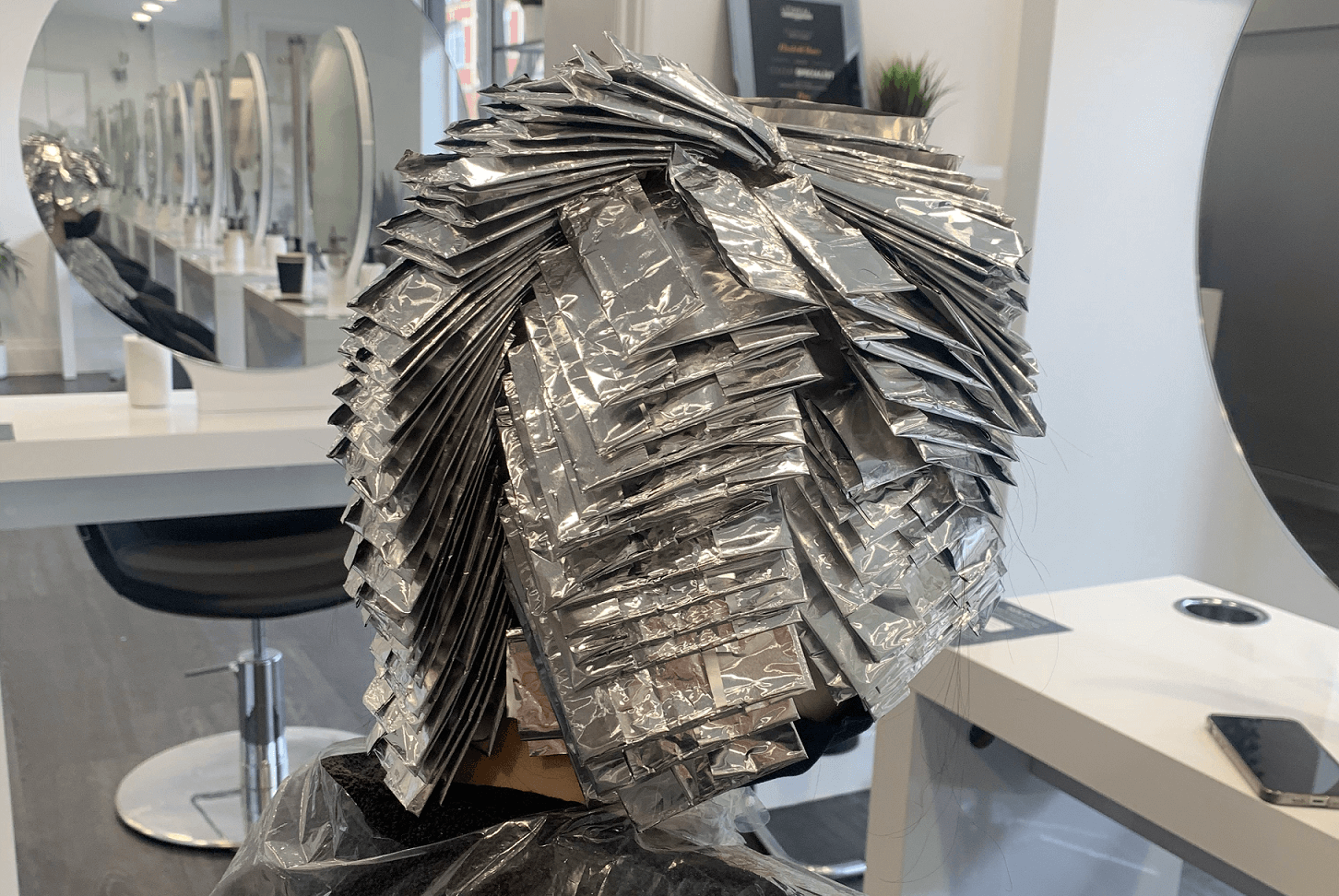
Bleach will always have some effect on hair structure. That is simply how the chemistry works. The question is not whether bleach causes damage at all, but how much, how it is managed, and whether the hair you have can handle what you are asking it to do.
Most problems with bleach happen either at home or when the condition of the hair is not properly assessed before the service begins. Both are avoidable with the right approach.
What bleach actually does to hair
Bleach works by opening the outer cuticle of the hair shaft and reacting with the melanin inside. This oxidises the pigment, effectively removing the colour. The melanin is not removed from the hair; it is rendered colourless.
Once the natural pigment is lifted, what remains is the underlying pigment of the hair. Darker bases reveal red tones first, then orange, then yellow as they lift higher. A pre-lightener lifts this underlying pigment out. A toner is then used to neutralise the remaining warmth and achieve the finished colour.
Breakage versus hair loss
Bleach does not typically cause hair loss from the follicle. What it causes is breakage, and the two are frequently confused. Hair loss means the follicle is shedding. Breakage means the hair shaft is snapping at some point along its length.
There are two types of structural damage to understand. Porous hair has damage to the cuticle, the outer layer. It feels dry and lacks moisture, usually caused by heat. Sensitised hair has damage to the internal structure, which changes the elasticity. Sensitised hair either snaps immediately when stretched or stretches too far and does not return, like chewing gum. Both need to be identified before any bleach service proceeds.
Going from dark to blonde
Moving from a dark base to a light blonde in a single session is not possible safely. Each bleach application lifts the hair a certain number of levels depending on the strength used, the development time and the starting condition of the hair. Attempting too much lift in one session risks over-processing, which in serious cases means the hair loses structural integrity entirely.
The right approach is to lift in stages with recovery time between sessions. After the first application, a toner is used to improve the result while the hair recovers. A minimum of two weeks is needed before assessing whether the hair is strong enough to go again. This process takes longer than clients sometimes want, but the alternative is compromised hair that cannot be repaired, only cut off.
Why home bleach is higher risk
Home bleach products are formulated for maximum lift because they are designed as a one-formula-fits-all solution. They cannot be adjusted for your specific hair condition, history or starting point. A professional mixes a bespoke formula based on your natural colour, previous colour history and current condition, then monitors the development in real time.
The other risk with home bleach is timing. The formula cannot tell you when to stop. Leaving bleach on too long causes accelerated damage and in extreme cases the hair structure can break down completely at the root and ends. At the salon this is prevented by ongoing visual and tactile assessment throughout the development process.