

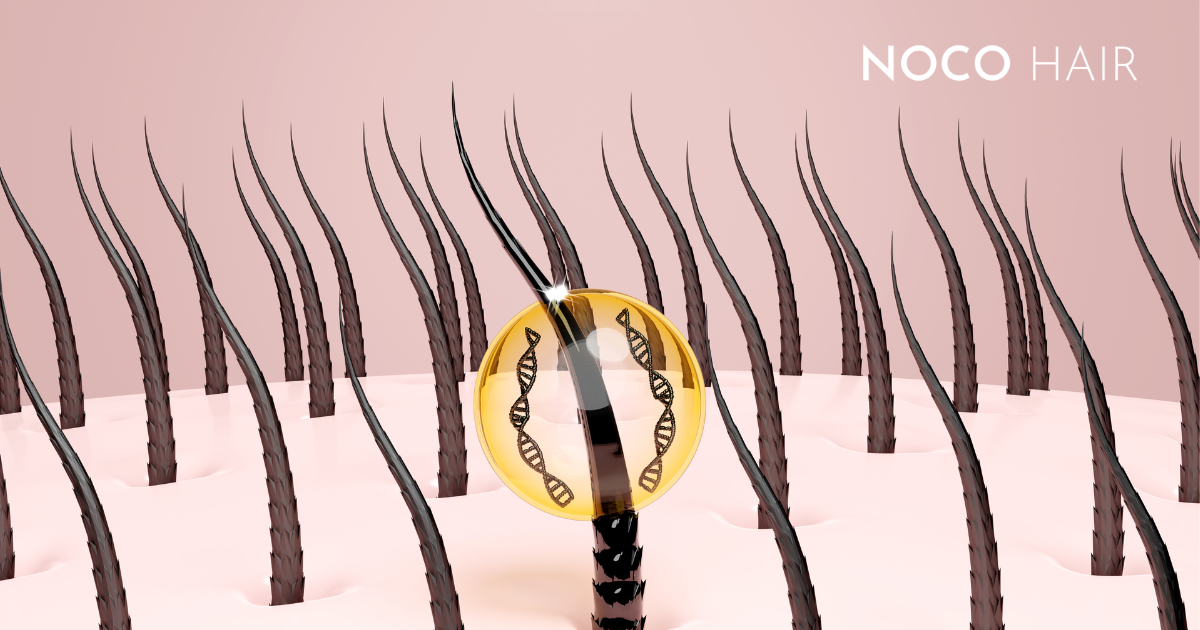
How long it takes for hair to grow back depends on why it changed in the first place. After hair loss, breakage, a big cut, or a fringe you have grown out of, the question is almost always the same: will it come back, and how long will it take?
Most people asking this question are going to get a positive answer. Hair is remarkably resilient. Understanding how it grows helps you understand what to expect and why patience is almost always the right approach.
How hair actually grows
Each hair on your head goes through its own growth cycle. The active growth phase, called the anagen phase, lasts anywhere from two to seven years depending on your genetics. During this time the hair grows roughly half an inch a month, or around six inches a year.
If your growth phase runs closer to seven years, your hair has the potential to grow very long before it naturally sheds and regrows. A shorter growth phase of around two years means your hair may reach a natural stopping point, often around the jawline or shoulders, even when it is perfectly healthy. Neither is better or worse. It is simply how your hair is built.
Why it feels slow at first
Hair grows from the root, not the ends. This means in the early weeks of regrowth you will not see much visible change, even though growth is happening. New hair has to travel a certain distance before it becomes noticeable at the surface.
People with fringes often notice hair growing back faster because it reaches their eyes. Length growth is harder to perceive because there is no equivalent reference point. The hair is growing. You simply cannot see it yet.
What affects how quickly hair grows back
The speed and quality of regrowth depends largely on what caused the change in the first place.
What helps while hair is growing back
You cannot dramatically speed up hair growth. What you can do is create the best possible conditions for the growth that is already happening.
When hair may not grow back fully
For most people, hair does recover well. There are some situations where the picture is more complex. Genetic thinning, certain hormonal conditions and some longer-term health issues can affect follicle activity over time. Even in these cases, early assessment and the right support can slow the process significantly and improve the quality of what remains.
The most important thing in any case is understanding what is actually happening rather than guessing. A professional can usually identify whether you are dealing with temporary shedding, breakage or something that needs a more structured approach.
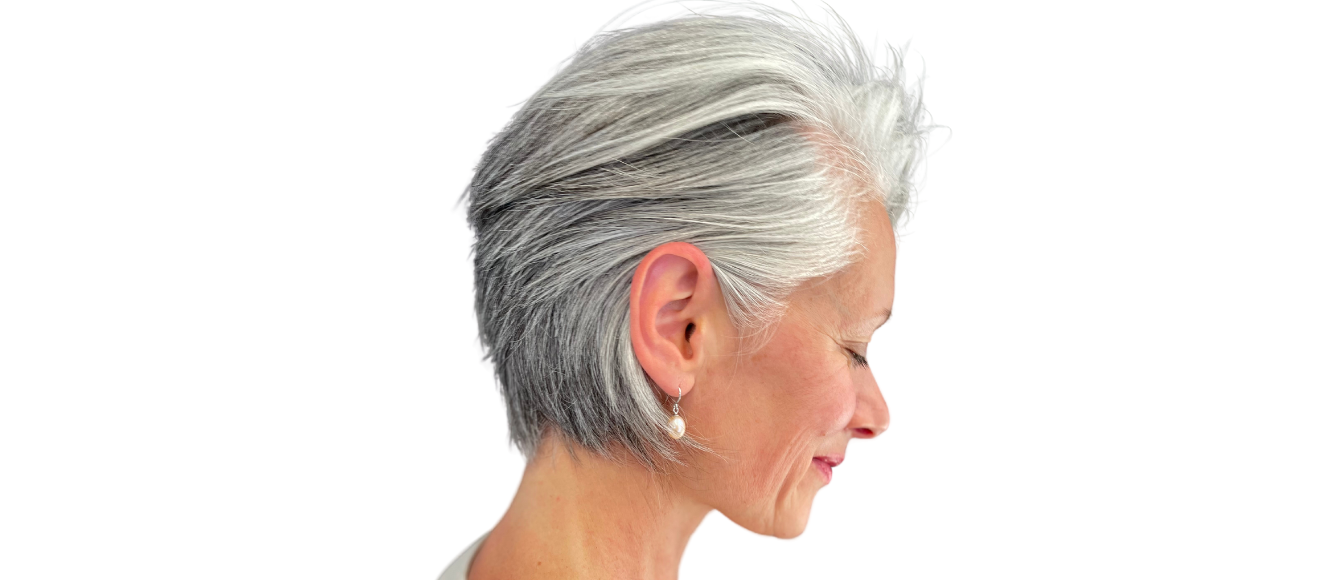
We get asked this more than you might think. Not just by older clients, but by anyone who has ever felt that a particular salon was not quite for them. Too trendy. Too young. Too intimidating. The honest answer is no, you are not too old. And the question itself tells us something important about what salons have often got wrong.
NOCO is a consultation-led salon. That means before we do anything, we sit down and understand your hair, your life and what you actually want. The result is always personal to you, not to what is trending on Instagram this week.
What age has to do with hair
Hair changes as we get older. It gets finer. It loses density. Grey comes in. The texture shifts. These are real changes and they affect what works and what does not. But none of them mean you should stop caring about your hair or stop coming to a salon. They just mean the conversation needs to be more informed.
A good stylist understands how ageing affects hair and works with it rather than against it. The right cut for finer hair is different from the right cut for thick hair. The right colour approach for someone with a lot of grey is different from someone with a dark base. None of this is complicated once you understand the principles.
What we actually do for clients as hair changes
Who comes to NOCO
Our clients range from students to grandparents. We have people in their twenties coming in for their first proper colour consultation and people in their seventies coming in for a cut they have never quite been able to get right anywhere else. The common thread is not age. It is that they want to understand their hair and leave feeling better than when they arrived.
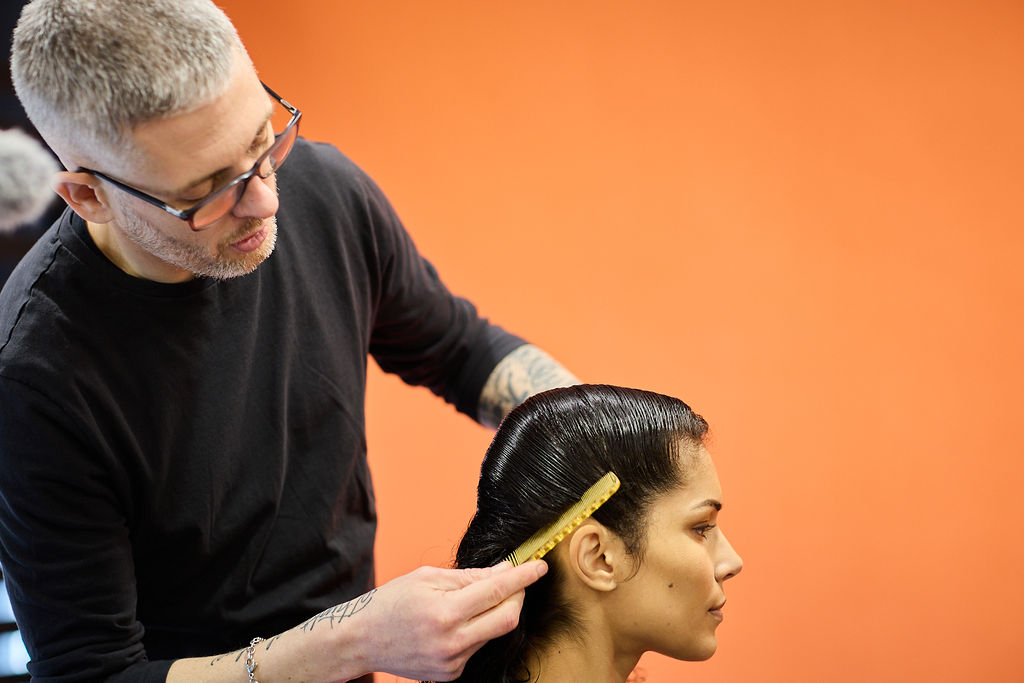

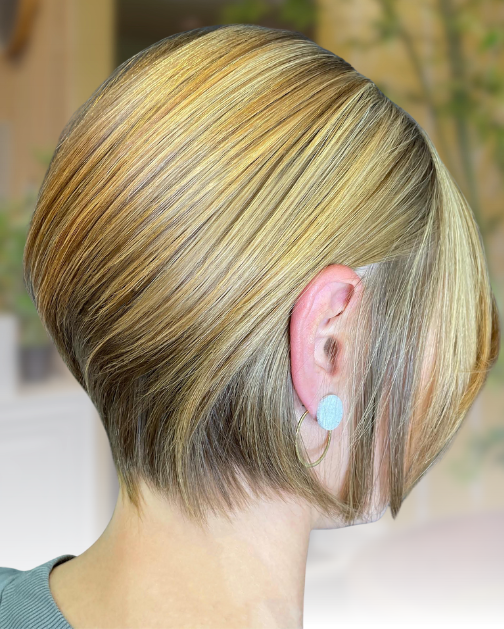
A selection of results from across our client base at NOCO Hair Bristol.
The question behind the question
When someone asks if they are too old for our salon, what they are usually really asking is: will I feel welcome here? Will someone take my hair seriously? Will I leave feeling like myself, or will I leave with something that does not suit me?
The answer to all of those is yes, yes and no. We take every client seriously regardless of age. The consultation is the same whether you are twenty-five or seventy-five. We diagnose before we design. We listen before we cut. And we do not hand you a style that works for someone else and hope for the best.
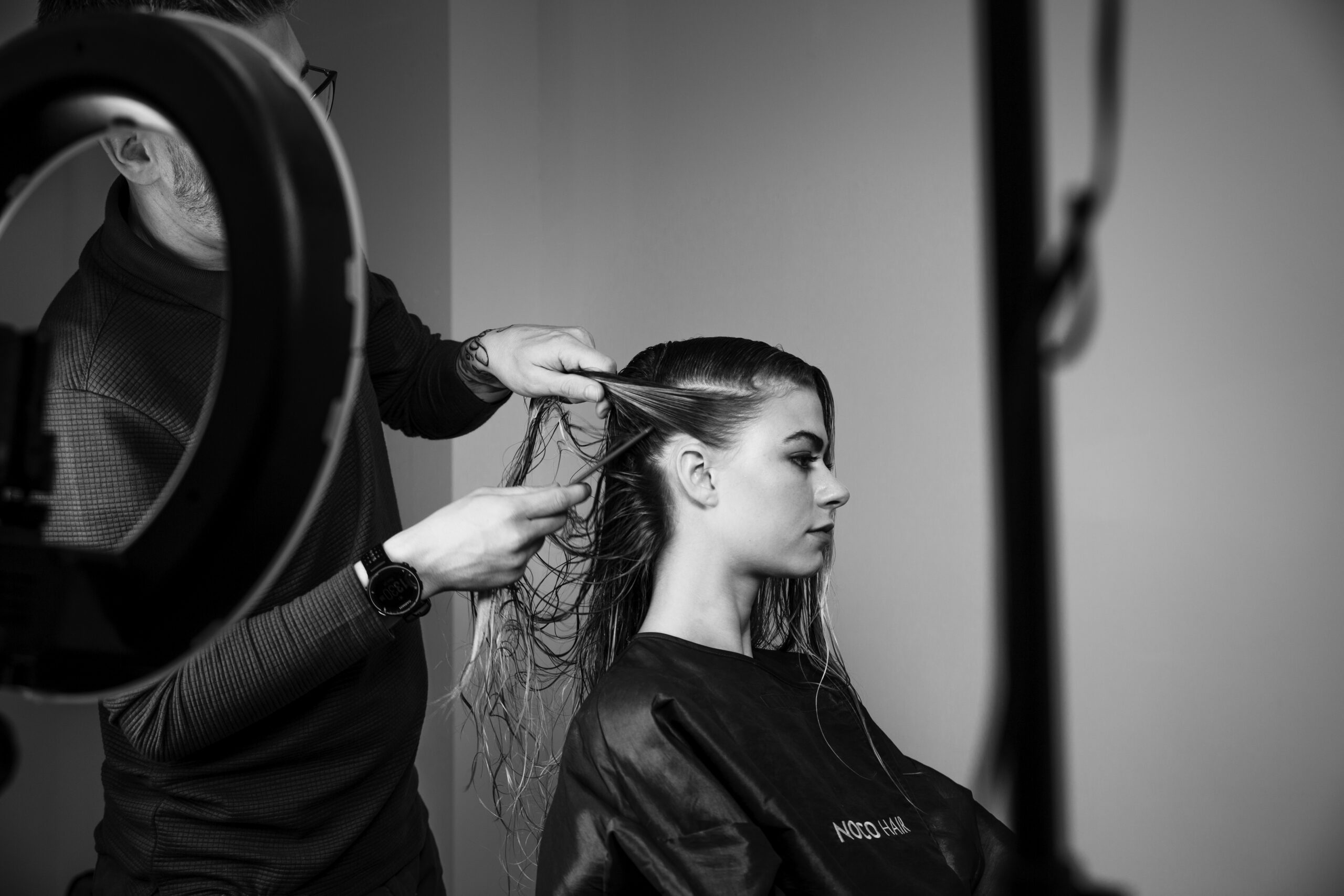
How often you should get your hair cut depends on your hair length, texture, how much heat or chemical processing it goes through, and what you are trying to achieve. For most people, somewhere between every six and twelve weeks is the right range, but the right answer for you sits within that depending on your specific situation.
The most important reason to keep up with regular cuts is not style. It is health. Split ends left unchecked travel up the hair shaft, causing frizz, breakage and dullness that no product can fully reverse.
Why haircut timing matters
Hair grows roughly half an inch a month. For short or layered styles, that growth quickly changes the shape and balance of the cut. For longer hair, the ends are the oldest and most vulnerable part of the hair shaft, and they accumulate damage over time from heat, styling and environmental exposure.
A regular cut removes that damage before it spreads. It also keeps your style looking intentional rather than grown out.
How often by hair type and length

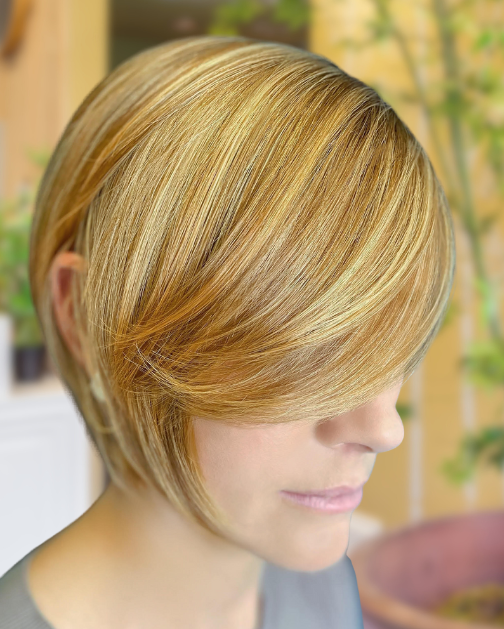
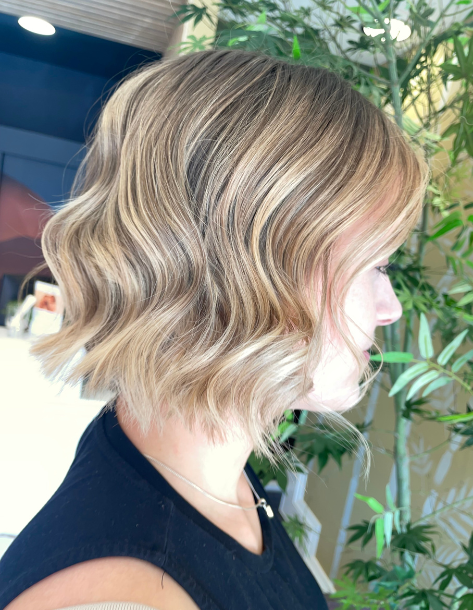
Precision cuts maintained regularly always look intentional.
What about fringes?
Most people trim their fringe roughly every four weeks, or whenever it reaches a length that bothers them. Because the fringe sits directly in the line of sight, it is easier to spot when it needs attention than the ends of the rest of your hair. Many clients manage this themselves between appointments, which is perfectly fine with the right scissors and a steady hand.
What if you are growing your hair out?
Trimming while growing your hair is not counterproductive. It feels that way, but leaving split ends to travel up the shaft costs you more length than the trim does. Even when growing, having a small amount taken off every three months keeps the ends healthy and means the length you are growing is retained rather than breaking off.
Ask your stylist specifically to maintain the length while removing damage. A good stylist will take the minimum necessary to keep the ends healthy without sacrificing length unnecessarily.
A precise cut maintained regularly always looks intentional.

Curly hair is not difficult to look after. It is just different. The routines and products that work perfectly on straight hair can actively damage curly hair. Once you understand why, getting consistently good results becomes a lot more straightforward.
Every curl type behaves slightly differently, so some trial and error is part of the process. But these five principles apply across the board.
1. Get into a washing routine that suits curls
Natural oils produced by the scalp are essential for healthy, hydrated hair. The problem is that curly and textured hair makes it much harder for these oils to travel down the hair shaft due to its shape. This means curly hair dries out faster and is more sensitive to over-washing than straight hair.
Washing once a week or even less is the general recommendation for curly hair. When you do shampoo, focus on the scalp rather than working the shampoo through the lengths. The ends will get cleaned when you rinse. Shampooing the full length too frequently strips the moisture that curly hair needs most.

Healthy curl definition comes from consistent moisture, not product volume.
2. Moisturise consistently
Whatever type of curl you have, whether wavy, loose, tight or coiled, curly hair is naturally prone to dryness, frizz and breakage. The solution is not more product. It is the right product used consistently.
Nutrition also plays a role. Protein, iron and vitamins that support hair growth and condition come from what you eat as much as what you apply. Read more in our guide on how diet affects hair health.
3. Choose the right products
The curly hair product market is overwhelming. Most of it is not worth the price. A few simple rules cut through the noise.
4. Style correctly
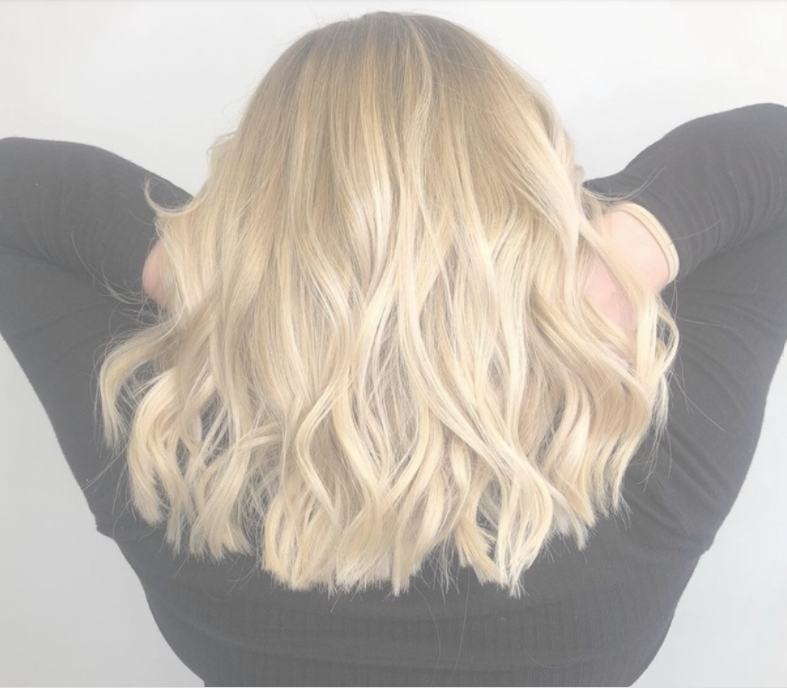
Short curly hair styled correctly at NOCO Hair Bristol.
5. Protect your curls overnight and day to day
The days become longer and brighter, which can only mean one thing: summer is here! Although summer means beach days and holidays, it’s important to know the dangers of those UV rays.
You wouldn’t step out into the summer sun without lathering up in sun cream, so why forget about those luscious locks?
Just like your skin, the sun will damage your hair too. Between sun, sea, and sand, your hair goes through a lot in those summer months. Without the correct hair care steps, the damage can really take a toll on your tresses. Read on to learn how to maintain healthy hair in the summer.
How sun can damage your hair
Those hot days and UV rays can be very damaging to your hair. It is crucial to understand those effects and the importance of protecting your hair from the sun.
- Cuticle damage – The cuticle is the outer layer of hair protecting the inside of the hair shaft from damage. The UV rays can break this down, causing your hair to dry out, your hair will then attract humidity and humidity means … FRIZZ!
- Inner damage – The sun weakens the internal structure of your hair and makes it prone to breakage and split ends.
- Colour damage – Coloured hair is even more prone to sun damage. Colour treatments can already leave your hair dehydrated, and too much sun can leave it even more vulnerable to damage. Not to mention – the UV rays perform as a bleach which will slowly but surely fade any colour. Some more colour treatment tips to come…
- Water damage - There is nothing like a dip in the pool or a splash around in the sea during those hot summer months! However, sometimes the things we love hurt us the most…
While you’re splashing about in the pool, chlorine is stripping natural oils from your hair, making your hair dry and weak. This can lead to breakages.
Salt water can have very similar effects to chlorine water, minus the chemicals. Salt water strips the hair of moisture, making it dry and more susceptible to breakages and split ends.
How to know if your hair is sun damaged
Exposure to sun for a longer period of time will make changes to your hair more noticeable. Signs of damaged hair are:
Split ends – the heat stripping your hair of moisture will make it more prone to split ends and breakages.
Texture – being in the sun or the pool will strip your hair of its natural oils, causing it to become much more dryer and brittle. So, say goodbye to your silky-smooth hair.
Discolouration– UV rays react with the melanin in your hair, causing pigment changes. The chemicals in chlorine can also react with your hair – especially if it’s dyed! – altering the colour.

Tips and tricks you need to know to keep your hair healthy in that summer heat
Start with a summer trim
It is important to give your hair a head start for summer. Visiting your salon and getting rid of those split ends will keep your hair healthy and easy to maintain in those hot summer months.
Mask the Mane
One of the obvious and simple answers to protect your hair from the sun is wearing a hat or a scarf. Wearing a hat or a scarf act as a physical barrier to protect from those harsh UV rays!
UV protection
The first thing you do if you know you are going to be spending a day in the sun is lather up your sun cream so why not use the same protection for your hair. UV hair protectants come in all shapes and sizes, from gel to powder. Research the best product to protect your locks!
Hydration
This is a tip you really shouldn’t ignore. You could be doing everything right to keep your tresses intact but, without correct hydration, your hair will start to show signs of stress. Drinking water will not only provide hydration for your body but to your hair strands too!
Keep away from heat styling tools
With the sun already scorching your strands, using straighteners, curling irons or hair dryers will add to the heat damage. Try using more natural methods of styling your hair in the summertime. Air drying and braids will be your best friend.
Washing your hair
It is likely that you will be washing your hair more frequently to help combat the dirt and sweat.
However, beware of the fact that overly washing and shampooing your hair will strip any natural oils, therefore further drying your hair out!
Try washing your hair 2-3 times a week and switching out your shampoo and conditioner routine for a more moisturising option. This will help with locking in any moisture in these drying months.
A pro tip from us this summer is to rinse your hair with cold water after you wash your hair for maximum shine. This is because it will close the hair cuticle and allow the hair to reflect more light.
Treatments
Hair masks and leave-in conditioners will help you with adding that extra bit of moisture. Using moisturising treatments will add an extra layer of protection from those UV rays, making it harder for the sun to damage your hair.
This tip is key if you are in and out of the water! Fully saturating your hair before diving into the pool will lock in that moisture it needs after sun exposure. Note that already wet hair won’t absorb as much saltwater or chlorine chemicals.
Fight the frizz
In the heat and humidity, frizzy hair will be your worst enemy. Keeping your hair healthy and well maintained will help keep your frizz to a minimum. Keep your eye out for shampoos and conditioners with two ingredients: amino-silicones, and cationic surfactants, these two ingredients will help neutralise your hair and prevent the humidity from winning this round!
If the frizz is getting the best of you this summer, here at NOCO we offer Phrizzy-o-therapy treatment to help combat the humidity.
Colour care
Coloured hair is already tricky to maintain, let alone adding those summer elements into the mix. If you have coloured hair, exposure to the sun can have many negative effects on your tresses.
Chlorine chemicals can strip out the colour your hair is dyed and often turn the dye brassy or faded. Ensure you are using colour preserving hair care products during the hot summer months.
Dyed hair is a lot more prone to dryness as the strands are already stripped of natural oils more than undyed hair. Using hydrating products is your only answer at this time of year; don’t let your hair damage ruin your time in the sun.
There you have it …
Understanding the importance of hair care is vital during these summer months! Stick to our useful haircare tips for summer and help protect your hair.
Here at NOCO, we are here to help you with any hair care needs, whether you are wanting your start of summer trim or a deep conditioning treatment to help bring back your shine.
Contact us today to book this summer!

This winter, NOCO Hair is offering 100 free haircuts to people in need across Bristol. Between 1 January and 28 February 2026, our team at Whiteladies Road will open our doors to local people through a network of ten Bristol charities, each receiving ten vouchers to use however they see fit.
Each charity can gift their vouchers to someone they support, raffle them to raise funds, or use them to recognise an outstanding volunteer. It is our way of giving something back to the city that has supported us since the beginning.
Where it started
The Care with Hair campaign grew from a single moment that changed how we think about what we do.
Years ago, I was invited to give a final haircut to one of my clients, Megan, in hospice care. That visit stayed with me. It revealed something that is easy to forget in the day-to-day of running a salon: that a haircut is not just about how someone looks. It is about how they feel. Seen. Cared for. Present.
That one act of compassion became the foundation for everything Care with Hair has grown into. What started as a personal response to a profound moment has become an annual commitment to the people of Bristol who need it most.
What Care with Hair is for
The campaign exists to help people feel confident, cared for and seen, particularly during difficult times. Recipients have included people going through cancer treatment and hair loss, people in recovery, and volunteers who spend their lives putting others first.

The NOCO team. Care with Hair is a team effort, every year.
Want to get involved?
If you are a local charity or organisation in Bristol and would like to take part in a future Care with Hair campaign, we would love to hear from you.
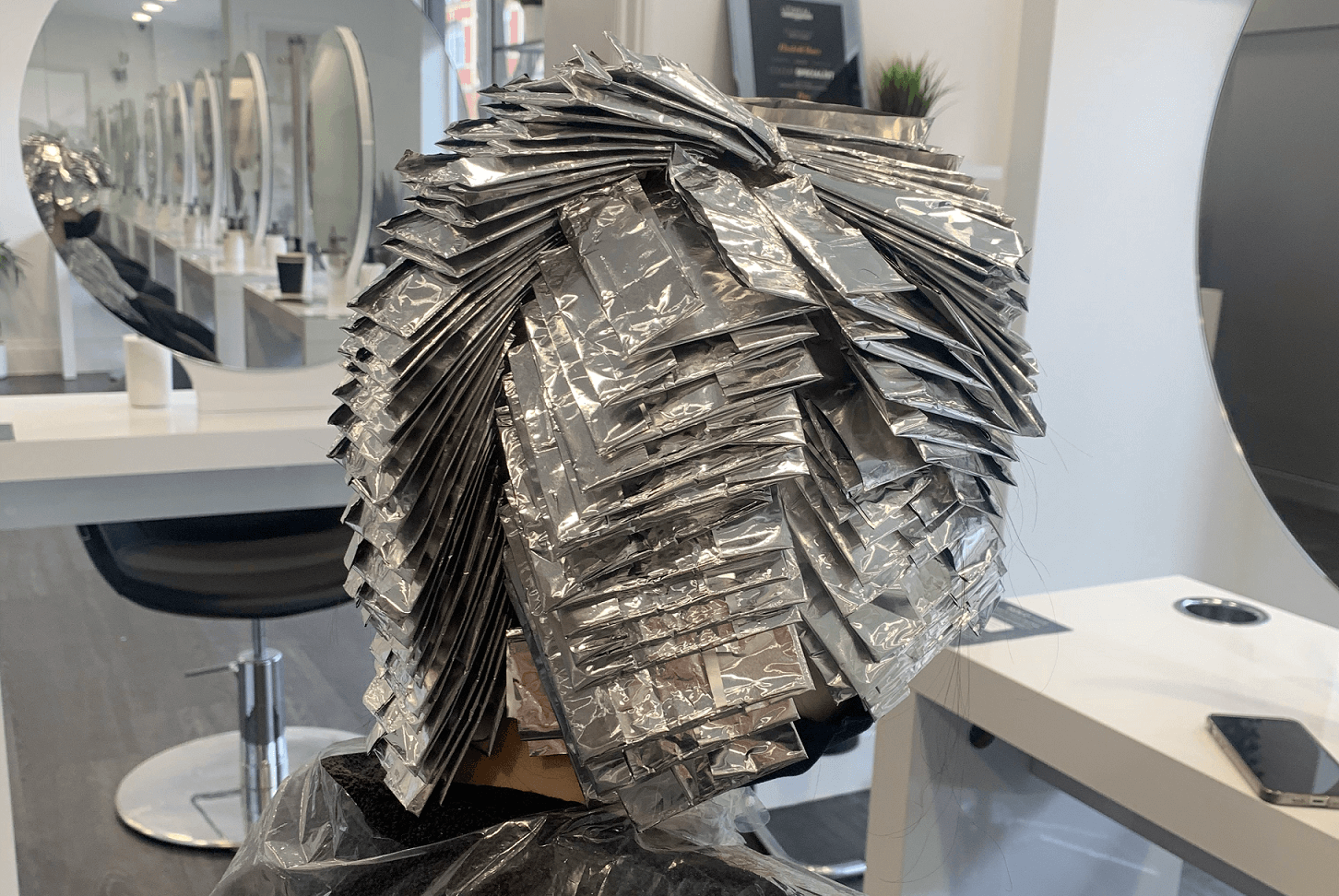
Bleach will always have some effect on hair structure. That is simply how the chemistry works. The question is not whether bleach causes damage at all, but how much, how it is managed, and whether the hair you have can handle what you are asking it to do.
Most problems with bleach happen either at home or when the condition of the hair is not properly assessed before the service begins. Both are avoidable with the right approach.
What bleach actually does to hair
Bleach works by opening the outer cuticle of the hair shaft and reacting with the melanin inside. This oxidises the pigment, effectively removing the colour. The melanin is not removed from the hair; it is rendered colourless.
Once the natural pigment is lifted, what remains is the underlying pigment of the hair. Darker bases reveal red tones first, then orange, then yellow as they lift higher. A pre-lightener lifts this underlying pigment out. A toner is then used to neutralise the remaining warmth and achieve the finished colour.
Breakage versus hair loss
Bleach does not typically cause hair loss from the follicle. What it causes is breakage, and the two are frequently confused. Hair loss means the follicle is shedding. Breakage means the hair shaft is snapping at some point along its length.
There are two types of structural damage to understand. Porous hair has damage to the cuticle, the outer layer. It feels dry and lacks moisture, usually caused by heat. Sensitised hair has damage to the internal structure, which changes the elasticity. Sensitised hair either snaps immediately when stretched or stretches too far and does not return, like chewing gum. Both need to be identified before any bleach service proceeds.
Going from dark to blonde
Moving from a dark base to a light blonde in a single session is not possible safely. Each bleach application lifts the hair a certain number of levels depending on the strength used, the development time and the starting condition of the hair. Attempting too much lift in one session risks over-processing, which in serious cases means the hair loses structural integrity entirely.
The right approach is to lift in stages with recovery time between sessions. After the first application, a toner is used to improve the result while the hair recovers. A minimum of two weeks is needed before assessing whether the hair is strong enough to go again. This process takes longer than clients sometimes want, but the alternative is compromised hair that cannot be repaired, only cut off.
Why home bleach is higher risk
Home bleach products are formulated for maximum lift because they are designed as a one-formula-fits-all solution. They cannot be adjusted for your specific hair condition, history or starting point. A professional mixes a bespoke formula based on your natural colour, previous colour history and current condition, then monitors the development in real time.
The other risk with home bleach is timing. The formula cannot tell you when to stop. Leaving bleach on too long causes accelerated damage and in extreme cases the hair structure can break down completely at the root and ends. At the salon this is prevented by ongoing visual and tactile assessment throughout the development process.
How to maintain bleached hair properly
You are currently viewing a placeholder content from Facebook. To access the actual content, click the button below. Please note that doing so will share data with third-party providers.
More InformationYou need to load content from reCAPTCHA to submit the form. Please note that doing so will share data with third-party providers.
More InformationYou are currently viewing a placeholder content from Hubspot Embedded Content. To access the actual content, click the button below. Please note that doing so will share data with third-party providers.
More InformationYou are currently viewing a placeholder content from HubSpot. To access the actual content, click the button below. Please note that doing so will share data with third-party providers.
More InformationYou are currently viewing a placeholder content from Hubspot Meetings. To access the actual content, click the button below. Please note that doing so will share data with third-party providers.
More InformationYou are currently viewing a placeholder content from reCAPTCHA. To access the actual content, click the button below. Please note that doing so will share data with third-party providers.
More Information