Here at NOCO our team take immense pride in making sure you leave our salon feeling absolutely fantastic. Glowing from the inside out as well as looking incredible from the outside. That’s why we carry out our in-depth face to face consultations before we start to make sure you love every moment of your experience, confident that we’re executing exactly what you’re after.
The two signature styles we’ve developed here at NOCO are The Vitality Cut and The Clifton Cut. That’s not to say that we don’t deliver different cuts at all – as we certainly do. But these are two of our favourites that look incredible and solve a variety of hair challenges, while fulfilling your hair wishes.
So, let’s see what the differences in the two cuts is – and most importantly which one will leave you feeling like the best version of you. Because you deserve to feel incredible.
The Clifton Cut
The Clifton cut is a really easy to maintain and manage at home style. This style provides real fullness by protecting weight around the baseline and adding more volume around your crown. We do this by using disconnected layers in a reverse angle shape. Sounds fancy, right? This technique also means you should still be able to tie your hair up with ease, despite all the layers.
This haircut is especially caring towards the midband of your hair, which is often a hotspot for split ends. The Clifton Cut reduces the weight in this area in a healthy way, providing you with extra movement and shine while protecting the hair underneath. Despite removing weight, many people come away from having The Vitality Cut commenting that their hair feels more full and luxurious than before.
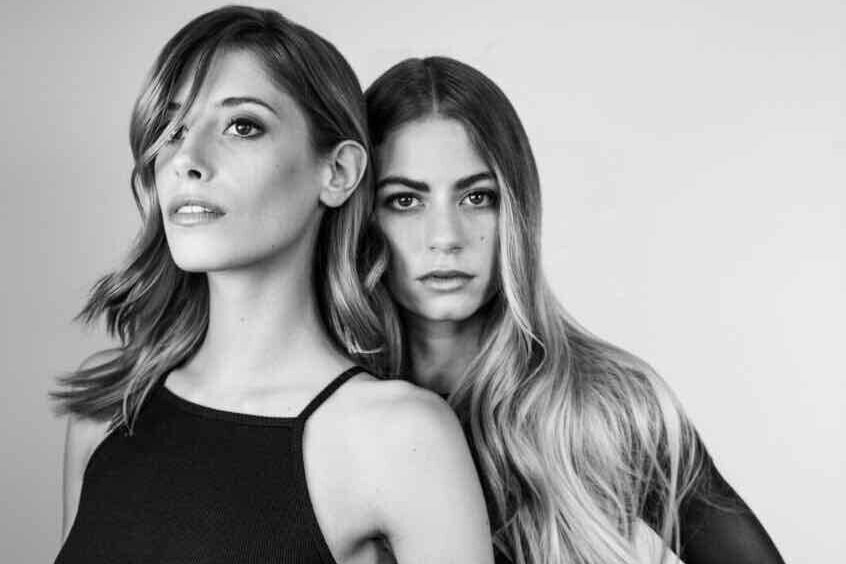
The Clifton Cut is also super versatile. It can be worn with or without a fringe or bangs and with straight or wavy hair, which means it’s perfect for customising to your unique style. As long as your hair is jaw-length or longer, we can tailor The Clifton Cut to bring out the best in your hair. We’ve found that it also works well with all types of colour, although we’ve discovered that balayage hair pairs with the style for a particularly stunning effect.
Some reasons you may choose to steer away from The Clifton Cut is if you don’t like a lot of texture in your hairstyle or if layers just aren’t your thing.
The Vitality Cut
The Vitality Cut is all about shine and volume. By reducing weight around the front baseline of your hair and adding volume to the hair around your face, a classic shape is created which frames your face and enhances your natural features.
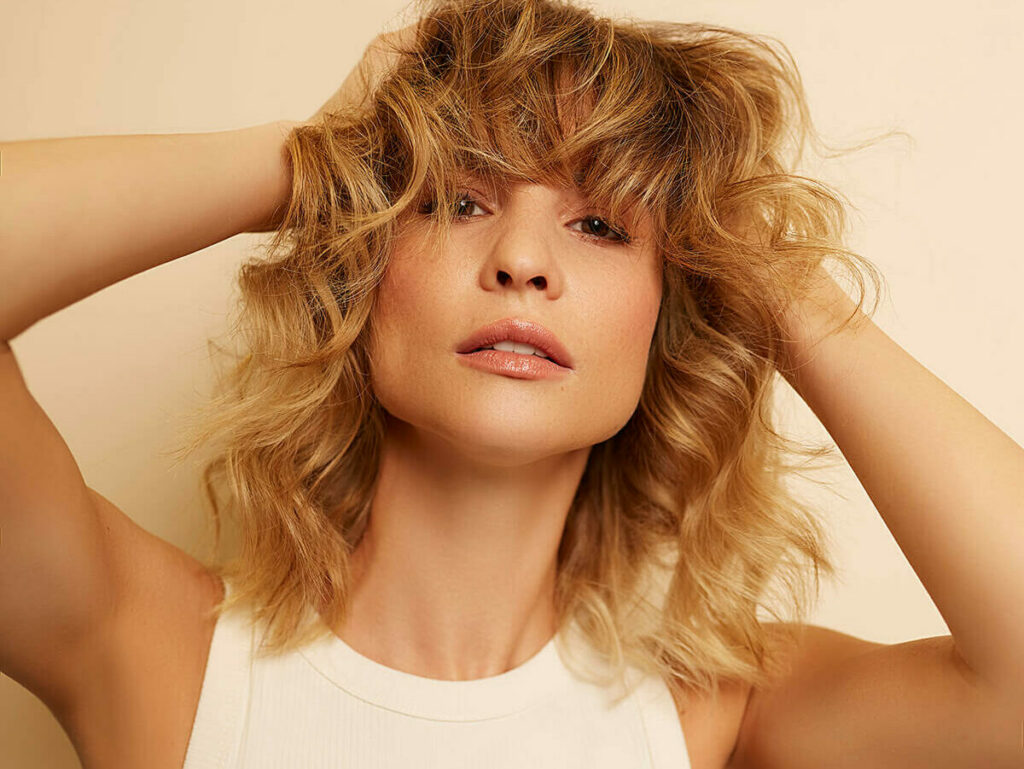
Split ends are commonly found in the fine hair close to your face but The Vitality Cut does away with these, bringing out the colour in your hair and making the surface shinier. Speaking of colour, The Vitality Cut works well with all types, but we’ve found that highlights really make the shine unmissable.
Like The Clifton Cut, The Vitality Cut is anything but one-size fits all but can be bespokely tailored to your style. It can be worn on mid-length hair whether it sits on your jawline or sweeps below your shoulders and can look great with a fringe. If you would like your hair to have a weightless feel, we can add more layers or volume to your crown. If you would like to try out a hair length which finishes below your jaw, we can use what we call “The Vitality Variation” to adapt the style.
Vitality vs. Clifton
Both cuts have unique strengths, so choosing the right style for you depends on the weight, colour and texture of your hair and what effect you would like to achieve with your hairstyle.
The Vitality Cut is a beautiful style for framing your face and adding volume to the hair there. The style brings attention to all of your best features while looking very natural. It can also really make the colour of your hair pop by removing split ends and adding shine and texture. The Vitality is designed to be versatile so can be worn with straight, wavy or curly hair. As mentioned above, there is also the option of using “The Vitality Variation” to add shine and volume to much shorter haircuts.
The Clifton Cut is easier to maintain at home due to it’s great structure and grows out well over time. It is designed to nurture healthy hair growth and reduce split ends. By adding structured layers of volume to the hair on your crown, there will be less weight to your style but the hair will feel thicker and more full of life. This style may also be a good option if you often wear an updo, since the connected layers of hair mean that the style will hold together when swept into a bun or ponytail.
If you’re struggling to choose between the two, you could think about how much time you spend on managing your hair at home, where you like to see volume and drama in your hairstyle and whether you like styles with a constant structure or more scope for varying your look day-to-day.
If it sounds like you could do with a bit of both, why not ask you stylist to create a bespoke hybrid version just for you?
Hair cutting is not one size fits all and your NOCO Hair stylist will be able to advise you on what’s right for you – whether it’s a Classic Clifton or A Vitality Variation, we have something to suit you.
The NOCO experience
Whether you decide that the Vitality Cut is best for you, you love the sound of The Clifton Cut or you fancy a hybrid of the two – there’s one thing that stays consistent… the customer service experience you’ll receive. Customer experience is at the heart of everything we do at NOCO, and you’ll definitely notice! We recently won The UK Salon Business Award for Customer Service, and it was so wonderful to be recognised for our commitment to our customers through everything we do.
Local salon NOCO HAIR received global recognition in the Salon Business Awards on Monday night in a glamorous awards ceremony at the decadent Quaglino’s in London.
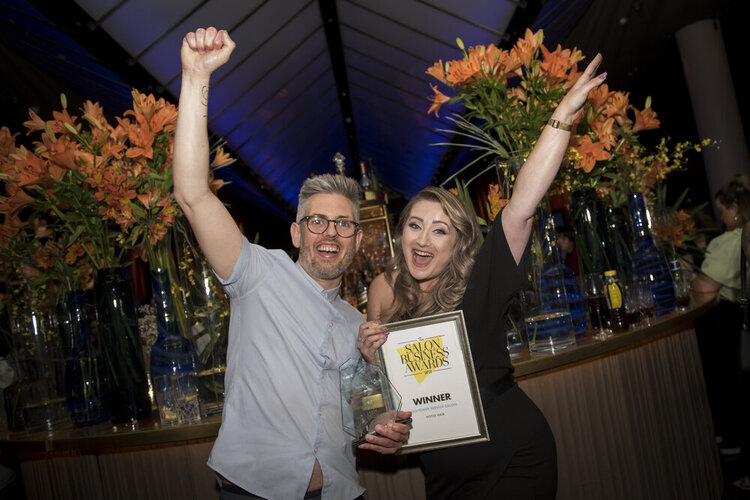
Photography by DFphotography.co.uk/Danny Fitzpatrick Credit : DFphotography.co.uk
The international hairdressing awards recognise salons and stylists that go the extra mile for their staff, clients and local community.
After beating hundreds of entries in the Customer Service Catagory to win top spot, NOCO HAIR’s Corey Taylor said: “We are over the moon with this award, customer service means a lot to us as we love to look after people. If a client leaves the salon in a better emotional state than when they have come in because of the service they have received then we have succeeded. To be recognised in such a prestigious way feels amazing!”
Over 250 guests turned up to the Mayfair hotspot to see 14 salons and two individuals receive their certificate and award, while feasting on delicious canapes and bubbles aplenty.
Dubbed Freedom Day, due to the national lifting of Government Covid restrictions the same day, the most often heard comment was “perfect timing”.
Salon Business Publishing Editor Joanne Charlton said: “The SBAwards Grand Final brought the industry back together in the way we remember – with hugs, with dancing and networking from start to finish.
“We were proud to give the winners the recognition they deserve in glorious surroundings filled with friends. Each of the winners truly represent everything that’s good about our industry – dedication, hard work, creativity and togetherness.”
Upon arriving at the venue, guests were led down a grand staircase to the main floor, where Brendan Mills was on the saxophone, warming the crowd. Mingling was high on the agenda for guests meeting friends old and new, before the awards announcements began.
Paul Simbler, HOB Salons Director, joined Joanne Charlton onstage to present the first half of the awards, with representatives of the sponsors taking to the stage for the final half.
The awards would not have happened without the unwavering support of the sponsors including
Schwarzkopf Professional, Remi Cachet, Joico, Paul Mitchell, iSalon and Unite, who also contributed generously to the SBAwards Goody bag making it the best one yet.

Every entry was judged by representatives from prestigious professional hair brands including Schwarzkopf Professional, Remi Cachet, Joico, Paul Mitchell, iSalon and Unite, as well as award-winning hairdressers including Errol Douglas MBE and Guy Kremer.
A full list of the winners is below…
Salon Winners
Local Salon Sponsored by Paul Mitchell
Winner B.E Ironbridge
Runner up Smith England
Design Salon
Winner Mark David
Salon Runner up Alchemy & I
Business Salon
Winner Sarai Hair and Beauty
Runner up Saks Exeter
Male Grooming Salon
Winner Joe & Co
Runner up Toni&Guy Billericay
Colour Salon Sponsored by Schwarzkopf Professional
Winner ROAR Hair and Beauty
Runner up Goldsworthy’s Hairdressing
Creative Salon Sponsored by Joico
Winner Ashley Gamble
Runner up Tim Scott-Wright @The Hair Surgery
Salon Team
Winner Q Hair and Beauty
Runner up Saks Hair and Beauty West Bridgford
Education Salon Sponsored by Remi Cachet
Winner Hair Ott
Runner up HOB Academy
Green Salon
Winner Hair Organics
Runner up B.E Ironbridge
Digital Salon
Winner Hxhair
Runner up Studio e
Customer Service Salon
Winner NOCO Hair
Runner up Artelier Formby
Fashion Salon Sponsored by Unite
Winner bebop
Runner up Karoliina Saunders Hair Design
Ultimate Sm to Med Salon Sponsored by iSalon
Winner Academy Salons Esher
Ultimate Large Salon Sponsored by iSalon
Winner HOB Salons
Individual Winners
Curl Specialist
Winner Rick Roberts
Runner up Emma Simmons
Global Stylist
Winner Gareth Williams
Runner up Anne Veck Oxford
For further information contact [email protected]
The finalists for the British Hairdressing Awards have been announced and we are overjoyed to report that we’ve been nominated for New Salon of The Year!
We’ve been lucky enough to have made the finalist list for the awards in two previous years- including an exciting win in the Newcomer of The Year category- but it is always exciting to receive attention from the event some are calling the biggest night in British hairdressing.
The awards have now been showcasing the best salons and stylists in the UK for 37 years and it’s made the names of some of the top stylists in the business. This year’s version of the event has also seen a big step forward for the event in terms of accessibility- broadening its entry criteria to allow a greater range of entries than ever before.
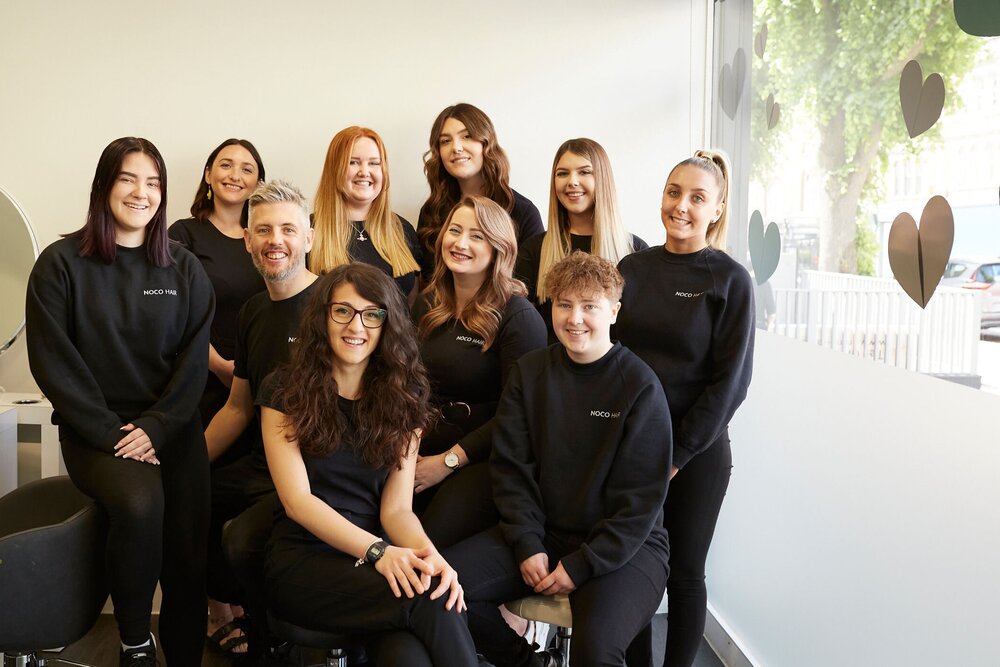
At NOCO, we are honoured to be recognised in a category such as Salon of the Year, which sees such steep competition from across the length and breadth of the UK. Further judging will be happening throughout the summer, culminating at a glamorous ceremony in London this autumn.
In other awards news- we have also been nominated as Customer Service Salon of the year at The Salon Business Awards!
As a team dedicated to quality care and expertise, it’s thrilling to be chosen from an international roister of competitors for the hard work we put into building positive experiences for our clients throughout their hair journey. Our entire team are immensely proud of the fun, innovative and professional atmosphere fostered here at NOCO.
After a tumultuous year for all, it’s wonderful to have the opportunity to acknowledge all of the fantastic, ground breaking work that’s been going on within the industry this year, despite lockdowns and periods of uncertainty.
The whole team here in Clifton are eagerly awaiting both ceremonies and will make sure to keep our guests posted on any news we have to share on award night.
In the meantime, you can find out more about The British Hairdressing Awards here and discover The Salon Business Awards through their website. To keep up with all the news live through social media, follow the hashtags #BHA21 and #SBAwards on twitter and Instagram!
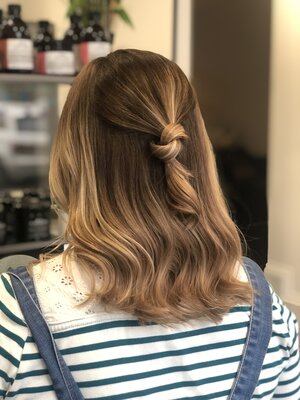
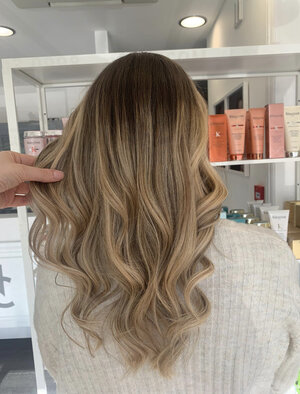
Balayage is one of the most popular hair techniques right now. It’s everywhere, and it’s something we’re constantly asked about – and something we pride ourselves as being experts in. This lower maintenance alternative to a full head of highlights is hugely adaptable depending on your needs and wants, and adds a beautiful multi-tonal and multidimensional colour by using patches of light and shade.
So, we know how popular balayage is – but where did it come from and how did its existence grace it’s way in to such a popular position? Let’s take a look at the history.
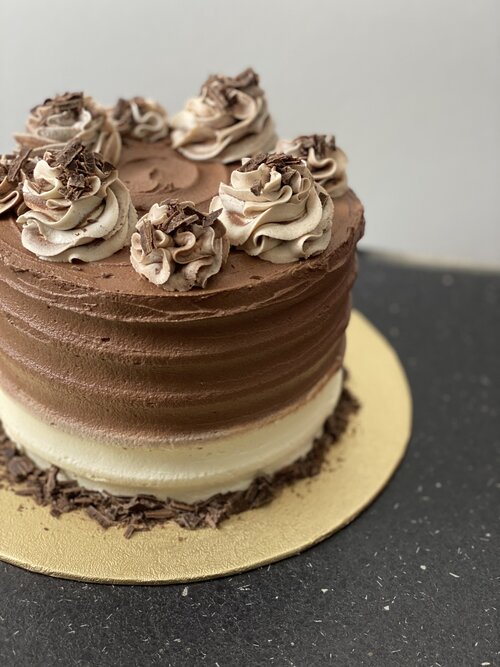
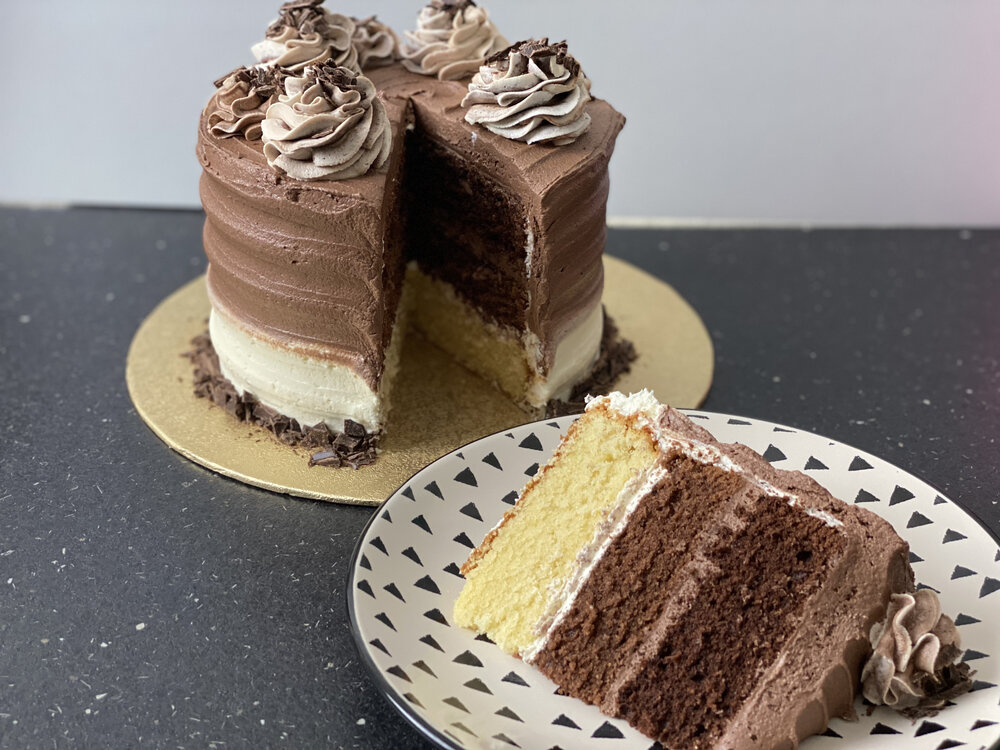
Oh, and we’ve also teamed up with the awesome Bryony (you will have seen her on Great British Bake Off) to give you a recipe for a decadent ombre cake – try it, we promise you won’t regret it!
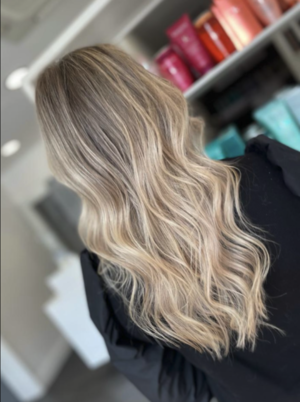
A brief look at the history
Dip dye
Dip dye – oh yeah, remember that one? You may be wincing a little as you reminisce on the dip dye trend and the home job you may have once attempted. This literal line was all the rage back in 2012 and was the start of what we know call balayage. While there has been natural progression of the style, it doesn’t mean there isn’t still a time and a place for a vivid shade of dip dye to create a high impact statement!
Dip dye is where it all began – the sold line of high contrast colour which gives the effect that you have dipped your hair in to hair dye (it does what it says on the tin this one!). The ratio of dip is completely down to the individual can just be the tips or can be half of your hair.
Ombre (the fade)
Dip dye quickly evolved in to Ombre which literally mean ‘graduated in tone’. Ombre is all about keeping the roots dark and ends light but with a much softer blend than dip dye. The result is often Ombre will look like three shades – dark, medium, light – with each tier diffusing in to the other. This fade usually works best when working off of a similar colour pallete. For example, natural like dark brown, into light brown in to dark blonde. Or also with fashion shades like red, into orange, into yellow. When it comes to executing a dazzling ombre we start by determining the darkest and lightest shades, and then finding something that sits right in the middle and complements the overall tone perfectly!
Natural Fade Ombre
The natural fade ombre draws on large similarities from the classic ombre where all the ends are lightened with a soft blend from dark into the lighter tones. The more natural fade ombre was conceived when we started to experiment with adding different tones through the ends while also keeping the top section of the hair darker. This was beginning of soft, dual tone, multidimension colour that wasn’t created using highlights. We started to use more of a colour melt technique to incorporate the combination of different tones – this effectively means blending a darker base colour down from the routes into 2, 3 or even 4 different panels of colour through the ends. The resulting overall effect is still a darker top and lighter ends, but with a much softer feel than a classic ombre.
Balayage
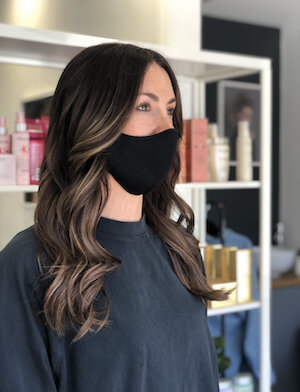
From the natural fade ombre, evolved balayage. Keeping those deeper roots ad lighter ends, but with a lot more variation in tone and ribbons of light and depth running all the way through the hair – not just the ends. This technique has evolved hugely over the years and there are now so many variations of the original balayage.
A classic balayage is used to create a soft and sun kissed effect through your hair, concentrating on the ends and around the face where sunlight would naturally hit. Balayage is the French word for ‘sweep’ or ‘stroke’, this refers to the motion which is used to apply the colour, usually pre lightener, to your hair. The result is a delicately diffused, soft and natural colour, blended into the root.
CALL TO BOOK A COMPLIMENTARY CONSULTATION NOW
The modern Balayage
Balayage has now be redefined by us brits and can come from any technique to give a deeper look at the root to a lighter natural finish at the ends. Just a quick Google image search will show you the wide variety of looks which fall under this umbrella style. From soft and natural ‘barely there’ ribbons of colour to high contrast placements. Sometimes we even use a range of different techniques to create a balayage look depending on the canvas we start with and the desired result!
At NoCo the technique we use most commonly is a foiling technique which adds lightness to the hair from root to tip. This is the best approach when lifting through the old colour, trying to eliminate warmth or for any corrective work. After that we may add colour between the foils to add even more depth or further variety in tones – depending on whether or not the hair has been previously lightened. The key to a. beautiful balayage is placement and colour choice – this underpins where we see maximum brightness and the amount of contrast that we create.
To finish the process, we use our Signature Soft Blend toner. We apply an acidic colours from root to tip using a deeper shade at the root, this adds depth to the hair without effecting the natural base colour – this bits super important as it’s how we make sure our balayages grow out seamlessly!
Olaplex is our magic not-so-secret ingredient to every lightening service. This protects your hair. Whether it’s a balayage, ombre, foliage, face frame, dip-dye, high lights or platinum card transformation – Olaplex is always highly recommended. After all condition is key!
One of the reasons that we are so smitten with balayage is the personalisation it allows, creating a completely unique bespoke colour for each guest, which suits that and fulfils their desires!
What’s next in fashion?
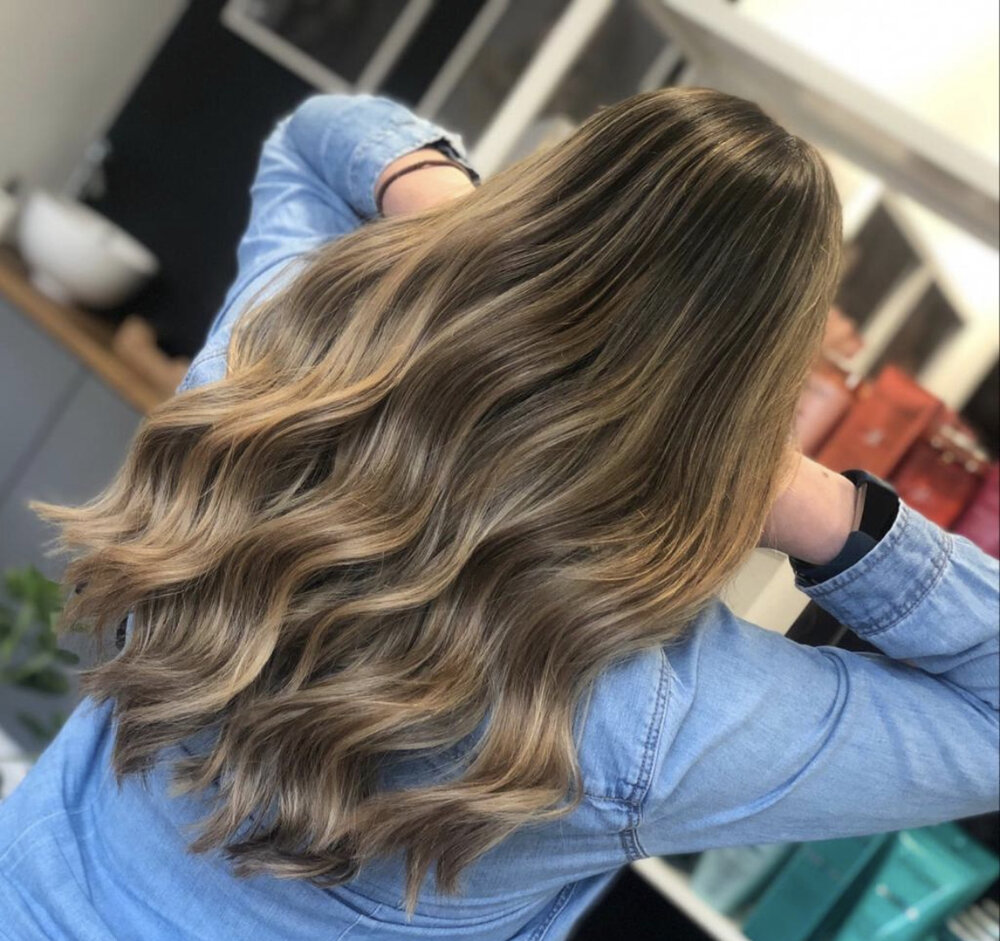
If there’s one thing we’re pretty confident about – it’s that balayage is here to stay However, we are seeing a change in cut trends with more texture, choppiness and movement so our approach to colouring must accommodate this. Using more block placement and concentrating the colour around the face and towards the ends of the layers helps to enhance the haircut and the two work in harmony to create a beautiful end result.
Brighter days calls for lighter hair! Whether your natural base colour is blonde or brunette, now is the perfect time to brighten it up. From soft & natural “barely there” ribbons of colour to block colour placement, that sun kissed glow is what everyone needs right now. Keep your hair feeling fresh by playing around with different tones. Enhancing warmth to create strawberry blondes with soft apricots and peachy hues gives blondes a more summery feel. “Bronzed Blonde” is the perfect balance of light and depth with lots of rich golden tones, a great way to make brunettes feel summer ready!
Good enough to eat!
We love creating beautiful colour with lots of delicious tones. From rich, glossy chocolate brunettes with ribbons of toffee & caramel tones to buttery blondes with a honey hue. Sounds good enough to eat right?
We are lucky enough to have Bristol Legend, Bryony Williams as a guest and talk always turns to food during a colour consultation!
Your Ombre Cake Recipe
Ingredients
- Sponge
- 350g unsalted butter, softened
- 350g caster sugar
- 350g self-raising flour
- ½ tsp baking powder
- 7 medium eggs
- 1 tbsp milk
- 1 tsp vanilla extract
- 3 tbsp cocoa powder
- Icing
- 400g unsalted butter, softened
- 800g icing sugar, sifted
- 3 tbsp cocoa powder
- 50g dark chocolate, chopped
Method
- Oven on to 160C fan/180C. Grease and line 3 x 8 inch cake tins.
- Beat the butter and sugar until light and fluffy. Add 4 eggs and the milk, mix to combine. Add half the flour and the baking powder, mix to combine. Repeat with the remaining eggs and flour.
- Place half the batter in a separate bowl. Add 3 tablespoons of cocoa powder to one half of the batter and mix gently to combine. In another bowl add half the cocoa powder batter and half the plain batter and fold until smooth (you should now have 3 batters; one dark brown, one pale brown and one plain). Place the plain batter in one cake tin, the pale brown in another and the dark brown in the third tin. Bake for 30 minutes until risen and a skewer comes out clean. Leave to cool in the tins for 15 minutes then tip onto a cooling rack to cool completely.
- Make the icing. Beat the butter until light and smooth. Add half the icing sugar and beat until smooth. Add the second half of the icing sugar and beat again until smooth. Place half the icing in another bowl and add 3 tablespoons of cocoa powder then beat until combined (add a splash of milk if too stiff).
- Build the cake. Trim the tops of the sponges with a serrated knife. Place the plain sponge on your cake board/plate and spread over a few tablespoons of the plain icing. Repeat with the next 2 sponges, first the pale brown and then the dark brown. Cover the cake with a thin layer of the plain icing and smooth with a cake smoother.
- Add the plain icing to the bottom half of the cake and the chocolate icing to the top half and the top of the cake. Smooth using a cake smoother/palette knife blending the different icings together in the middle.
- Place any remaining icing in a piping bag with a star nozzle. Pipe stars on top of the cake. Sprinkle over the chopped dark chocolate.
CALL TO BOOK A COMPLIMENTARY CONSULTATION NOW
What we’ve learnt, explain business partners Noel Halligan and Corey Taylor of NOCO Hair in Bristol…
The past 12 months have been like nothing the industry has experienced before. We are naturally sociable people, we work hard and play hard and run businesses that are at the heart of the community. So to have to have closed our doors for some eight months of the past twelve, has been difficult both mentally and emotionally.
There were some bumpy and worrying times but there was one glimmer of positivity; we were suddenly blessed with lots of free time. While the world was making banana bread and learning a new language, many in our industry took to cycling, walking or art. Drawing, painting, DIYing and learning editing skills filled our days. Of course, we all missed our clients and creating amazing hair, but we all learnt something else. Time is precious and as we all re-open and see our columns bursting with clients, it’s important that we don’t forget some of the things we learnt during the pandemic.
1 People are important
We already knew that, but spending time with family and friends is really important. Do we all want to go back to a world of 12-hour days, seven days a week? Making time to spend with family and catching up with friends is invaluable for our mental health and something we should all make time for. Never again will we say no to an invite for a drink or not go to an event because we’re tired. We’ve certainly appreciated everything!
2 Community is where the heart is
We’ve always worked with local charities but 2020/21 has really shown us how getting involved in your community is integral to our business. As more people work and live in their local area we offered free haircuts for charities to use as prizes or auctions, we offered style advice and got involved in local initiatives. Independent shops are the heart of high street and it’s important we carry on being part of the community spirit.
3 Take time out
Don’t put that book down you enjoyed reading – read some more! Just because we are back at work doesn’t mean we can’t take time out to read a book, go on a bike ride or run a marathon. Work can be all-consuming if you let it; so make some time when you think about something else.
4 Learn wherever you are
Hairdressers have always been good at learning new things and this year has shown us that education is all around us. Nothing replaces the intimacy of face-to-face training, but there are so many webinars, Facebook lives, tutorials and podcasts that refreshing skills or learning something new creatively and in business is accessible 24/7. Reading books from other business leaders and learning what works (and doesn’t) from people from other industries helps you stand out from the crowd and see things with a fresh pair of eyes.
Website: www.nocohair.com
Instagram: @nocohair
When it comes to choosing a hairstyle to suit you, it’s a little more scientific than finding a do that looks great on someone else and trying to reciprocate it. There’s a bunch of factors which can influence how much a certain hair style (colour or cut) will suit you. From your natural hair colour to your skin tone or eye colour and face shape.
We have our ‘Beautiful You Consultation’ for precisely these reasons. In this consultation we assess the key areas that define your suitability for a hair style. Interested? Contact us today to book your free consultation.
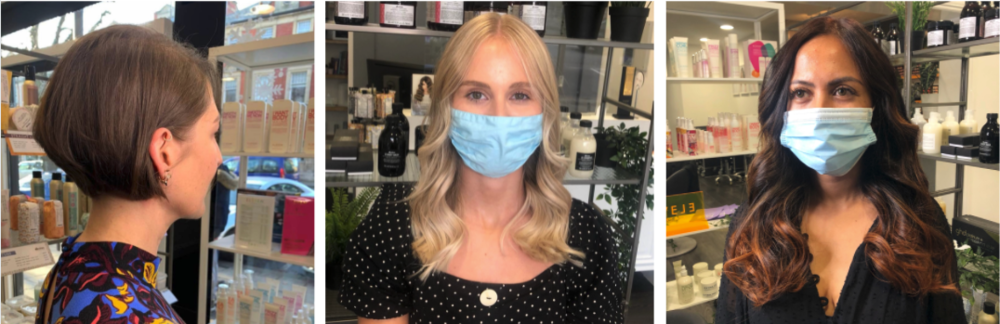
What’s my natural hair colour?
Hairdressing is like another language. Have you ever heard 2 colourists discussing formulas and wondered what they were on about?! This is because we often talk in numbers.
Let’s start with a little bit of the theory behind this secret language to give you some background. Everyone has a natural depth ranging from 1 (black) – 10 (lightest blonde). A base 7 can often be described as ‘mousy blonde’ whereas anything below a 6 looks brunette.
Then there’s the magic 3 letters D.O.P which is your natural distribution of pigment. Everyone’s hair contains red, yellow and blue tones, but the amount of each varies from person to person. If someone has naturally copper hair, they have an excessive red D.O.P, if someone’s hair always goes yellow in the sun it may have a yellow D.O.P and if someone’s hair looks inky and flat in tone, they may have a blue D.O.P.
It is also important to consider how much grey hair you have as this will often make your hair appear lighter or ashier.
To find your own natural hair colour first of all determine whether you would class yourself and blonde or brunette. Then consider whether it is light, medium or dark. Then look for the tones that reflect, you can often see little flecks of warmth amongst your natural hair.
For the most natural result we will always suggest that you stick to the same base level as your natural colour at the root. This is how we create or our seamless balayage blends from root to tip – by using a special formula that matches with your natural colour to blur away any regrowth lines.
We have a ‘rule of 2’ where we suggest that you shouldn’t go any more than 2 levels different to your natural base colour at the root. If you are looking for a very light, high contrast balayage on brunette hair we would always recommend a darker blonde at the root to help it blend.
What colour hair should I get if I’m going grey?
Grey hair is beautiful in its own right when paired with a great haircut and the right home care. However, if you are not yet looking to embrace your greys, you have 2 options – cover or camouflage!
To cover grey, we use Inoa, this is an oil based, no ammonia colour which gives luminous shine. We apply this directly to the scalp and cover all the hair or just the roots for maintenance appointments.
To camouflage we will either use Diarichesse, which is a quasi-permanent colour and apply it in the same way. This gives less coverage but a much softer grow out. For the most natural blend, we use a technique called baby lights which are super fine highlights. These mimic lighter pieces in the hair disguise greys as they mix in with the highlights.
What colour hair will best suit my skin tone?
Generally speaking, if you have a warmer skin tone you should stick to warmer colours and if you have a cooler skin tone stick to cooler colours. A good way to gauge what tone will suit you is to consider the colours of clothes that you are drawn to or whether silver or gold jewellery suits you more.
If you really struggle, have a look at the colour of your veins! If your veins look a more greeny colour this usually indicates you have a warm skin tone, whereas if your veins look more blue you probably have a cooler skin tone.
One way of characterising your features to gauge what hair colours will suit you is identifying your characteristics as either spring, summer, autumn or winter.
Summer:
- You have golden olive skin
- You tan easily and when you are tanned look very ‘bronzed’
- Eye colour can vary, but most summer people have golden flecks in their eyes which is visible in the light
If your features characterise you as ‘summer’ then you should stay away from ashy colours and tones with a blue or green base. We would also suggest staying away from black. Instead, anything with a yellow or orange base will look great, think golden blondes, caramel browns and butter/honey platinums.
Autumn:
- You have a rich, dark brown hair colour
- You tan easily and could have olive skin
- Your skin tone ‘glows’
- Your eyes are golden brown, hazel or green with golden flecks.
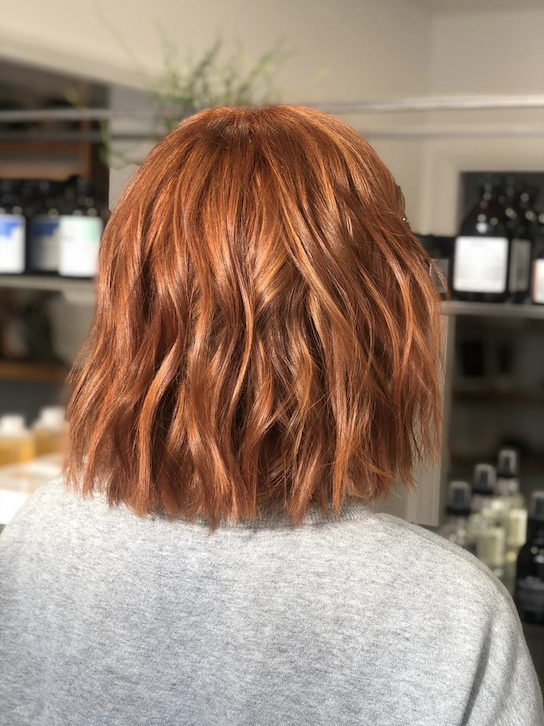
If your features put you in the autumn category you should steer clear from platinum blondes and ash browns, and much like summer avoid those blue and green undertones. Colours that would look great are those with an orange or red undertone. We’re talking warm, golden browns, honey or golden blonde, copper highlights and rich auburns.
CALL TO BOOK A COMPLIMENTARY CONSULTATION NOW
Spring:
- You will have fair skin with a more pink or yellow undertone
- You can tan, but not easily
- Your eyes are generally on the lighter side, pale blue, light green, light hazel or light golden brown
If you sound like you’re a ‘spring person’, we recommend not going for anything with an orange or overly golden base. Instead think colours that have a violet, blue or green base. You’ll look great with an icy blonde, platinum blonde or ashy brown.
Winter:
- You have lighter skin, with pink undertones. Your skin is fair for your ethnicity
- You do not tan easily
- There is a harsh contrast between the depth of your eyes, & hair
- Your eyes are blue, green, emerald green, dark blue or very dark brown
If you fall in to the ‘winter’ category it’s probably best to avoid golden blondes, copper reds, caramels and honey colours. However, you’ll look great with anything that’s got a blue, violet-red or violet base. Also, white and platinum blonde, and really dark brown or violet reds to bring out green eyes. If you have winter features, you’ll also be able to pull off jet black.
What’s the best colour hair for my eye colour?
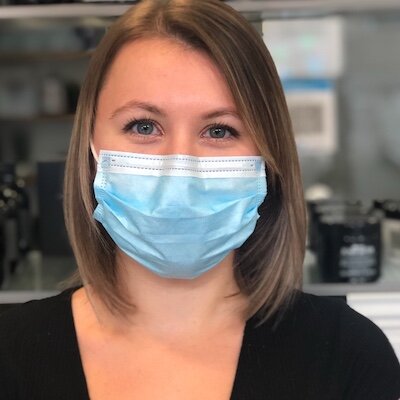
This is a pretty broad and sweeping rule but can be worth keeping in mind when considering switching up your hair colour. This doesn’t at all mean that if you deviate from these colours your hairstyle won’t suit you as factors such as skin tone can affect what colours and tones will give you that wow factor!
- Green eyes = auburn & coppers
- Hazel eyes = caramel & toffee
- Brown eyes = brunette, chestnut & chocolate
- Blue eyes = lighter & brighter, blonde
Blend VS Contrast
If your eye colour and hair depth is in the same range, you are considered a ‘blend client’ and it is recommended that you stay within one level of your natural base colour. For example, blonde hair & blue eyes or brunette hair and brown eyes. If your eye colour and natural hair depth are not in the same range, for example light eyes and dark hair/dark eyes and light hair you are a ‘contrast client’ meaning you can pull off more contrasting colours as both sides of the scale will suit you.
Whisper – Talk – Shout hairstyles
How much of a statement do you want to make with your hair? Do you want something soft, subtle and understated to enhance your hair with minimal commitment? Then you are a ‘Whisper Client’. Are you always looking to be on trend with the latest ‘it looks’, do you like to change your look with the season and love to come into the salon regularly? If so, you are a ‘Talk Client’. Do you want to make a statement and break the rules, have hair that gets people talking and loves more daring styles? Then you are a ‘Shout Client’.
CALL TO BOOK A COMPLIMENTARY CONSULTATION NOW
Choosing a hairstyle based on your age
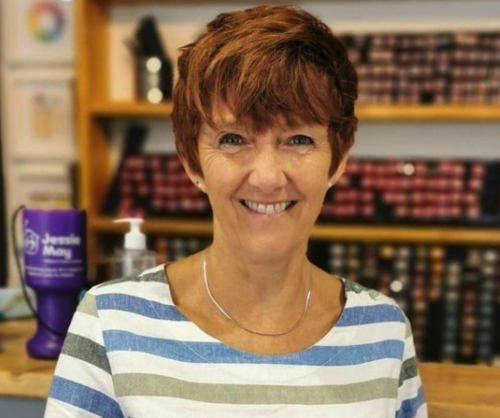
As we get older our skin tone changes and colours or styles we used to be able to carry, no longer work for us. People tend to go lighter with their hair colour and have softer shades like soft gold, beige, champagne tones. Lighter hair works better when you have a high percentage of grey hair, however that’s not to say going blonde is the best route if you’ve just noticed your first couple of ‘natural highlights’ as we like to call them!
Often going blonde in an attempt to camouflage grey is not always the best thing to do, if your hair is less than 70% dark, going lighter might actually make your roots look worse! The depth & tone of a colour is really important as if you get this wrong it can actually add the years on.
You want a colour that makes your skin look bright and fresh, not sullen and flat. Your Noco colourist will be able to determine the right depth, tone, technique and placement to suit you.
What hair style suits my face shape?
Contouring with hair colour works exactly the same as it does with makeup, adding depth to create shadowing and lightness to illuminate. With hair colour, we often use a darker base colour to create the illusion of more thickness at the root whilst having a variety of light and dark adds texture and creates the look of more volume. Lighter pieces are used around the face to draw attention to the jaw, cheek bones or eyes.
How does your hair type affect hair style choices?
Naturally curly is enhanced when you add different tones through the ends, the contrast helps to give definition to the curl. If your hair is naturally finer, keep your root darker for the illusion of more thickness and remember that finer hair is generally weaker and cannot handle extensive colouring processes (consider this if you are thinking of having a big change).
How to choose a haircut that suits you
Some of the other factors you may want to consider before deciding on your next do are the following.
- If you have narrow set shoulders, you could be better suited to shorter hair
- Whereas if you have broader shoulders, longer hair may be better for you
- Strong features such as defined jaw and cheek bones can be accentuated or softened. You could carry a strong A-line bob or if you want to soften your features, we can add feathering around the face
- If you have a rounder face, we recommend a longer hair style with a middle parting
- If you have a longer face, we recommend a style with width, possibly a side parting or cheekbone bangs
As you’ve probably realised, the factors underpinning your hair cut truly having that wow-factor vary hugely based on your natural features as well as preferences. That’s why at Noco we offer our ‘Beautiful You Consultation’ so you can find a hairstyle that suits exactly what you want.
CALL TO BOOK A COMPLIMENTARY CONSULTATION NOW
Do you know the difference between balayage and highlights?
Unless you’re a professional hairstylist, we don’t expect you to! The two styles are very similar on paper and can easily be confused, but they are actually entirely different styles.
If you’re looking to switch up your style and add some light to your look, either of these could be what you’re looking for. But you need to know the difference between them to make sure you get the style you’re dreaming of.
Lucky for you, we’ve got a guide to help you out. Read on to find out more about balayage vs highlights.
What is balayage?
The word balayage actually comes from the French word that means to sweep, and it’s very fitting for the technique! To get the sun kissed balayage look, colour is applied in a sweeping or stroking motion, and it’s always applied freehand with a brush and without foils.
Classic balayage is applied free hand however we often use foil or cling film separate each section
Although it’s become a super popular trend in recent years, balayage has actually been around for a while and its evolved quite a lot. In fact, the first balayage technique involved around 1,000 feet of cotton, which we definitely don’t use now! Just a quick Google search of balayage will show you just how much variation there is to the look, from soft and natural to high-contrast colours.
Foiliyage is a fork off of the balayage technique, and it uses a combination of different techniques foils to create a softer, more lived-in effect that than either balayage or classic highlights. It also intensifies the colour of a balayage, leading to a whole new style! At our salon, we often used foiliyage for clients who want to transition away from regular highlights or when we’re working with darker base colours.
If you wonder why our stylists bring out the foil for what you thought was a balayage, don’t worry! We’re simply using the foil to help separate each section and get better lift for a lighter, brighter colour and to avoid ashy tones. Classic Balayage is meant to be a warm, soft, and sun kissed look. If you’re after a cooler result, foils will help us get there.
Trust your colourist, foils no longer mean stripes but instead mean beautifully natural hair!
Benefits of Balayage
There are tonnes of balayage benefits that have contributed to it becoming such a popular style (aside from how gorgeous it is, of course). Let’s dive into them so that you can work out whether this is the right look for you.
Completely Bespoke to You
Because balayage is painted on with a freehand technique, your style is going to be entirely unique to you! There are no rules about where the colour should go up to or how much of your hair should even be coloured, so you can create the custom look you’ve been daydreaming about. Make sure to speak with your stylist first about what you want (pictures are always useful) and we’ll work with your hair to help create a bespoke look.
It’s Easy to Maintain
Balayage is super easy to maintain – much easier than a full head of colour or even just highlights! Part of the reason for this is because it doesn’t reach the root in most cases, instead blending into your root colour from the ends of your hair up. So, there’s no root regrowth to worry about!
You can just let your hair grow without worrying, although balayage on short hair might need more regular touch-ups to maintain. A lot of clients with longer hair can go months without a touch-up, which is brilliant if you’re super busy or don’t like to spend hours in the salon chair.
Great as an Introduction to Colour
If you’ve never tried a different colour in your hair, it can be scary! Balayage lets you try out a change without as much of a commitment. Rather than seeing a full head of different colour which can be overwhelming, you can blend your colour with your regular natural base for a less intense look. If you let us know you’re a little worried, we can make sure to do a more understated balayage, too.
If you love it, you can start to experiment more! With hair colours, it’s often about building confidence until you find your perfect colour.
Enhance Your Natural Colour
Balayage is a dream for making your natural colour pop! If you have mousy brown or even black hair, adding a light balayage can bring your look to life, creating a contrast that enhances your natural colour.
Low Commitment
Because we only colour part of your hair, it’s much less commitment than a full head. If you want to change your look with the seasons, we can do it easily! You’ll also experience less damage (especially when our professionals create your balayage) which is an added bonus.
Is Balayage Just for Blondes?
Definitely not! Balayage can be used on all-natural base colours, from dark brown to light blonde. The one thing to consider is that the darker your hair is, the warmer the result is going to be. This is because of the underlying pigment in your hair.
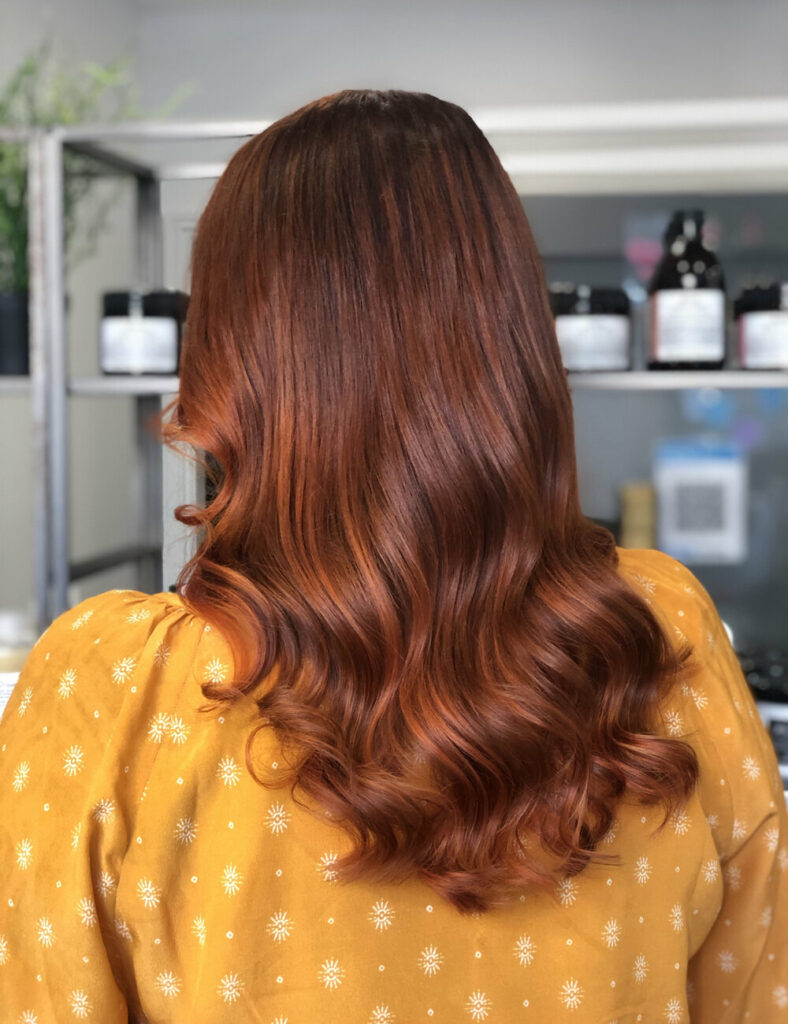
So, if your natural colour is brunette, the underlying pigment is going to be a red/orange tone, and when your hair is lightened, this is going to come through. Because the balayage look is meant to look natural, you can use your natural tone to pick your perfect balayage. Really, darker bases are suited to deeper colours, like dark red and mahogany, and chestnut tones which can be achieved using a balayage technique. If you’re want to lighten your hair by more than 1-2 levels, we will always recommend a foiling technique.
How to Choose Your Balayage Colour
When you’re in the salon, you can have a consultation to find your perfect colour. There are a number of things that can affect which balayage is going to look best on you, and let’s take a look at them!
Skin Tone
If you have a warm skin tone, you should stick to warmer and richer tones. Blondes will look great with bright, summer shades, and even apricot tones will look amazing! For brunettes or brown hair with highlights, try super sweet caramel and toffee tones.
If you have a neutral skin tone, opt for a more muted colour. Champagne blondes with iridescent and beigey hues are perfect for you.
Cooler skin tones are going to suit ashier tones that are clean and bright, like a beautiful platinum blonde – one of the most on-trend colours right now!
Blend and Contrast
Did you know that your eye colour can change the type of hair colour that’s going to suit you? The general rule is that light eyes with light hair should stay close to their natural colour. But, because balayage isn’t an all-over colour and we can adjust the placement to suit you, you don’t have to follow this rule quite so closely as your natural base will do the work for you.
If your eyes and hair are already in different ranges (like dark hair and light eyes), you’re in luck! You should be able to pull off pretty much any hair colour, so get ready for many envious looks.
How to Turn Ombre into Balayage
Ombre is the transition of one colour into another, blending the two for a seamless look. Usually, there are three tones moving from dark to light, with all ends lifted for an intense contrast. Balayage is a much softer look with a wider variety of tones and depths, giving you more dimension.
Another important difference is the colour blend. In ombre, the transition is horizontal, whilst balayage has a vertical blend.
How Long Does Balayage Last?
We’ve already mentioned that balayage is definitely a low-maintenance look, but how often you have yours touched up depends on the technique needed to achieve your perfect shade. In fact, we have clients coming in for touch-ups after 6 weeks, and others leaving their balayage for 6 months!
Whereas blonde hair highlights directly to your root will have a much more obvious regrowth. You’ll need yours topped up every 4-8 weeks depending on how quickly your locks grow.
How to Maintain Balayage and Highlights
Because balayage and highlights both lighten your hair, aftercare is vital! This will help you maintain your colour and save your locks from some serious damage. We love the Blonde Abslou Range from Kerastase, which has been specifically designed to nourish, protect, and strengthen your lightened hair, perfect for blonde highlights or balayage hair.
When you come to our salon, our hairdressers can also assess the health of your hair and advise you on the right aftercare. Your tresses need the right balance of moisture and protein to stay healthy.
Brittle hair is in need of hydration, whereas weak hair is in need of a quick protein hit! Too much or too little protein can lead to breakage, so trust your stylist’s advice after you’ve had your hair lightened.
If your colour is in need of a refresh, give a toner a try! These can’t lighten your hair, but they can neutralise unwanted tones and or add warmth leading to the perfect colour.
How to Style Balayage
Balayage always looks better with some kind of movement. Curls or waves really help to bring out the different tones and create more depth. A brilliant colourist should be able to give you a seamless balayage that works both on straight and wavy hair, but just remember that balayage and beachy waves were always destined for each other! Check out our tutorials on creating waves and texture.
Book in For Your Balayage
Now you know the difference between balayage and highlights, it’s time to decide which is the perfect look for you and book an appointment at our salon! With a team of trusted colourists, your hair is in good hands at NOCO Hair. If you’re still not sure what look you want, don’t worry; book in a consultation and we’ll help you find your dream look.
We recommend that all new colour clients visit us for a consultation prior to their appointment so that we can book you in for the right service…
Does diet affect hair growth? Yes, it does. Hair condition is one of the first places your body shows a nutritional gap. Not dramatically, not overnight, but over time the quality, density and growth rate of your hair reflects what you are putting into your body.
We talk about this in the salon regularly. Someone comes in frustrated that their hair feels thinner, grows more slowly, or keeps breaking. They have tried products, changed their routine, and nothing seems to stick. Often the answer is not on the shelf. It is on the plate.
Why food matters for hair growth
Hair is not essential tissue. The body does not prioritise it the way it prioritises your heart or your organs. When your nutrition is depleted or unbalanced, hair is one of the first things to suffer because the body redirects resources to what matters most for survival.
This is why crash diets, restrictive eating and sudden changes in nutritional habits can trigger noticeable hair shedding within a few months. The hair you lose today often reflects what was happening in your body two to four months ago.
The nutrients that matter most
You do not need a complicated supplement regime. Most people simply need more of what is already available in a balanced diet. These are the nutrients we talk about most in the salon.
What tends to cause problems
Deficiency is one side of it. But we also see clients whose hair suffers because of what they are doing to their diet rather than what they are missing from it.
Yo-yo dieting puts the body under significant stress and hair is often the visible consequence. Cutting out entire food groups, particularly protein or fat, removes the building blocks the hair follicle needs. Juicing phases that replace full meals can look healthy on the outside while quietly depleting the nutrients your scalp depends on.
The body is not designed to process dramatic nutritional swings. Hair, being non-essential tissue, reflects those swings quite clearly.
What you can do
Start with the basics before reaching for supplements. A varied diet with enough protein, plenty of vegetables and adequate healthy fats covers most of what your hair needs. Specific deficiencies are worth investigating properly through a GP or nutritionist rather than guessing.
If your hair has been noticeably thinner, shedding more or growing more slowly over the past few months, a blood test checking iron, ferritin, vitamin D and thyroid function is a sensible starting point. These are the markers we most commonly see linked to hair changes in the salon.
And remember, the hair you are seeing today is a reflection of what was happening two to four months ago. If you have recently improved your diet, the results will come. They just take a little time to show up.
When diet is only part of the picture
Nutrition is one piece of it. But hair condition is also influenced by stress, hormonal changes, the products you use, heat styling, and the physical condition of your scalp. A proper consultation looks at all of these together rather than treating them as separate problems.
If your hair has been concerning you and a dietary change has not made a difference, it is worth coming in for a proper assessment. We can identify whether the issue is nutritional, structural, scalp related or a combination, and give you a clear plan from there.
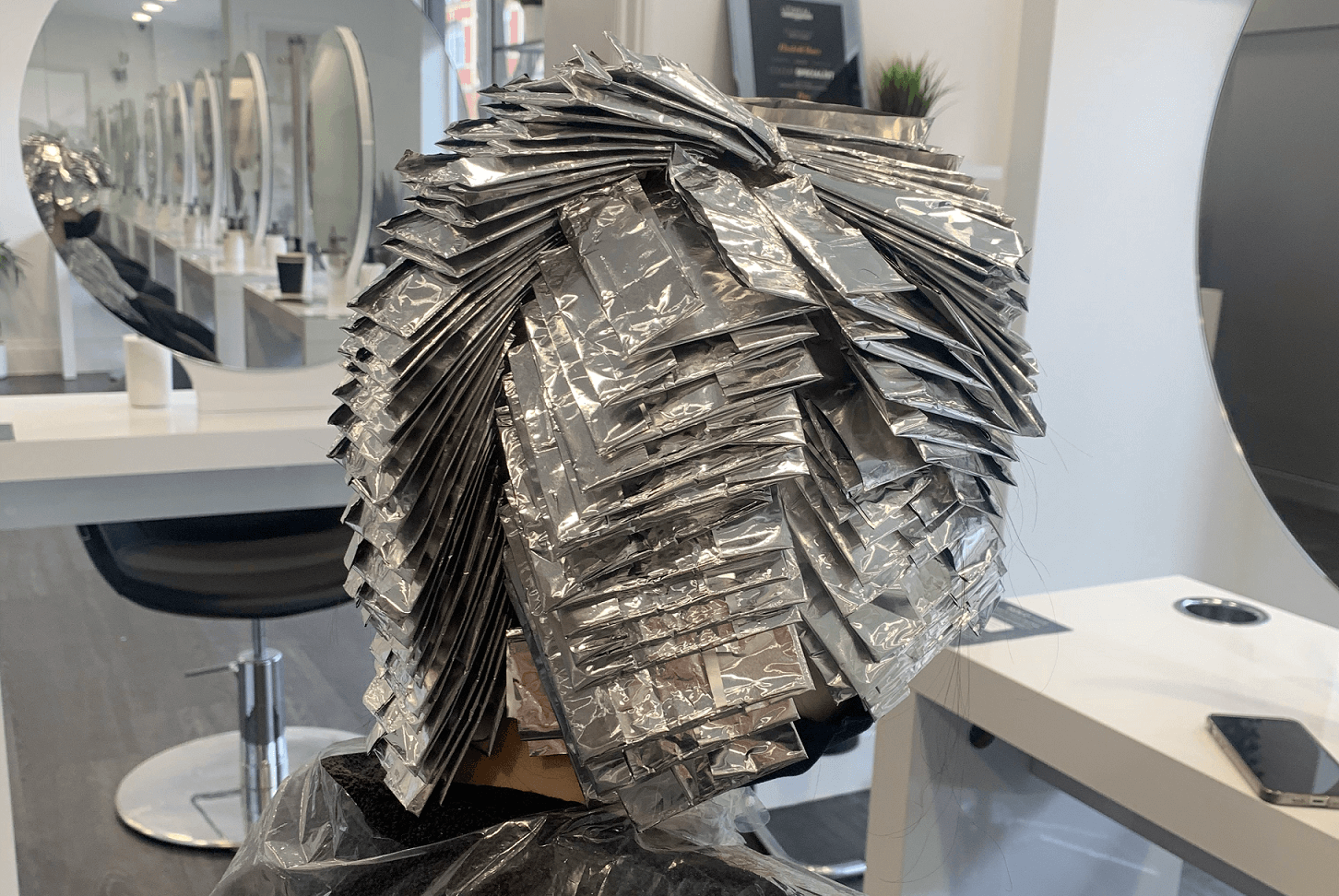
Bleach will always have some effect on hair structure. That is simply how the chemistry works. The question is not whether bleach causes damage at all, but how much, how it is managed, and whether the hair you have can handle what you are asking it to do.
Most problems with bleach happen either at home or when the condition of the hair is not properly assessed before the service begins. Both are avoidable with the right approach.
What bleach actually does to hair
Bleach works by opening the outer cuticle of the hair shaft and reacting with the melanin inside. This oxidises the pigment, effectively removing the colour. The melanin is not removed from the hair; it is rendered colourless.
Once the natural pigment is lifted, what remains is the underlying pigment of the hair. Darker bases reveal red tones first, then orange, then yellow as they lift higher. A pre-lightener lifts this underlying pigment out. A toner is then used to neutralise the remaining warmth and achieve the finished colour.
Breakage versus hair loss
Bleach does not typically cause hair loss from the follicle. What it causes is breakage, and the two are frequently confused. Hair loss means the follicle is shedding. Breakage means the hair shaft is snapping at some point along its length.
There are two types of structural damage to understand. Porous hair has damage to the cuticle, the outer layer. It feels dry and lacks moisture, usually caused by heat. Sensitised hair has damage to the internal structure, which changes the elasticity. Sensitised hair either snaps immediately when stretched or stretches too far and does not return, like chewing gum. Both need to be identified before any bleach service proceeds.
Going from dark to blonde
Moving from a dark base to a light blonde in a single session is not possible safely. Each bleach application lifts the hair a certain number of levels depending on the strength used, the development time and the starting condition of the hair. Attempting too much lift in one session risks over-processing, which in serious cases means the hair loses structural integrity entirely.
The right approach is to lift in stages with recovery time between sessions. After the first application, a toner is used to improve the result while the hair recovers. A minimum of two weeks is needed before assessing whether the hair is strong enough to go again. This process takes longer than clients sometimes want, but the alternative is compromised hair that cannot be repaired, only cut off.
Why home bleach is higher risk
Home bleach products are formulated for maximum lift because they are designed as a one-formula-fits-all solution. They cannot be adjusted for your specific hair condition, history or starting point. A professional mixes a bespoke formula based on your natural colour, previous colour history and current condition, then monitors the development in real time.
The other risk with home bleach is timing. The formula cannot tell you when to stop. Leaving bleach on too long causes accelerated damage and in extreme cases the hair structure can break down completely at the root and ends. At the salon this is prevented by ongoing visual and tactile assessment throughout the development process.
How to maintain bleached hair properly
Having had amazing Guest feedback, we’ve decided to give a special offer on NEW Keratin Hair Smoothing treatments in Clifton at NOCO Hair.
Winter haircare can be difficult, especially given the additional pressure we put hair under: cold and windy weather, indoor heating, and lots of hard rain.
December, January and February are particularly important ties of the year to ensure that hair is hydrated, de-frizzed, in pH balance, and well nourished.
Our Keratin Treatment (also called a Brazilian Blow-dry) offers an incredible level of hair smoothing, de-frizzing, and extra shine, which lasts up to 12 weeks. It also repairs hair, adding strength and elasticity.
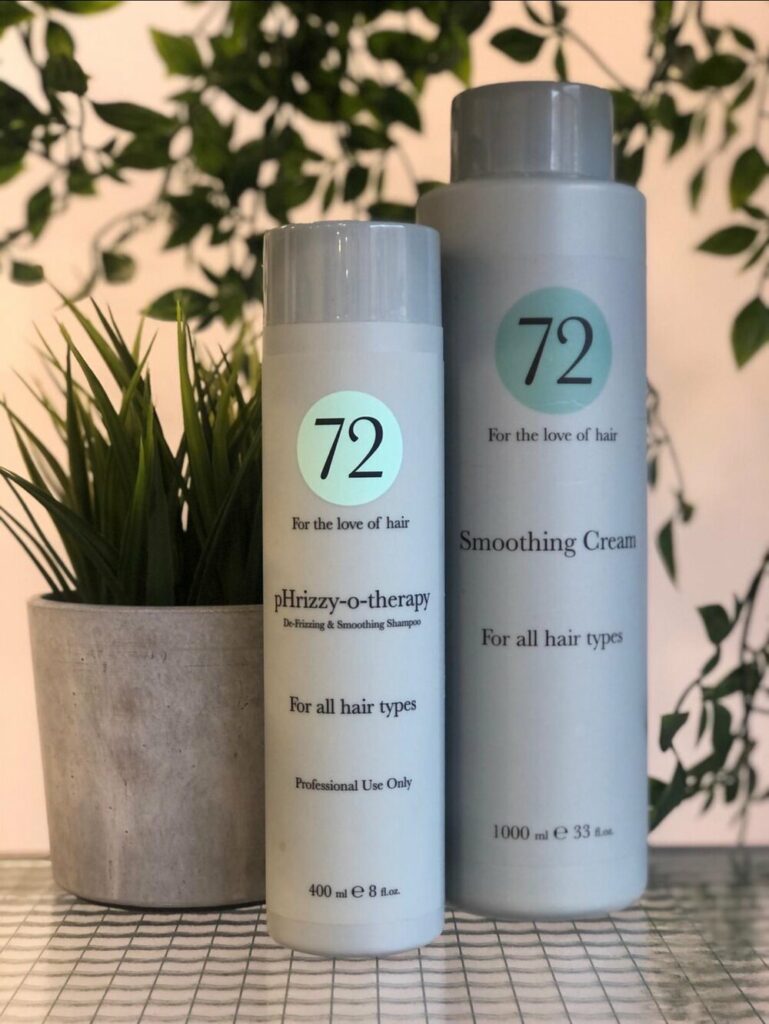
We use hair treatment products from a superb Brand called 72 Hair, which is also a Vegan-friendly range and is perfect for all hair types, as well as being formulated from plant extracts, organic amino acids and pure keratin.
The new pHrizzy-o-therapy Keratin Hair Smoothing treatment at NOCO Hair is a keratin complex treatment, which utilises two formulas.
The classic treatment is a cream formula which is blow-dried into the hair, whilst pHrizzy-o-therapy is a gel consistency formula that’s much lighter on the hair. Both hair smoothing treatments from 72 Hair give amazing results.
The pHrizzy-o-therapy process is simply, wash hair, treat, develop, rinse thoroughly, blow-dry then straighten.
To celebrate the gorgeous results Guests have seen so far in December, we’re offering £10 off all Keratin Hair Smoothing Treatments in Clifton at NOCO Hair.
Simply mention this blog post and quote ‘Smooth21’ when you book in with us to get the introductory deal on your hair smoothing treatment during January and February 2021.
To find out more about a recent review of the pHrizzy-o-therapy Keratin Hair Smoothing Treatment from 72 Hair, please visit here.
We recently wrote a blog post about hair care treatments for dry hair now available at our Clifton salon – please read here to find out more.
To see more of the amazing hair treatments and products we recommend in-salon at NOCO Hair, and which you can purchase online, please visit our Salon Shop here.