


The NOCO Go app, our NOCO Hair booking app, lets you book, move or check your visit whenever it suits you, even at midnight when you suddenly remember. Two minutes of setup and you are away.
Step 1. Download the app
Search NOCO Hair in the App Store or Google Play and look for NOCO Go, or tap this link on your phone and it will take you to the right store automatically: Download the NOCO Go app.
Step 2. Get logged in. This is the bit that matters
Been to NOCO before? Your details are already in our system, so do not create a new account. Tap Forgot password, enter the email we have for you, and set your password. That is it, you are in.
New to NOCO? Tap Create account and you are away.

Two doors. Been before? Yours is Login, then Forgot password.

Been before? This is your button.
Step 3. Book your visit
Choose your service, your stylist and your time. Done in under a minute. You can move or check your appointment from the same place whenever you need to.
Questions we hear a lot
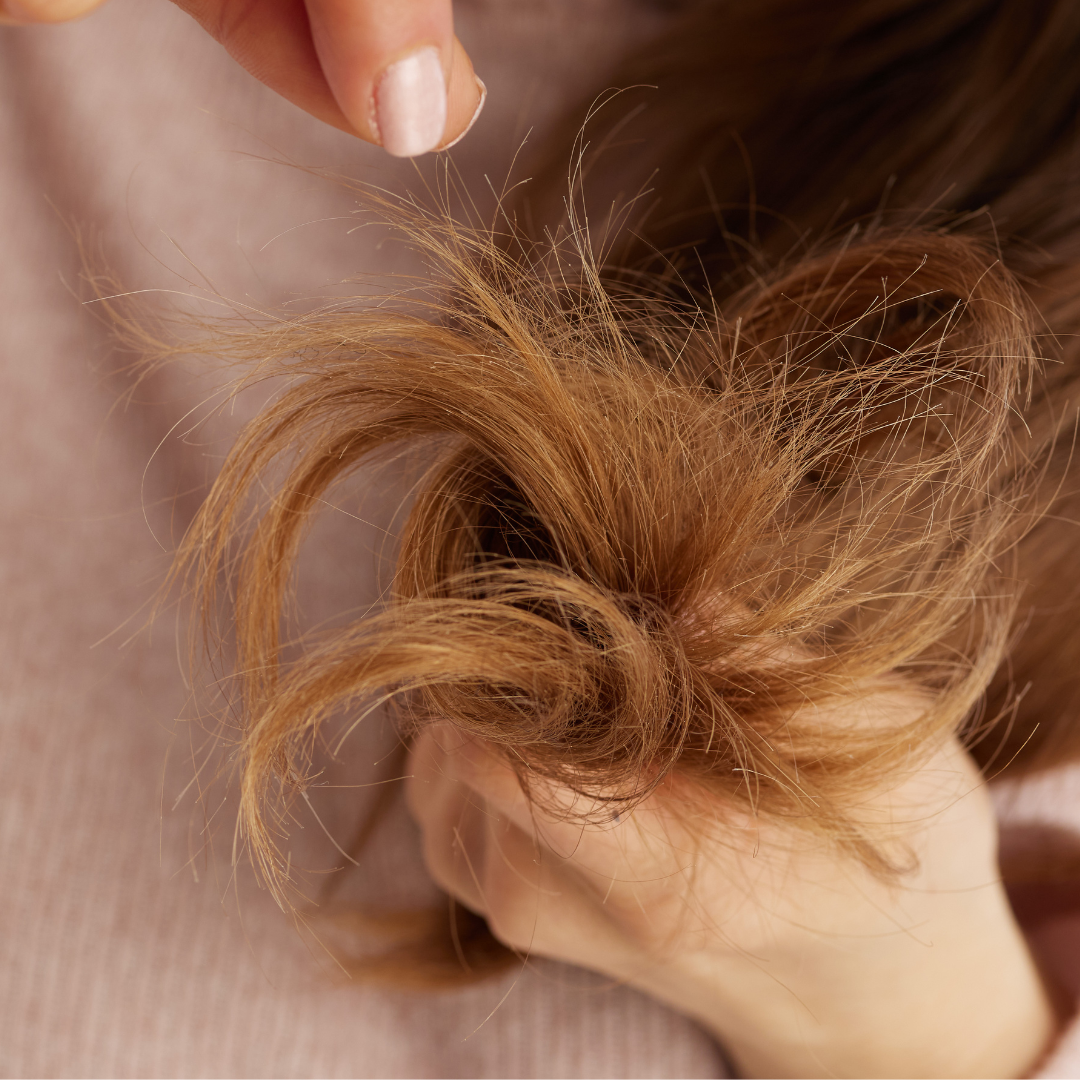
Frizz is not a hair type problem. It is a moisture problem. When the cuticle on the outside of your hair lifts, water gets in and out where it should not. Get those three things right and the frizz settles down on its own.
Why hair goes frizzy in the first place
Think of the cuticle on your hair like roof tiles. When the tiles lie flat, water stays out, light reflects, and hair looks smooth and shiny. When the tiles lift, water gets in, the inside of the hair swells, and you get that puffy, dry, frizzy look.
Summer makes this worse. Heat, humidity, sun, salt, and chlorine all lift the cuticle. The good news is the fix is simple. It comes down to three things you do at home.
Wash and Condition It Right
Most people get this part wrong. Use two shampoos when you wash your hair, then towel dry before you put conditioner on.
The first shampoo opens up the cuticle and pulls off product, oil, and dirt. The second shampoo gets in there properly and cleans the hair itself. Then wring it out and towel dry it before the conditioner goes on.
That step matters. If the hair is soaking wet, the conditioner just slides off. Towel dry first and the conditioner can do its job, which is to smooth those roof tiles back down so the hair feels soft and looks shiny from root to tip.
Dry It Properly With Heat
This one surprises people. The latest research shows that drying your hair fully with a hairdryer is better for it than letting it air dry.
When hair is left wet for a long time, water sits inside the cortex, which is the strong middle layer of the hair. That swelling causes tiny cracks and the hair loses strength. Dry it properly and you protect the cortex.
Use a medium heat setting. Hold the hairdryer about 15 cm away from your hair. Get it 100% dry. Not damp. Not nearly there. Properly dry.
Use an Oil or Leave-In Conditioner
Oils and water do not mix. Think of olive oil and balsamic vinegar in a bowl. They separate. Hair works the same way.
When you put oil on your hair, it pushes water out and seals the cuticle down. Water cannot get back in to swell the cortex. The hair stays smooth, the scalp stays calm, and the frizz settles.
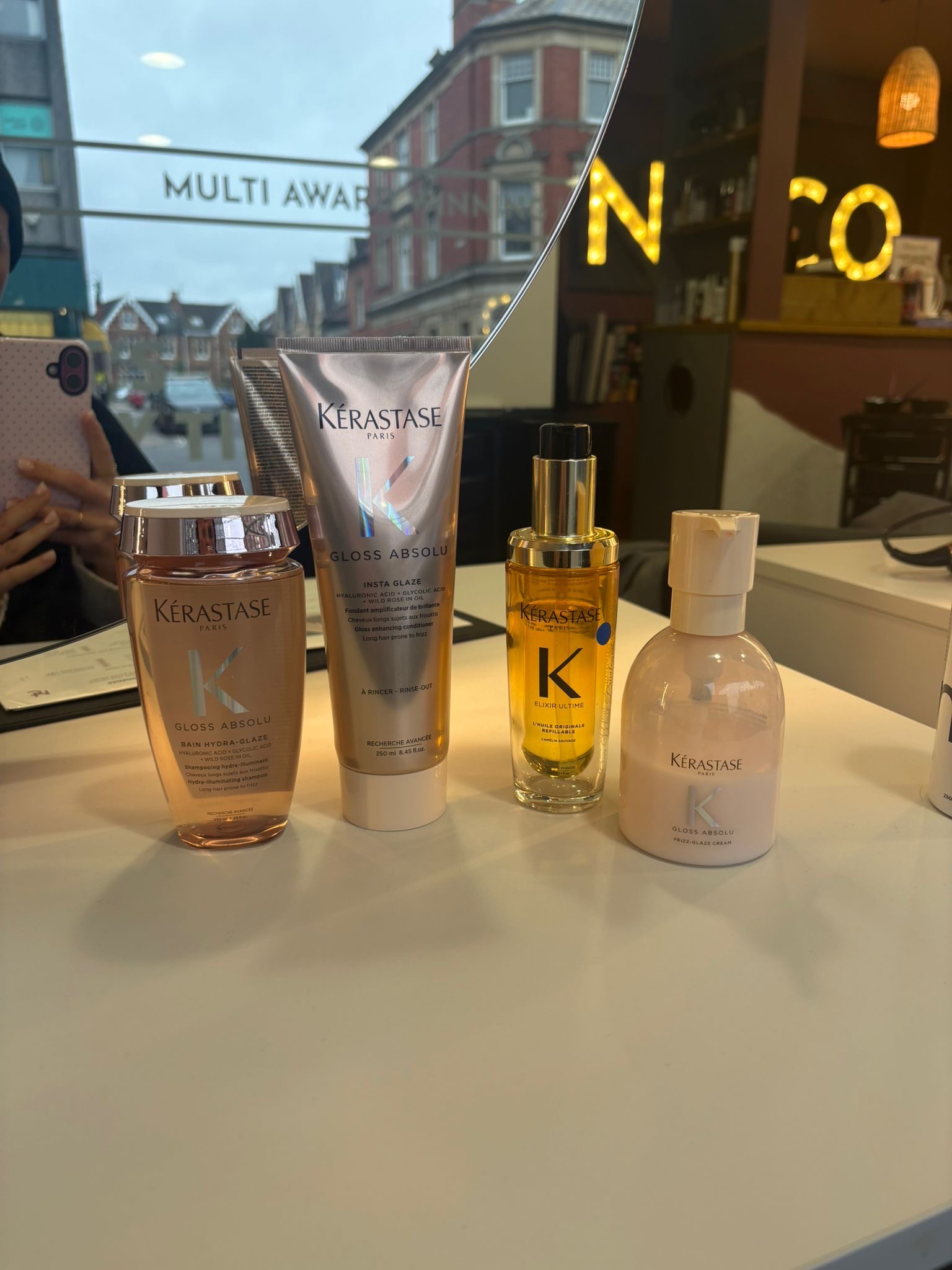
Leave-in conditioners do the same job. They sit on the hair, smooth the cuticle, and protect it through the day. We use Kerastase at NOCO because it works. But the principle is what matters. Use something. Every time you wash.
Put it all together
- Two shampoos. Towel dry. Then condition.
- Dry the hair fully on medium heat, 15 cm away.
- Finish with an oil or leave-in conditioner every wash.
Do those three things and the frizz settles on its own. No new shampoo needed. No magic product. Just the right order and a bit of attention.
Take the free NOCO Hair Score and get a clear picture of where your hair is and what it needs.
Take the Free Hair ScoreWhen to come in
If your hair has been feeling dry and frizzy and the home routine is not shifting it, it is worth getting it properly looked at. At NOCO we use the Kerastase K-Scan to see what is happening with your scalp and the condition of your hair before we recommend anything. Sometimes the answer is a treatment. Sometimes it is a small change at home. Either way, you leave knowing what to do.
 Before
 After
After
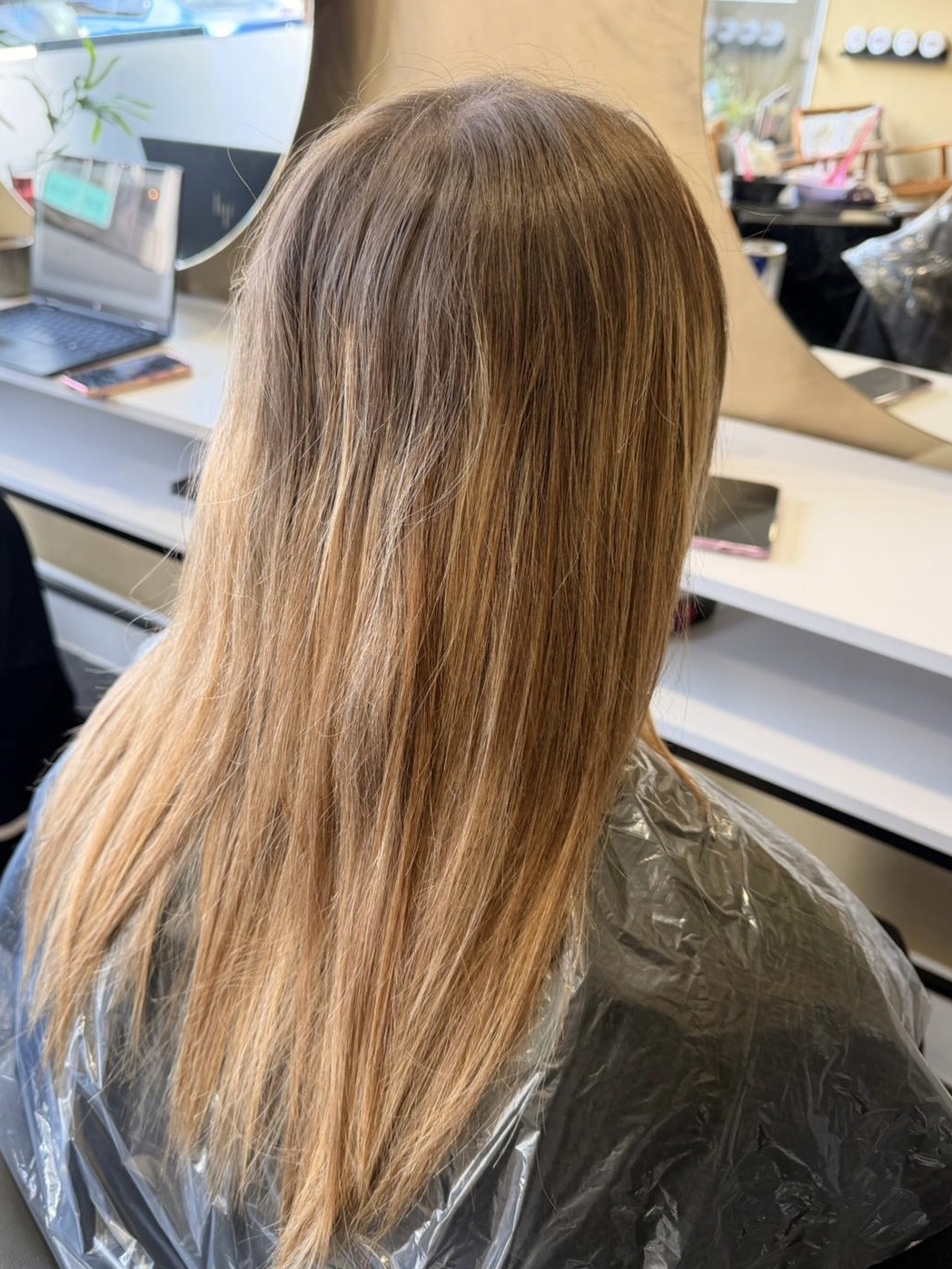
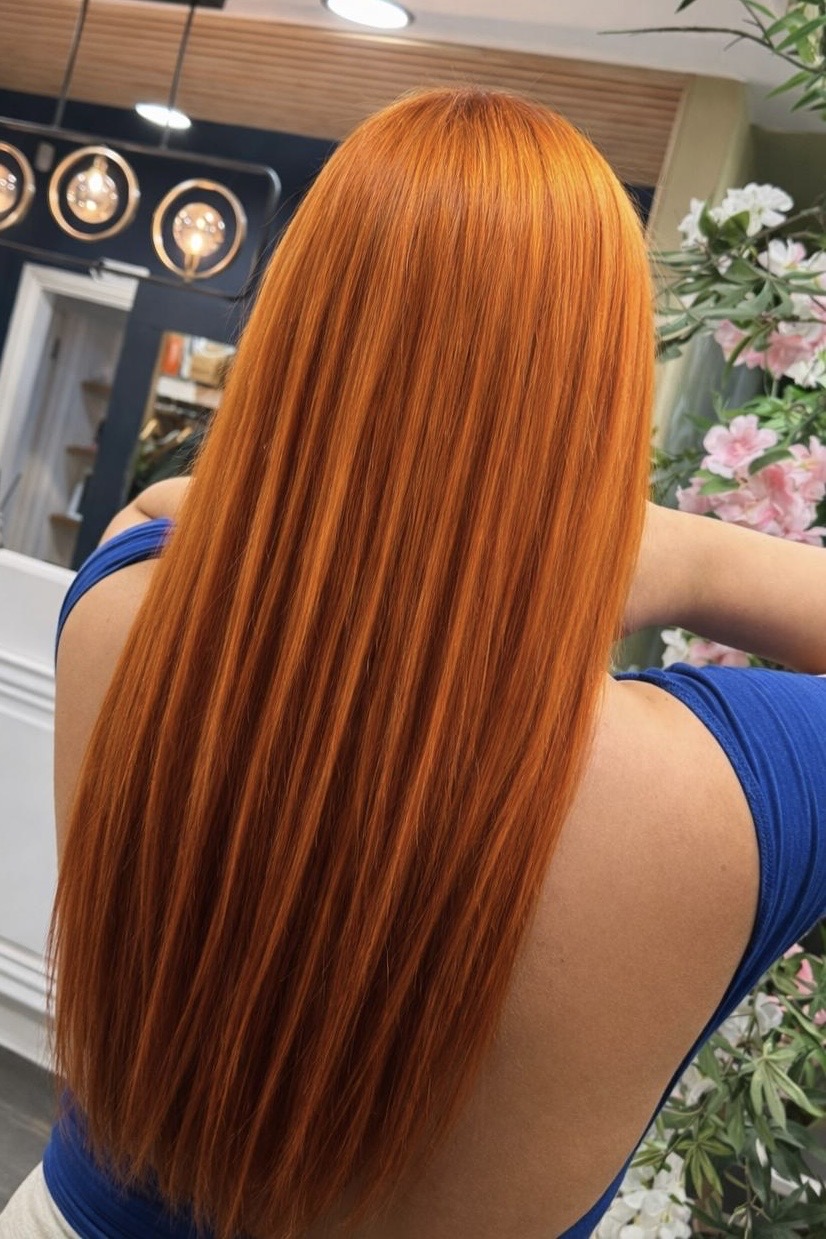
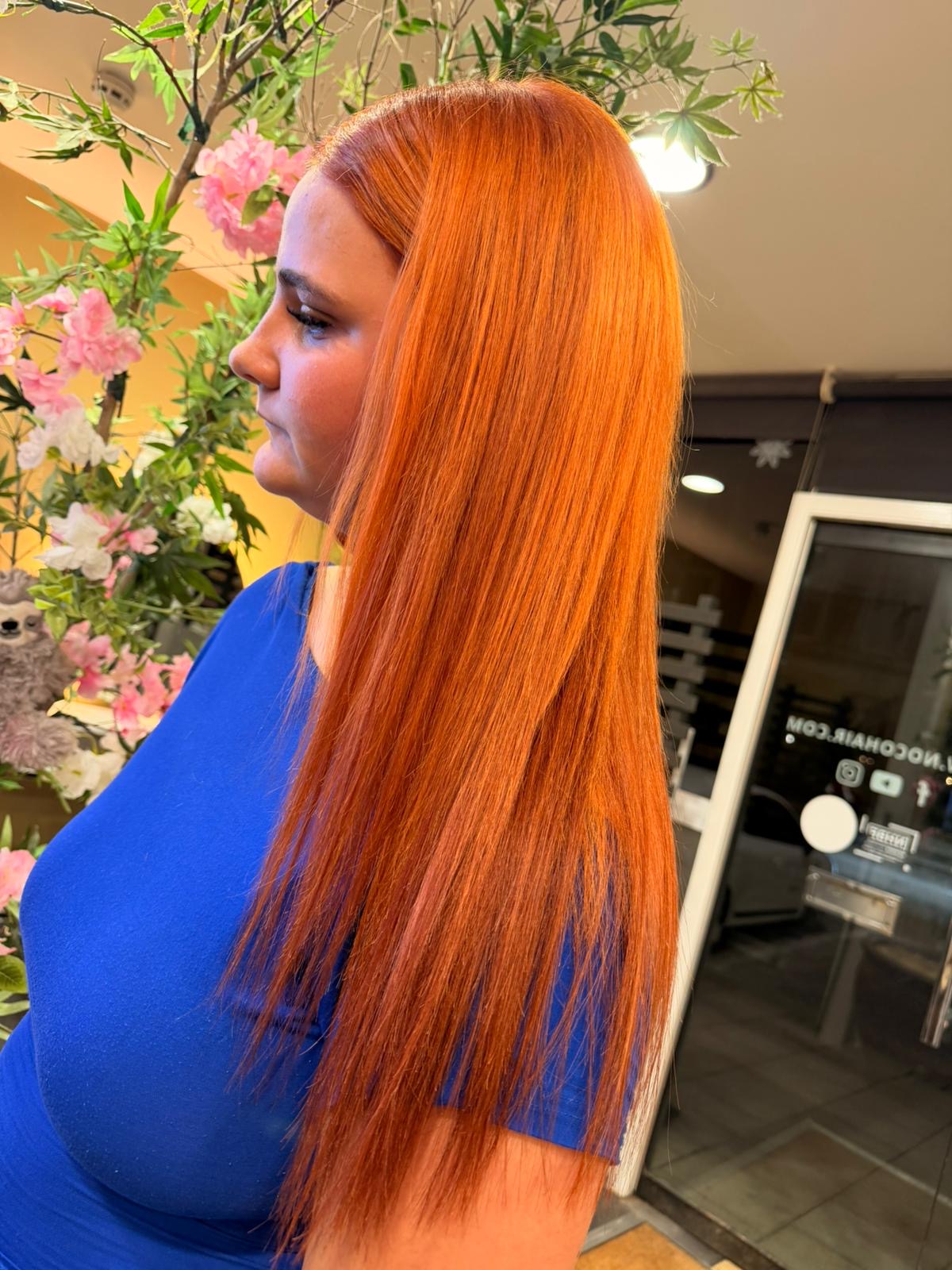
Phoebe’s hair was blonde but it did not feel like her. Not vibrant enough. Not thick enough. Not quite right. After an extensive consultation with Grace, the plan became clear. Bright copper colour, matched with tape-in extensions. This is what happened.
Where we started
Phoebe came in with a history of highlights that had grown into a soft balayage. Her hair was blonde and in good condition, but she felt it lacked vibrancy and volume. She wanted something with more presence. More colour. More her.
The challenge was getting there safely. To achieve a true copper result, we needed to lift the hair significantly while keeping it healthy enough to take the tone — and then match everything with tape-in extensions for the length and thickness Phoebe wanted.
That kind of result takes planning. Grace spent time in the consultation understanding exactly what Phoebe was asking for, what her hair could realistically achieve, and what the process would look like across the appointment.
The technical process
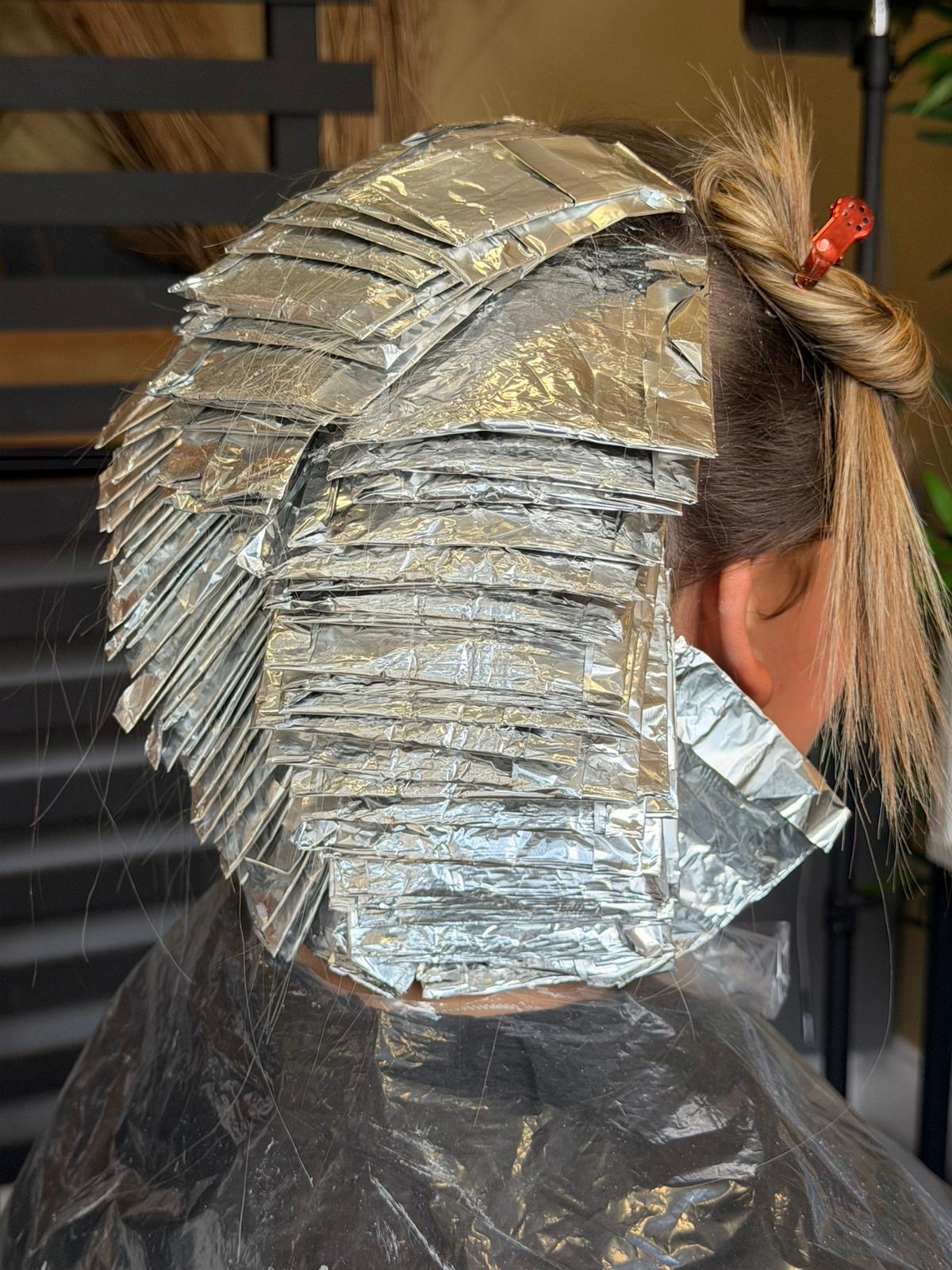
This was a considered, multi-step colour appointment. Grace worked methodically through each stage to make sure the result was both vibrant and consistent.
The investment
A result like this involves multiple services delivered across a long appointment. Here is a transparent breakdown of what the appointment included.
Refer a friend and receive 25% off your next appointment.
Thinking about a colour change?
A transformation like this starts with an honest conversation. We look at your hair history, what your hair can realistically achieve, and what the process will actually involve. No surprises. No rushing. Just a clear plan before anything begins.
If you have been thinking about going warmer, brighter or more copper, a consultation at NOCO is the right first step.
Grace is a graduate colourist and stylist at NOCO Hair Bristol. This copper transformation demonstrates her ability to plan technically complex appointments and deliver results that genuinely exceed expectations.

What happens on the outside is a reflection of what goes on on the inside. If your hair has been feeling more lank, thinner, or harder to manage, the answer is more likely to be in your diet than in a new shampoo.
You are currently viewing a placeholder content from YouTube. To access the actual content, click the button below. Please note that doing so will share data with third-party providers.
More InformationWhat Tim Spector actually said
Professor Tim Spector, founder of the Zoe nutrition programme and one of the UK’s leading voices on gut health, has talked extensively about the benefits of black coffee for the microbiome. His recommendation of three cups of black coffee a day is not about the caffeine. It is about the polyphenols in coffee that feed the beneficial bacteria in your gut.
A healthy microbiome means better nutrient absorption. And better nutrient absorption means the vitamins and minerals your hair follicles need are actually getting to where they need to go.
So does coffee actually help hair growth?
Indirectly, yes. The connection runs through your gut. If your gut health is in good shape and your body is absorbing nutrients properly, your hair benefits. Coffee, specifically black coffee without sugar or milk, contributes to that gut environment.
There is also separate research on topical caffeine and hair follicle stimulation, but that is a different conversation. For most people the simplest starting point is just drinking good quality black coffee regularly and paying attention to the broader diet picture.
What should you actually do?
If your hair has been feeling different lately, the question worth asking is not what shampoo to switch to. It is what has changed in your life in the last three to six months. Stress levels, diet, sleep, hormones. Hair growth cycles run on a delay of around three months, so what you are seeing now reflects what was happening then.
- Three cups of good quality black coffee a day if you tolerate caffeine well.
- Oily fish two to three times a week for omega-3 fatty acids that support scalp health.
- Reduce ultra processed food, which disrupts the gut environment that supports nutrient absorption.
- Get your iron and ferritin levels checked if you have noticed increased shedding. Low ferritin is one of the most common and most overlooked causes of hair loss in women.
Take the free NOCO Hair Score and get a clear picture of where your hair is and what it needs.
Take the Free Hair ScoreWhen to come in
If your hair has been changing and you are not sure why, the most useful thing you can do is have it properly assessed. At NOCO we use the Kerastase K-Scan to get a clear clinical picture of your scalp and hair condition before we recommend anything. It takes the guesswork out of it.

A new study has ranked the City of Bristol as the second worst place in the UK to keep your hair healthy, with a risk score of 73.5 out of 100. North Somerset topped the list as the single worst local authority in the country. Bath and North East Somerset also made the top five worst areas. That is three locations in our region in the bottom five nationally.
We are not surprised. At NOCO Hair on Whiteladies Road, we have been seeing more clients coming in with hair loss, thinning and scalp concerns than ever before. Now we know part of the reason why.
What is actually causing it?
The study looked at three key environmental factors: water quality, air quality and UV levels. Bristol scored a perfect 10 out of 10 for poor water quality. That means the water coming out of your taps is one of the most damaging in the country for hair and scalp health.
Hard water contains high levels of minerals including calcium and magnesium. Over time these build up on the hair shaft and scalp, making hair feel rough, dry and brittle. They also interfere with how well shampoo and conditioner work, meaning your products are less effective than they should be.
The South West also ties for the highest UV levels in the UK alongside the South East. UV exposure damages the outer layer of the hair shaft and can accelerate pigment loss, meaning hair can go grey earlier than it otherwise would.
What you can do about it
You cannot change the water or the weather. But you can change how you manage your hair in response to the environment you live in. These are the things that make the most consistent difference.
The NOCO Hair Score gives you a number, a band and a clear next step. If you live in Bristol or the South West, this is worth doing.
Take the Free Hair ScoreWhen it is worth coming in
If you have been noticing more hair in the shower, thinning at the crown or temples, a drier or itchier scalp than usual, or hair that just does not feel the way it used to — it is worth having it properly assessed rather than guessing.
At NOCO Hair we use the Kerastase K-Scan consultation, which gives us a detailed clinical picture of your scalp and hair health before we recommend anything. It removes the guesswork and gives you a clear starting point. From there we can design a plan that actually addresses what your hair needs — not just a product recommendation off the shelf.
And if all else fails — you could always move to Scotland.
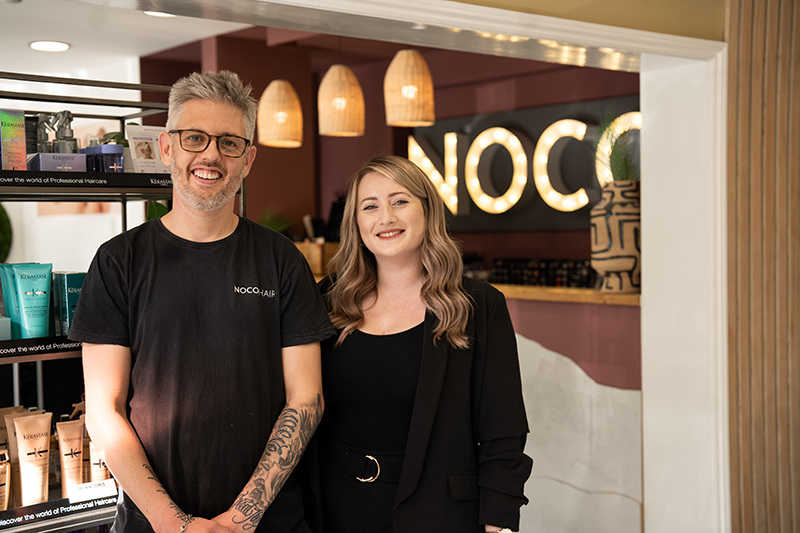
Hairdressing is as much about how you make someone feel as how they look. That has been true from day one at NOCO and it shapes every decision we make — about how we consult, how we train, how we give back, and what kind of place we want to be for the people of Bristol.
We opened NOCO Hair in 2018 with a clear idea of what we wanted to build. Not just a great salon. A place where people could step out of their hectic lives, leave their worries at the door and feel genuinely looked after. Hair, body and soul.
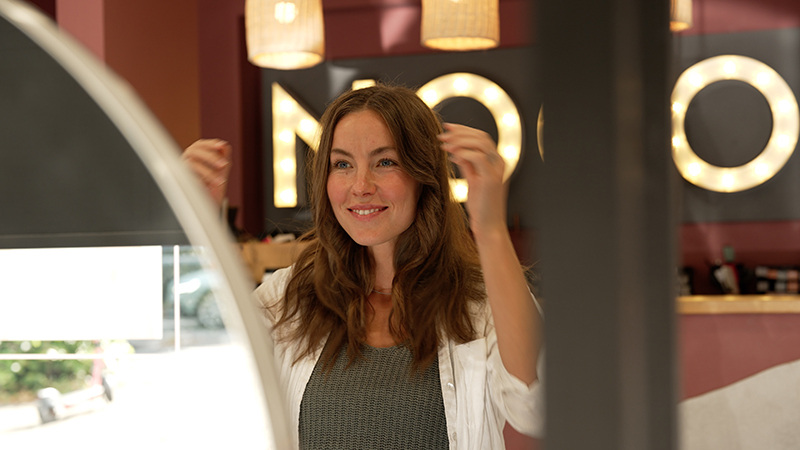
The relationships are the work
People sometimes ask what makes NOCO different. The honest answer is the relationships. The consultation is not a formality we go through before the real work starts. It is the real work. Understanding who someone is, what their hair has been through and what they actually want their life to look like — that is where everything begins.
We have had clients sit in the chair going through something enormous. A diagnosis. A bereavement. A life change they were not ready for. The haircut is almost beside the point in those moments. What matters is that they felt heard, looked after and, when they left, a little more like themselves.
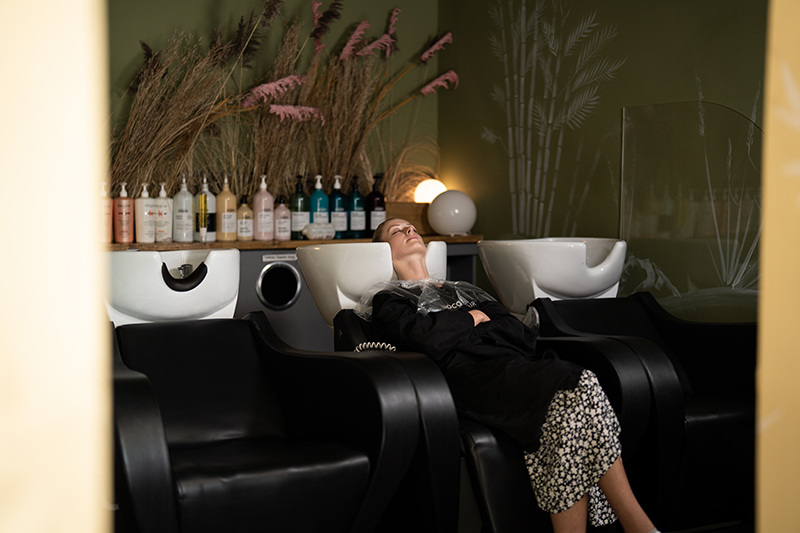
The wash. One of the most underrated moments in a salon visit.
Where it comes from
The Care with Hair campaign grew from a single moment that made everything clear. Years ago, I was invited to give a final haircut to one of my oldest clients, Megan, in hospice care. That visit changed how I think about what we do. A haircut is not just about how someone looks. It is about being present with another person. Seeing them. Caring for them at a moment that matters.
That one act became the foundation for everything Care with Hair has grown into — over £15,000 raised for Bristol charities, 300 free haircuts given to people who needed them most, and a team that genuinely believes business should do good, not just do well.
What the salon looks like now
The salon you walk into today on Whiteladies Road is the result of everything that has happened since 2018. The award within our first year. The lockdown that nearly ended it. The BBC Interior Design Masters transformation that gave the space its Japandi identity. And the team that has been built around a shared belief in doing this properly.
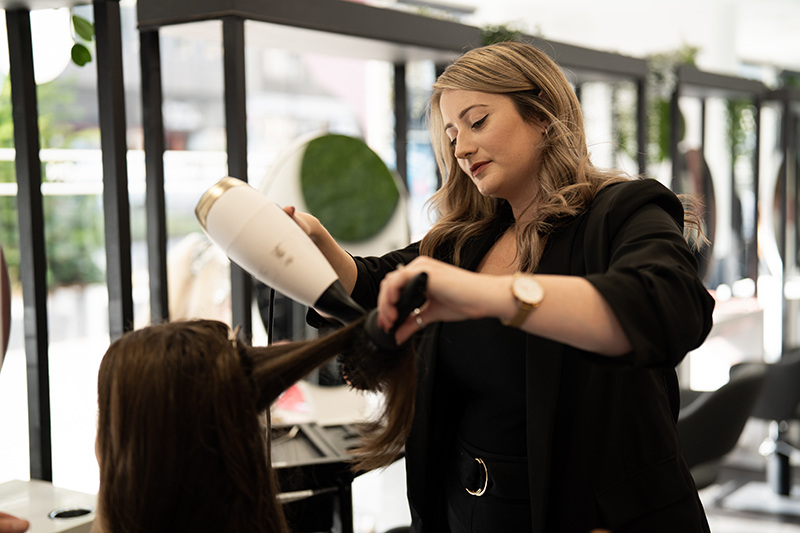
Corey Taylor at work. Co-founder, Managing Director and L’Oréal Colour Specialist.
Every detail in the salon is intentional. The drinks menu. The plants. The relaxation zone with its floor-to-ceiling bamboo mural. The massage chairs. The burnt orange, navy and yellow that run through the space. All of it exists to serve one idea: that when you are here, you should feel somewhere better than where you started.
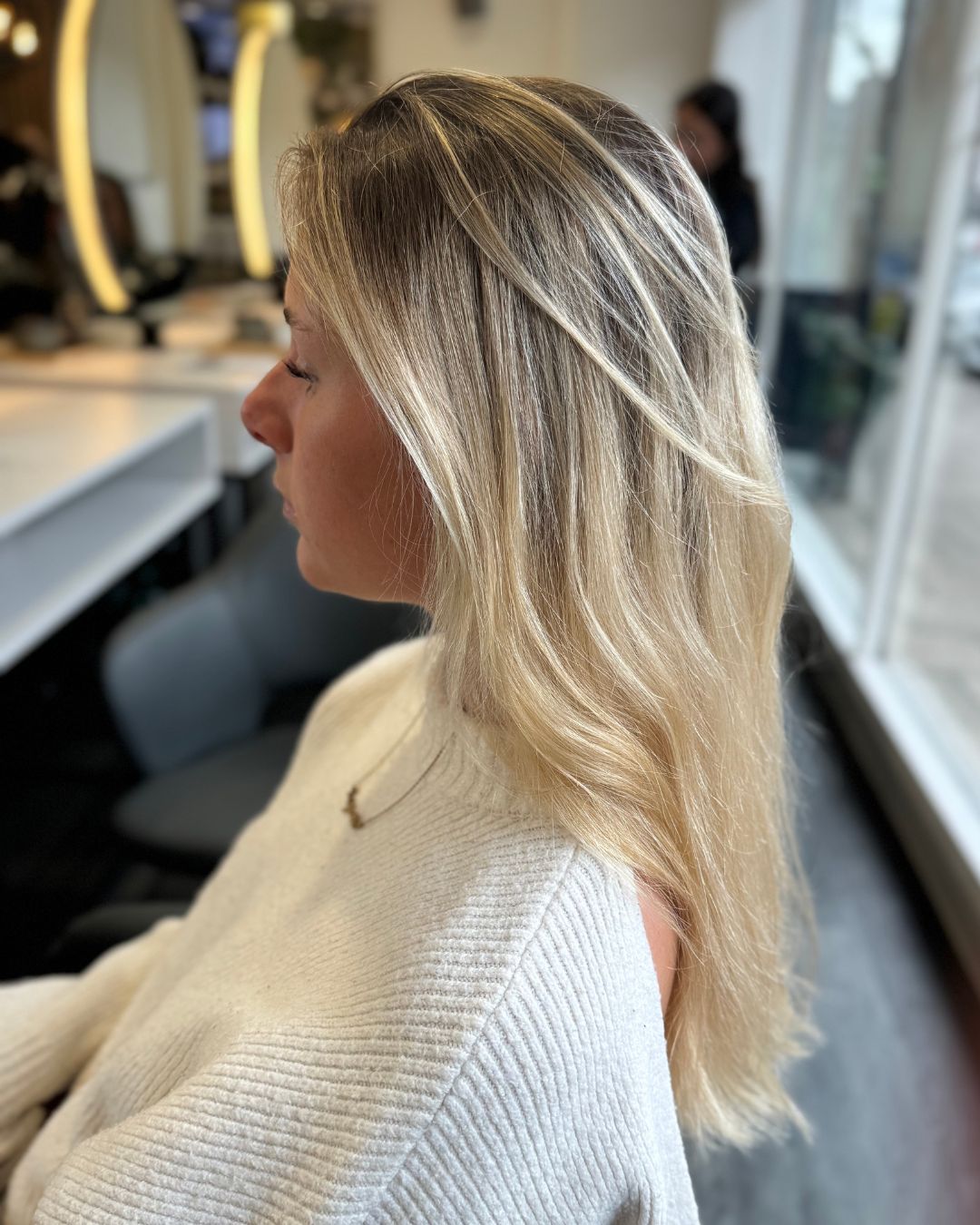
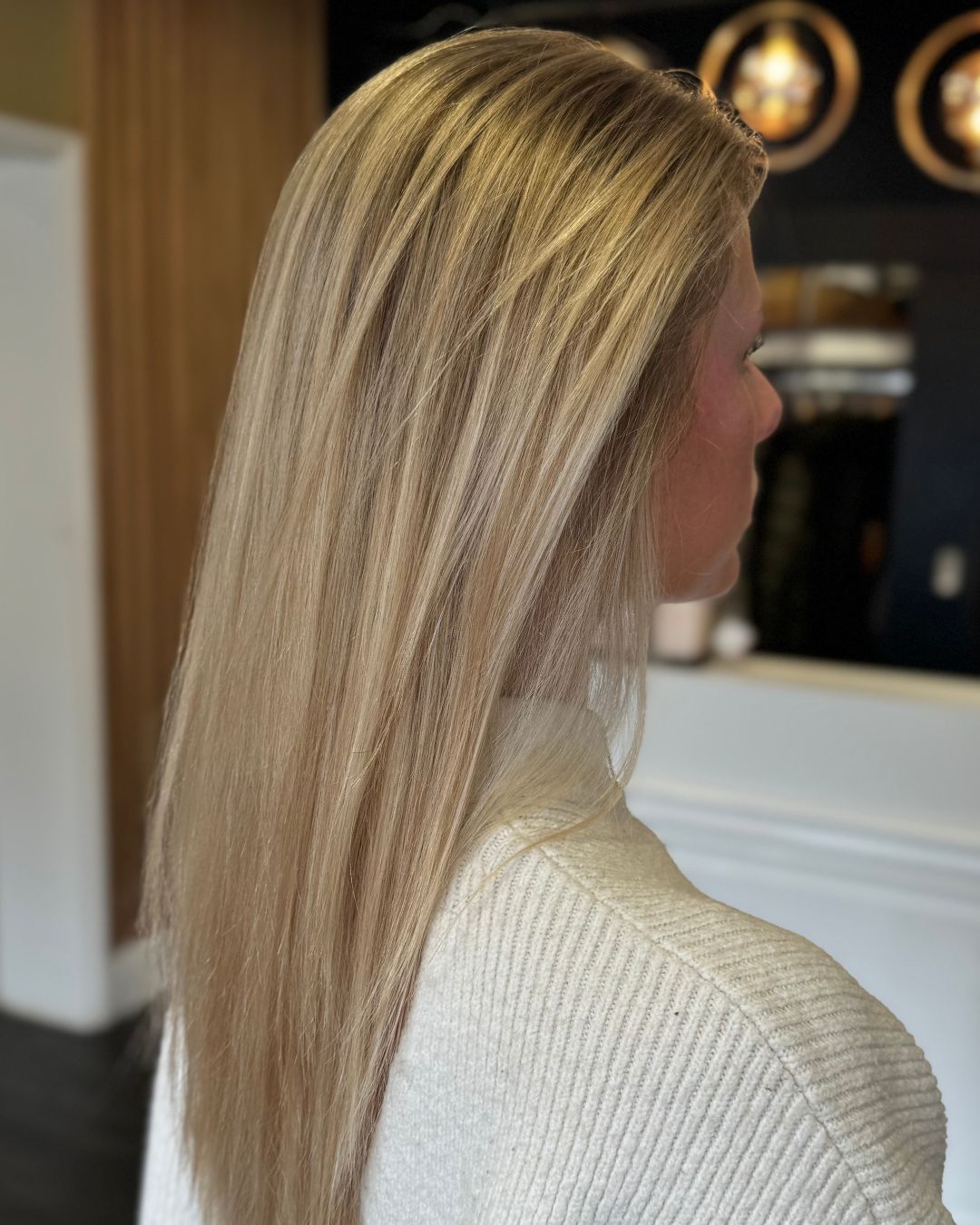
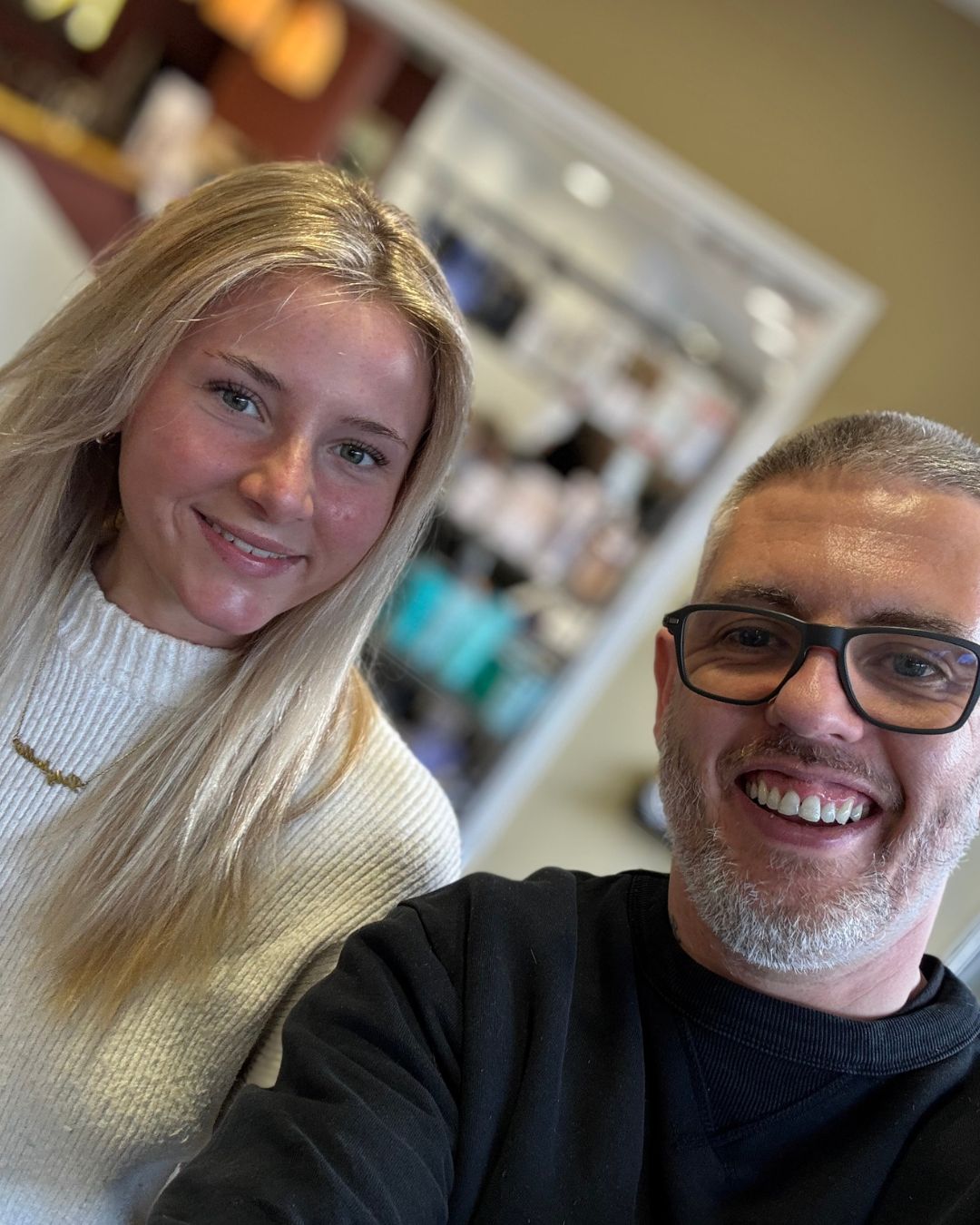
Blonde highlights in Bristol done well start with a conversation not a colour chart. For Lilybelle at NOCO Hair Bristol, that conversation changed everything. She did not just want lighter hair. She wanted to feel fresh, vibrant and confident walking out of the salon. Catching the light was the goal.
That is the conversation that shapes everything that follows.
Where she was starting from
Lilybelle had last been in for colour six months earlier, back in September. Her natural regrowth had come through noticeably darker at the root, creating a visible contrast against her lighter ends. The lengths were in reasonable condition, but the overall effect was heavy and flat. The brightness that had made her hair feel alive was gone.
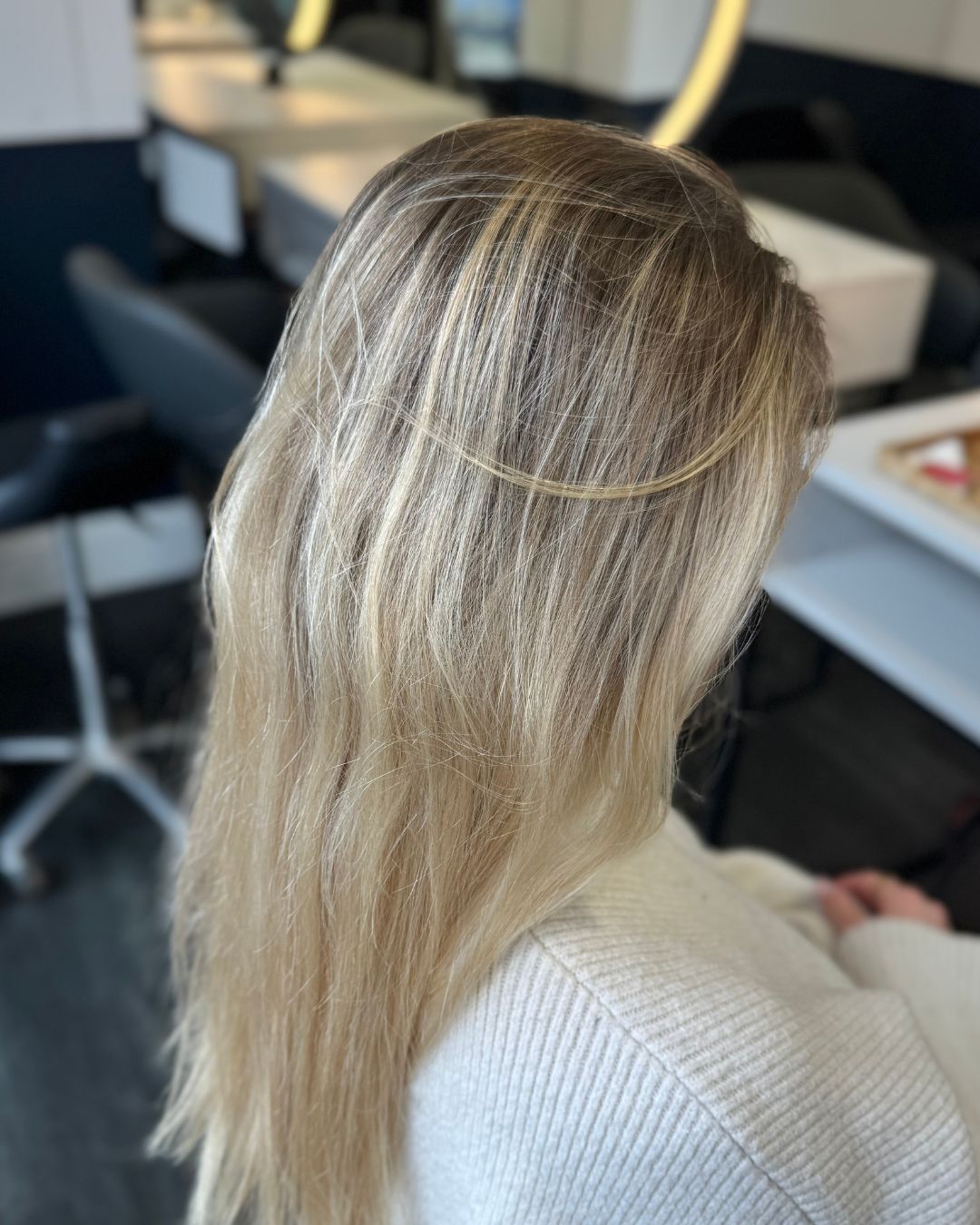
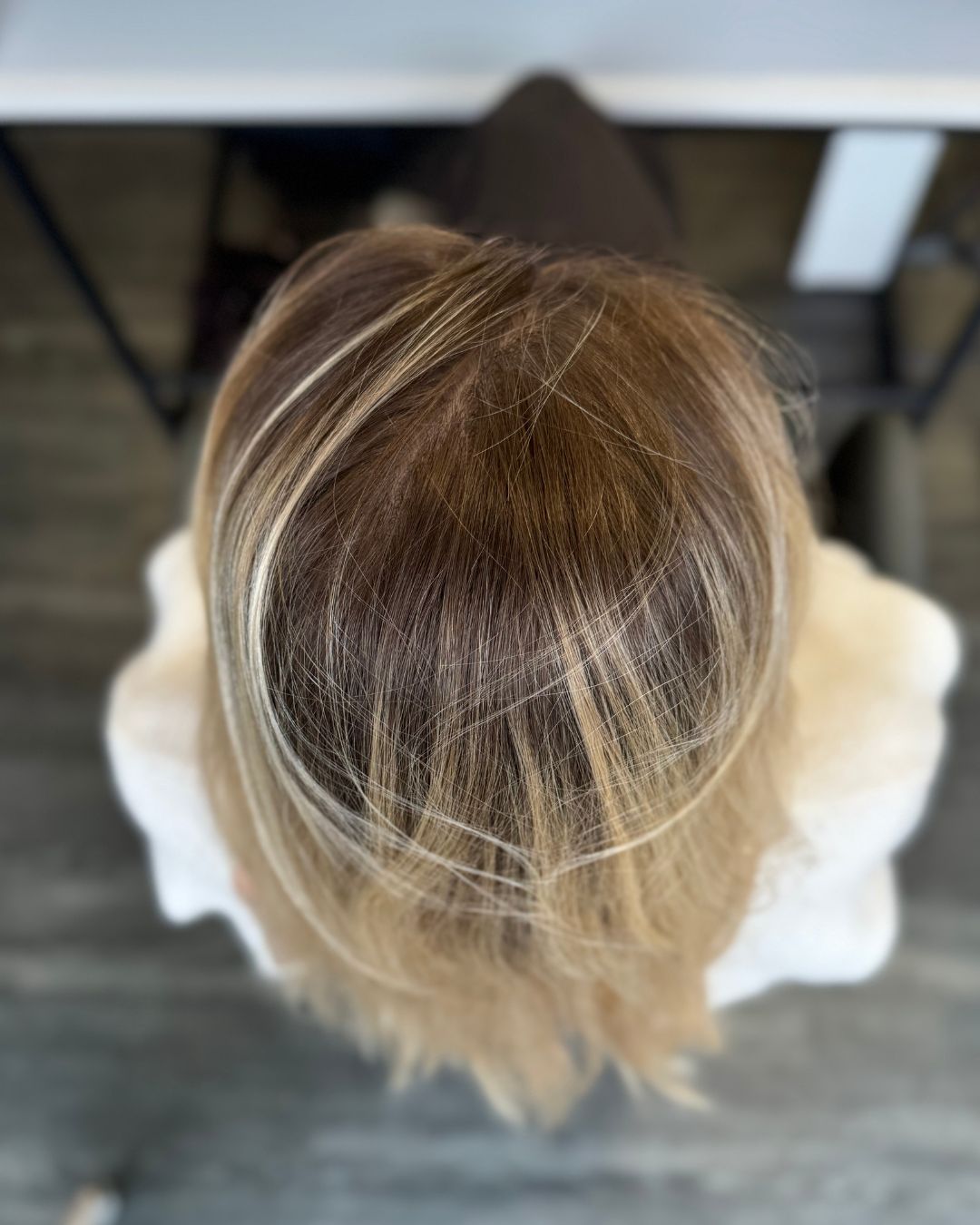
The top down photograph says it most plainly. A wide band of darker natural growth contrasting against the lighter blonde below. Not damaged. Not in bad shape. But flat, heavy and without energy.
What she told us in the consultation
We took Lilybelle through our full consultation before touching a thing. She was clear about what she wanted and equally clear about what she did not want.
What she wanted: Brightness back, especially around the face. A warm, creamy blonde with dimension. Something that looked healthy and luminous. The feeling she had when she left after her September appointment.
What she did not want: Nothing ashy or cool. Nothing too dark. No brassiness. And above all, she wanted the condition of her hair protected throughout.
The inspiration

Lilybelle came with reference images showing long, layered blonde hair with soft dimension. Both had the same quality she was drawn to: brightness around the face, warmth through the lengths, and a lived-in quality that felt effortless rather than overdone. That brief guided every decision in the process that followed.
Our approach to blonde highlights in Bristol
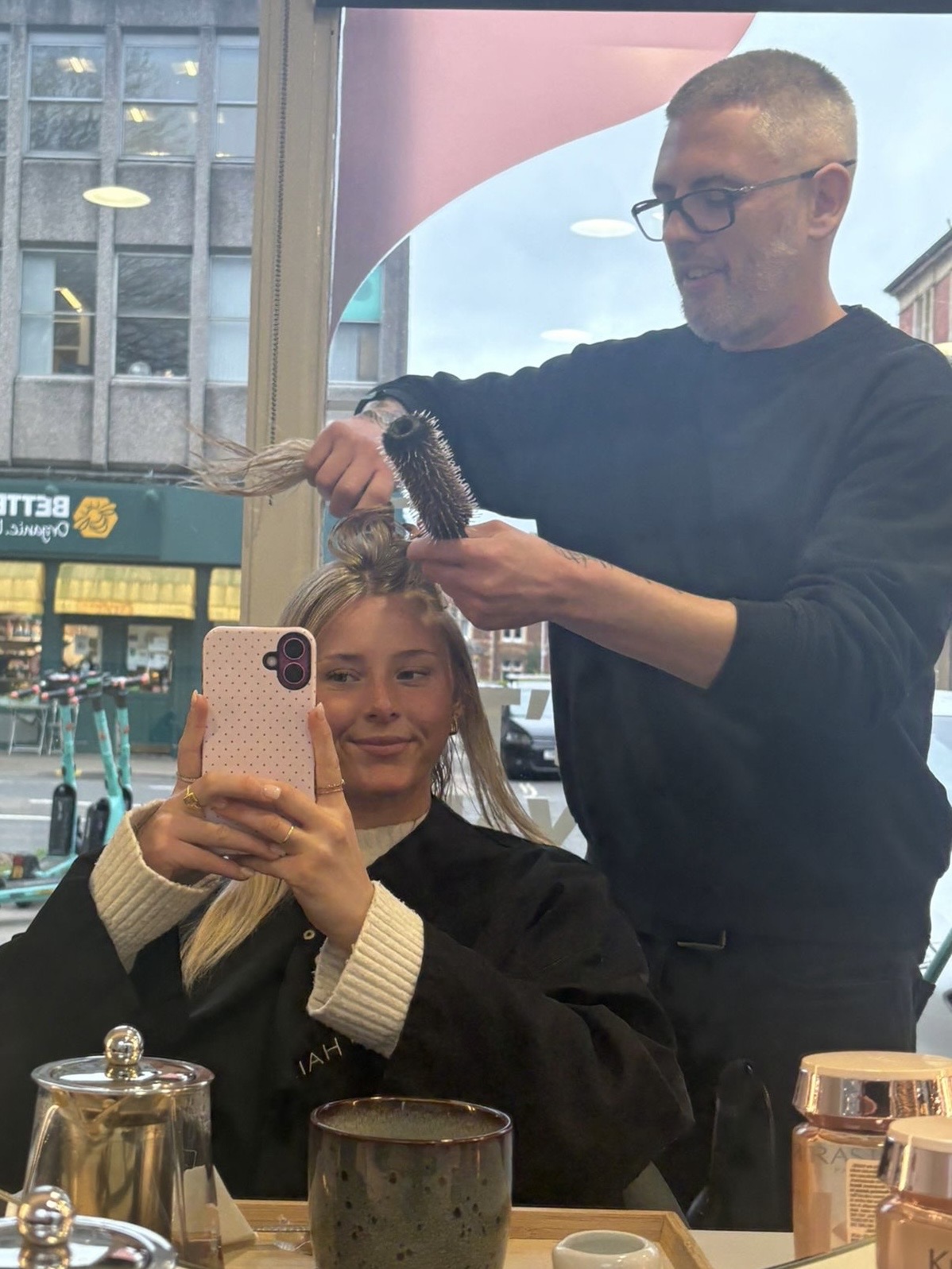
With the brief clear, the plan came together quickly. A full head of highlights to flood the hair with brightness, working particularly around the face. We would then tone the result to land in that warm, creamy blonde territory, and finish with our deluxe treatment package to ensure the condition matched the colour.
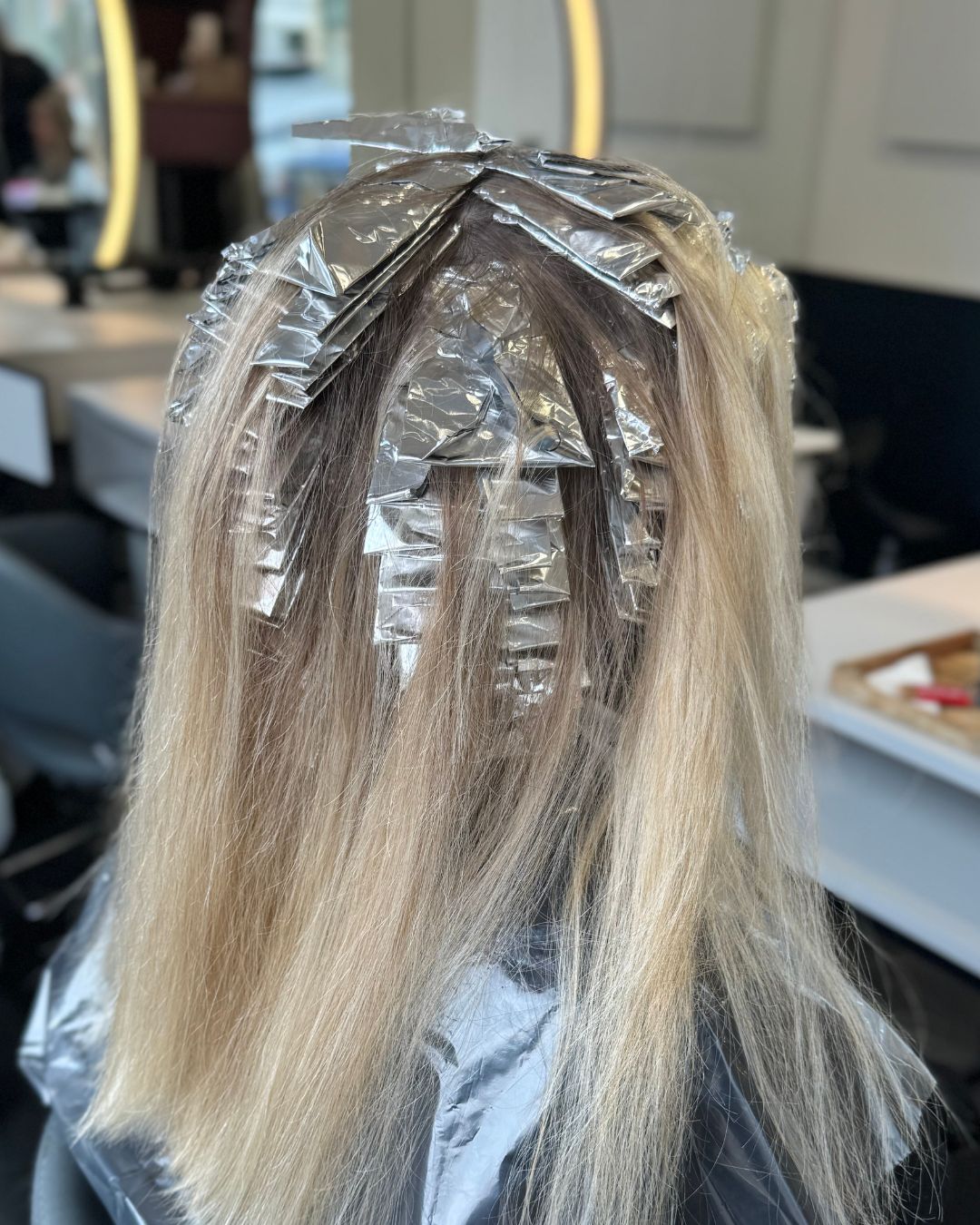
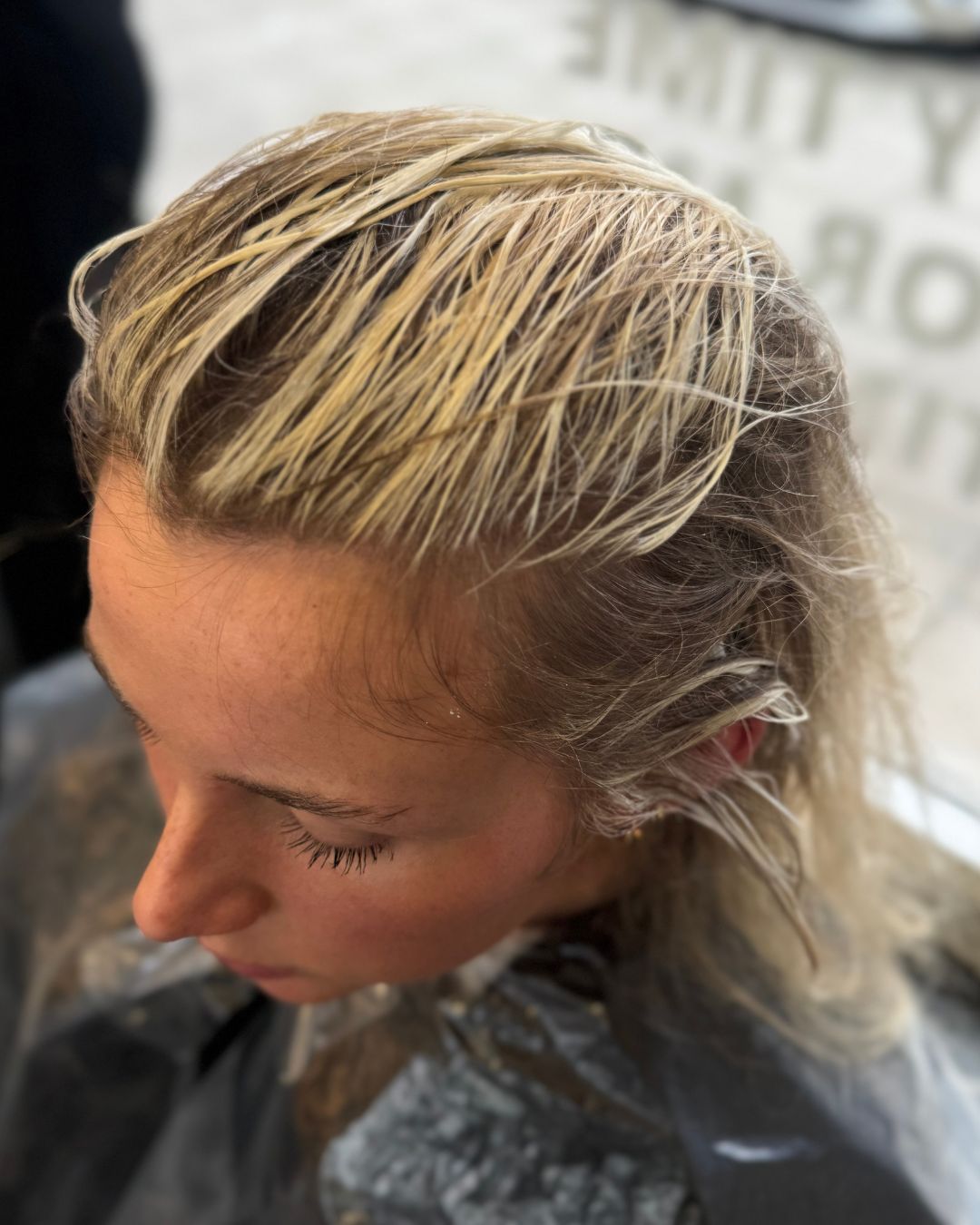
The treatment package
This is where Lilybelle’s result went from good to exceptional. Lightening services put the hair under stress. The way you manage that stress determines not just how the hair looks when the client leaves, but how it behaves for the weeks that follow.
The result
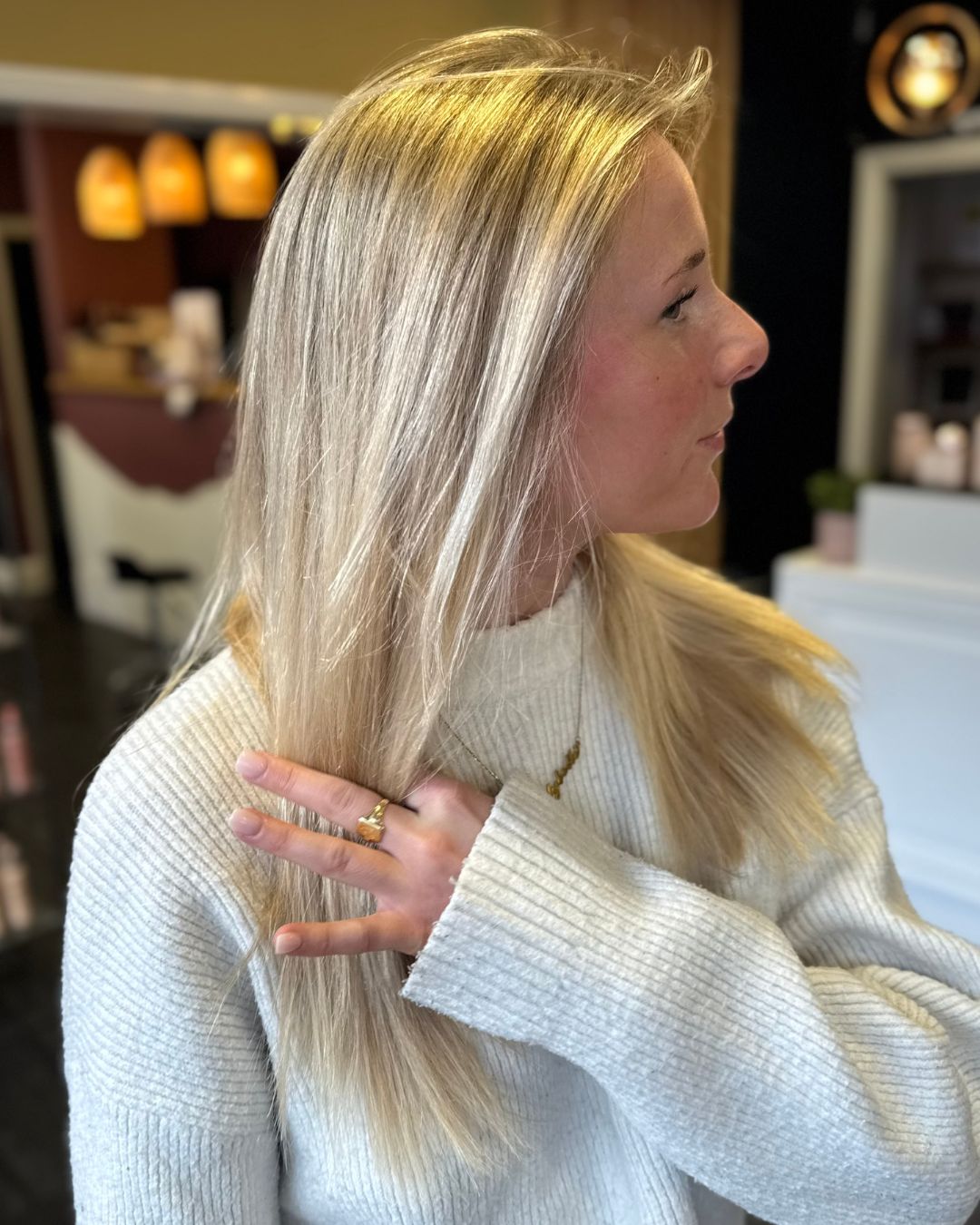
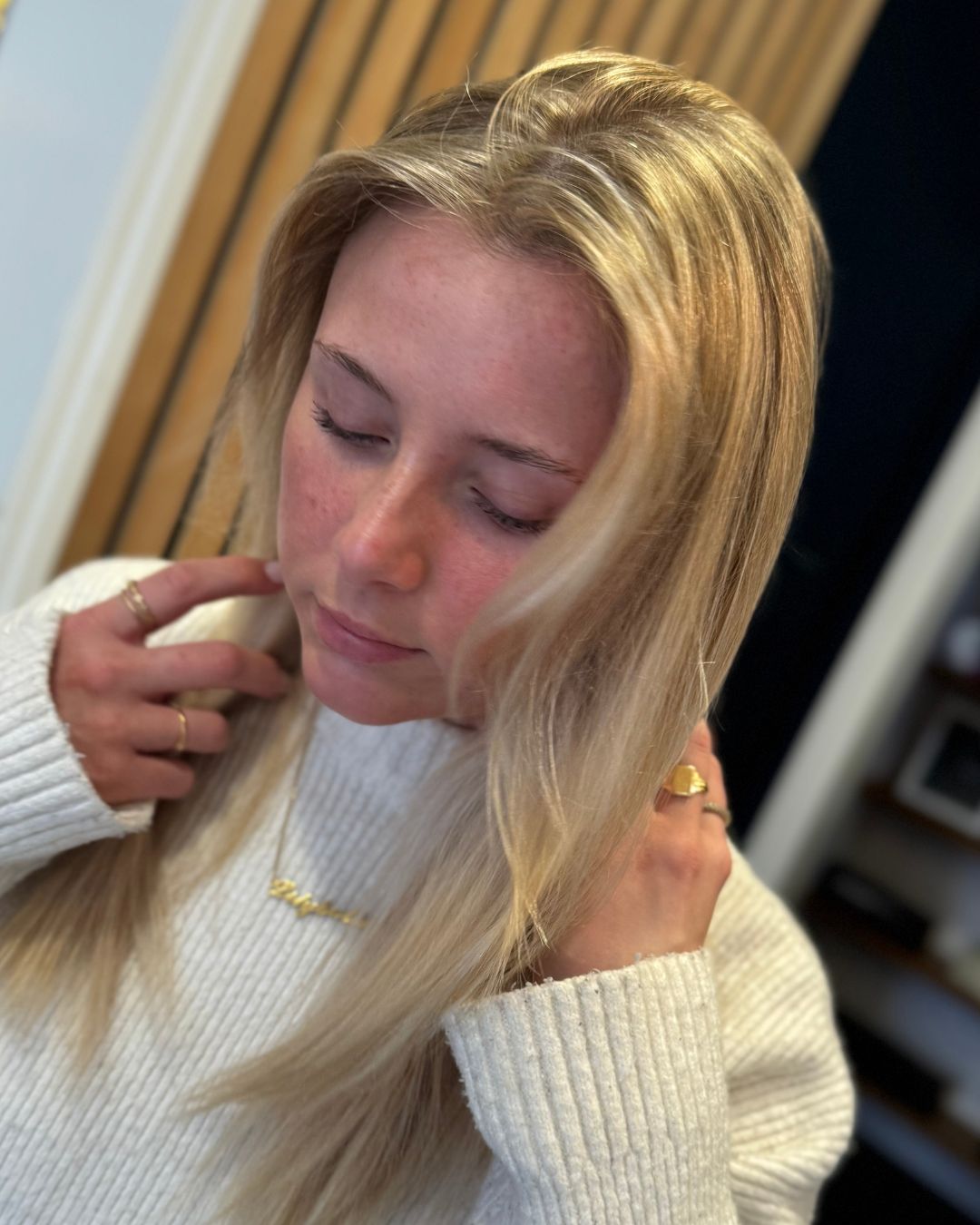
The transformation speaks for itself. Six months of regrowth and a flat, heavy colour replaced with a creamy, luminous blonde that catches the light exactly as she described. The face framing is bright without being stark. The lengths have dimension. The condition is exceptional.
Why the consultation made the difference
What made this result possible was not just the technical skill involved. It was the conversation that happened before any colour was mixed.
At NOCO Hair Bristol, every blonde highlights consultation is recorded and documented. Before we touched Lilybelle’s hair, we had a clear record of exactly what she wanted, what she did not want, how she manages her hair at home, and what result she was expecting to leave with. Her non-negotiables were on record. Her inspiration images were documented.
That documentation does two things. It means the stylist has a complete brief to work from. And it means the client leaves knowing that everything they said was heard and acted on.
Lilybelle’s consultation took just under twenty minutes. The colour and cut took four hours. But those twenty minutes were what made the four hours count.
The investment
We believe in being transparent about pricing. Here is exactly what Lilybelle’s appointment included and what it cost.

Whether your hair can take more bleach depends on four things: the result you want, the technique used to get you there, your previous colour history, and how strong your hair already is. There is no single rule that works for everyone.
This is one of the most common questions we hear in the salon. And it is the right question to ask. Because bleach does not fail. Hair fails when it is pushed too far. The real question is not whether it can go lighter. It is whether it can stay healthy if it does.
What bleach actually does to your hair
Bleach opens the outer layer of the hair shaft. Once open, it moves inside and removes pigment to make the hair lighter. At the same time, it removes structural strength. Every bleach service carries some level of risk, which is why the condition of your hair before we start matters so much.
A gentle lift to add warmth is very different from removing colour and going from dark to light. The approach, the speed, and the level of risk all change depending on the result you are trying to achieve.
Signs your hair may not be ready
These are not automatic red lights. They are signals worth checking properly before we proceed.
In many cases, hair that shows warning signs can still be worked on safely. It just needs the right approach. This is not about stopping. It is about doing it well.
Why a strand test matters
A strand test means taking a small section of hair and applying colour or bleach to it before working on the whole head. It shows us how fast the hair lifts, how evenly it lifts, how much strength it keeps, and when it is safest to stop.
Alongside this we check elasticity. We gently stretch a strand of hair between two fingers. Hair that stretches and returns generally has good strength. Immediate snapping may indicate dryness or brittleness. Stretching too far without returning usually means the hair needs protein support before we proceed.
These tests are most important when bleaching over existing bleach, or when your hair has been through multiple colour services. That is where damage can build quickly if hair is pushed beyond what it can handle.
How timing affects the decision
Timing matters, but it is not the same for everyone. It depends on hair length, how much new growth there is, the type of colour being used, and whether bleach would overlap hair that is already light.
In most cases, previously lightened ends do not need to be bleached again. If they are already light and healthy, we protect them rather than overlapping. Pushing too soon does not save time. It costs hair.
Can products fix hair enough to bleach again?
Modern bond builders and treatments have come a long way. They can reduce breakage, support strength during bleaching, and improve how hair feels and behaves. But there is a limit to what they can do.
Products cannot replace hair that has already been lost, and severely compromised hair cannot be fully repaired by a treatment alone. When hair is healthy enough, bond builders can make bleaching safer and more comfortable. When it is not, the safest option is to pause and rebuild first. Knowing the difference comes from proper assessment, not guesswork.
Foils versus open air techniques
Technique matters as much as timing. When hair is wrapped in foil, heat builds and the lift is stronger. The risk is higher. When bleach is applied in open air, the process is slower, the lift is gentler, and the hair has more protection.
In some cases, lifting low and slow is the safest option. In others, a stronger lift can be used carefully with proper protection. It depends on the hair, not just the colour goal. There is always some level of risk when colouring hair. The role of a professional is to manage that risk properly, not to eliminate the conversation about it.
Frequently asked questions
Can my hair take more bleach?
Sometimes yes, sometimes no. It depends on the strength of your hair, previous colour history, and how the bleach would be applied. A professional check is the safest way to decide.
Is bleaching over already bleached hair risky?
It can be. Overlapping bleach is where most damage happens. In many cases, previously lightened ends do not need to be bleached again and are protected instead.
Do foils make bleaching stronger?
Yes. Foils increase heat and speed up lift. Open air techniques are slower and gentler. The safest option depends on the hair and the desired result.
Can products make my hair strong enough to bleach again?
Products can help support strength and reduce breakage, but they cannot replace hair that has already been lost or fully repair severely compromised hair.
How long should I wait between bleaching appointments?
Around six weeks often works well for root work. Longer gaps can still be managed but usually require more time and care. There is no single rule for everyone.
Will bleaching always damage my hair?
There is always some level of risk when colouring hair. The goal is not to remove risk completely, but to manage it properly through testing, planning and technique.
How long it takes for hair to grow back depends on why it changed in the first place. After hair loss, breakage, a big cut, or a fringe you have grown out of, the question is almost always the same: will it come back, and how long will it take?
Most people asking this question are going to get a positive answer. Hair is remarkably resilient. Understanding how it grows helps you understand what to expect and why patience is almost always the right approach.
How hair actually grows
Each hair on your head goes through its own growth cycle. The active growth phase, called the anagen phase, lasts anywhere from two to seven years depending on your genetics. During this time the hair grows roughly half an inch a month, or around six inches a year.
If your growth phase runs closer to seven years, your hair has the potential to grow very long before it naturally sheds and regrows. A shorter growth phase of around two years means your hair may reach a natural stopping point, often around the jawline or shoulders, even when it is perfectly healthy. Neither is better or worse. It is simply how your hair is built.
Why it feels slow at first
Hair grows from the root, not the ends. This means in the early weeks of regrowth you will not see much visible change, even though growth is happening. New hair has to travel a certain distance before it becomes noticeable at the surface.
People with fringes often notice hair growing back faster because it reaches their eyes. Length growth is harder to perceive because there is no equivalent reference point. The hair is growing. You simply cannot see it yet.
What affects how quickly hair grows back
The speed and quality of regrowth depends largely on what caused the change in the first place.
What helps while hair is growing back
You cannot dramatically speed up hair growth. What you can do is create the best possible conditions for the growth that is already happening.
When hair may not grow back fully
For most people, hair does recover well. There are some situations where the picture is more complex. Genetic thinning, certain hormonal conditions and some longer-term health issues can affect follicle activity over time. Even in these cases, early assessment and the right support can slow the process significantly and improve the quality of what remains.
The most important thing in any case is understanding what is actually happening rather than guessing. A professional can usually identify whether you are dealing with temporary shedding, breakage or something that needs a more structured approach.

Is Bristol’s water causing hair loss? It is one of the questions we hear most from clients who have noticed a change since moving to the city, or who have been here a while and cannot explain why their hair feels different. The water is worth understanding. But it is rarely the only thing going on.
Bristol sits in a moderately hard water area. That means the water contains a higher concentration of dissolved minerals, primarily calcium and magnesium, than you would find in a soft water region. Over time, this has a real and measurable effect on hair and scalp.
What hard water actually does to hair
Hard water does not cause hair loss directly. What it does is create conditions that make hair more prone to breakage, dryness and scalp irritation over time. When those things build up, they can look and feel very much like hair loss.
Why Bristol comes up specifically
Bristol draws its water from a combination of sources including reservoirs in the Mendips and the River Severn. The hardness level varies across the city but sits broadly in the moderately hard range. It is not as extreme as parts of London or the South East, but it is noticeably harder than soft water areas in Wales or the North West.
People who move to Bristol from a soft water area often notice the difference quickly. Hair feels drier, products lather less, and the scalp can feel tighter or more reactive than before. These are real changes caused by water chemistry, not imagination.
Watch: Noel Halligan on Bristol’s water and hair loss
After being contacted by the Sunday Times about potential hair loss linked to Bristol’s water, I sat down to dig into what is really going on. From mineral buildup to scalp health, this conversation covers the facts behind the question.
Watch the full conversation
You are currently viewing a placeholder content from YouTube. To access the actual content, click the button below. Please note that doing so will share data with third-party providers.
More InformationNoel Halligan, Co-founder of NOCO Hair Bristol, discussing the real link between Bristol’s water and hair health.
When water is not the only cause
Hard water is one factor. In the salon we rarely see hair changes that have a single cause. Clients concerned about thinning or increased shedding in Bristol are usually dealing with a combination of things.
What you can do about it
The effects of hard water on hair are manageable. None of the practical solutions are complicated or expensive.