


A new study has ranked the City of Bristol as the second worst place in the UK to keep your hair healthy, with a risk score of 73.5 out of 100. North Somerset topped the list as the single worst local authority in the country. Bath and North East Somerset also made the top five worst areas. That is three locations in our region in the bottom five nationally.
We are not surprised. At NOCO Hair on Whiteladies Road, we have been seeing more clients coming in with hair loss, thinning and scalp concerns than ever before. Now we know part of the reason why.
What is actually causing it?
The study looked at three key environmental factors: water quality, air quality and UV levels. Bristol scored a perfect 10 out of 10 for poor water quality. That means the water coming out of your taps is one of the most damaging in the country for hair and scalp health.
Hard water contains high levels of minerals including calcium and magnesium. Over time these build up on the hair shaft and scalp, making hair feel rough, dry and brittle. They also interfere with how well shampoo and conditioner work, meaning your products are less effective than they should be.
The South West also ties for the highest UV levels in the UK alongside the South East. UV exposure damages the outer layer of the hair shaft and can accelerate pigment loss, meaning hair can go grey earlier than it otherwise would.
What you can do about it
You cannot change the water or the weather. But you can change how you manage your hair in response to the environment you live in. These are the things that make the most consistent difference.
The NOCO Hair Score gives you a number, a band and a clear next step. If you live in Bristol or the South West, this is worth doing.
Take the Free Hair ScoreWhen it is worth coming in
If you have been noticing more hair in the shower, thinning at the crown or temples, a drier or itchier scalp than usual, or hair that just does not feel the way it used to — it is worth having it properly assessed rather than guessing.
At NOCO Hair we use the Kerastase K-Scan consultation, which gives us a detailed clinical picture of your scalp and hair health before we recommend anything. It removes the guesswork and gives you a clear starting point. From there we can design a plan that actually addresses what your hair needs — not just a product recommendation off the shelf.
And if all else fails — you could always move to Scotland.
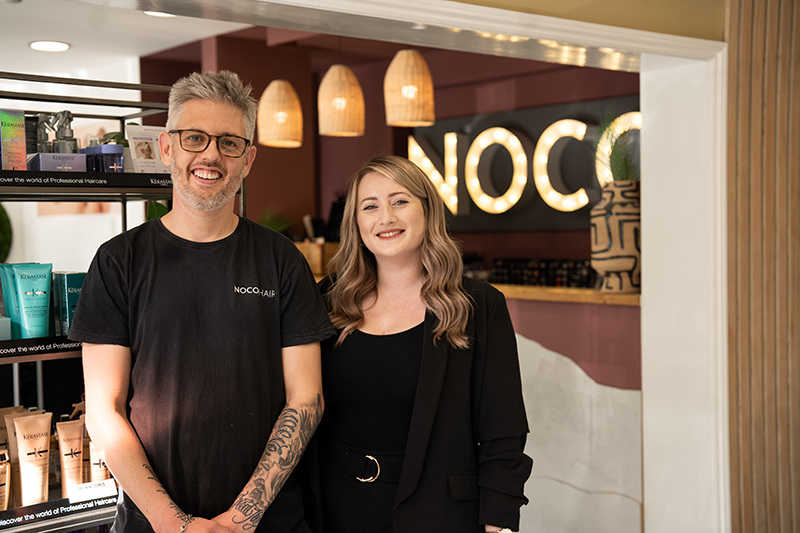
Hairdressing is as much about how you make someone feel as how they look. That has been true from day one at NOCO and it shapes every decision we make — about how we consult, how we train, how we give back, and what kind of place we want to be for the people of Bristol.
We opened NOCO Hair in 2018 with a clear idea of what we wanted to build. Not just a great salon. A place where people could step out of their hectic lives, leave their worries at the door and feel genuinely looked after. Hair, body and soul.
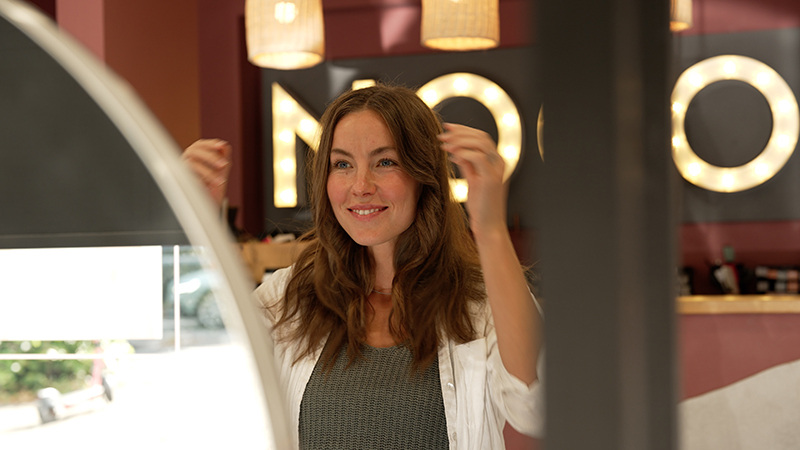
The relationships are the work
People sometimes ask what makes NOCO different. The honest answer is the relationships. The consultation is not a formality we go through before the real work starts. It is the real work. Understanding who someone is, what their hair has been through and what they actually want their life to look like — that is where everything begins.
We have had clients sit in the chair going through something enormous. A diagnosis. A bereavement. A life change they were not ready for. The haircut is almost beside the point in those moments. What matters is that they felt heard, looked after and, when they left, a little more like themselves.
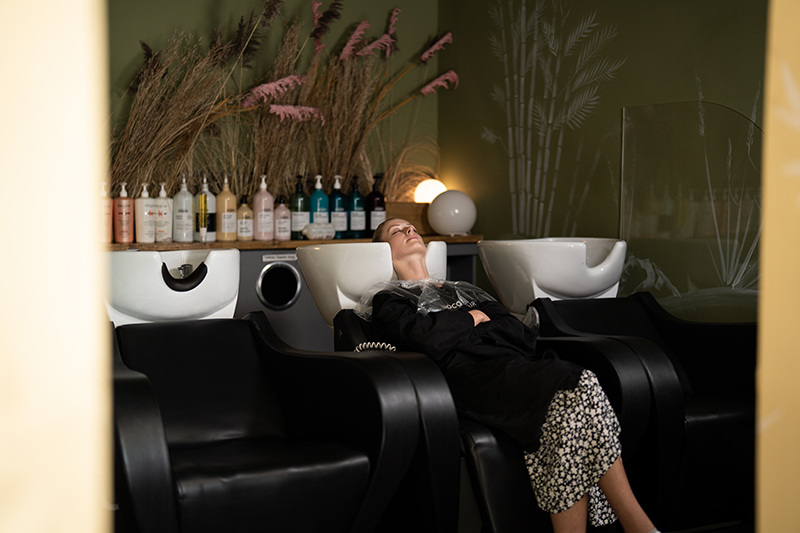
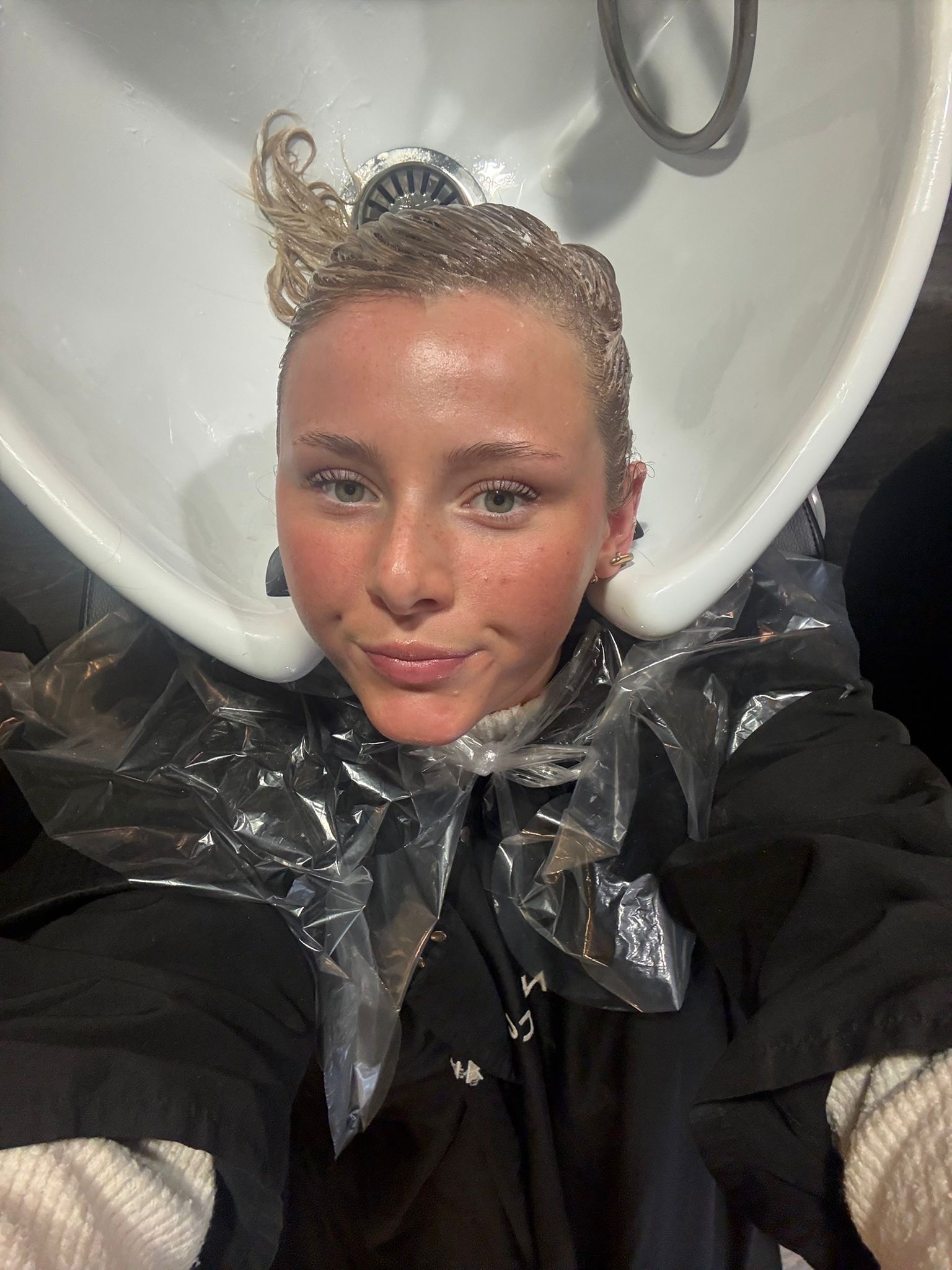
The wash. One of the most underrated moments in a salon visit.
Where it comes from
The Care with Hair campaign grew from a single moment that made everything clear. Years ago, I was invited to give a final haircut to one of my oldest clients, Megan, in hospice care. That visit changed how I think about what we do. A haircut is not just about how someone looks. It is about being present with another person. Seeing them. Caring for them at a moment that matters.
That one act became the foundation for everything Care with Hair has grown into — over £15,000 raised for Bristol charities, 300 free haircuts given to people who needed them most, and a team that genuinely believes business should do good, not just do well.
What the salon looks like now
The salon you walk into today on Whiteladies Road is the result of everything that has happened since 2018. The award within our first year. The lockdown that nearly ended it. The BBC Interior Design Masters transformation that gave the space its Japandi identity. And the team that has been built around a shared belief in doing this properly.
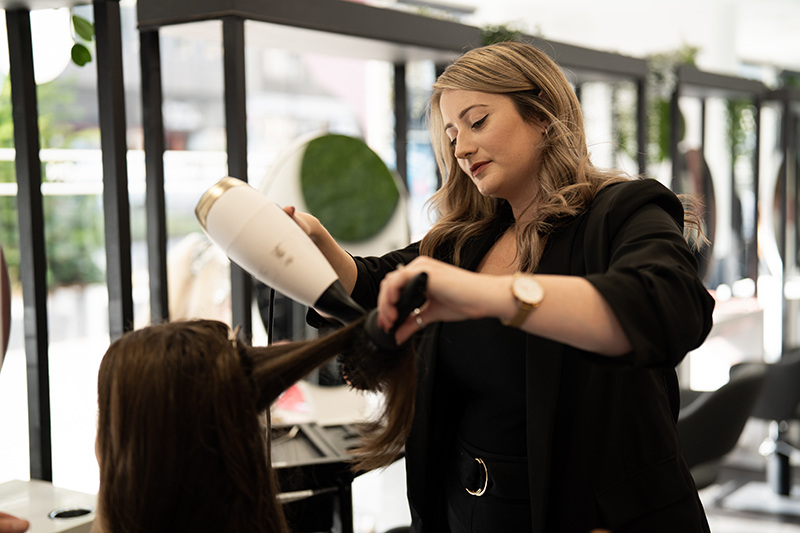
Corey Taylor at work. Co-founder, Managing Director and L’Oréal Colour Specialist.
Every detail in the salon is intentional. The drinks menu. The plants. The relaxation zone with its floor-to-ceiling bamboo mural. The massage chairs. The burnt orange, navy and yellow that run through the space. All of it exists to serve one idea: that when you are here, you should feel somewhere better than where you started.
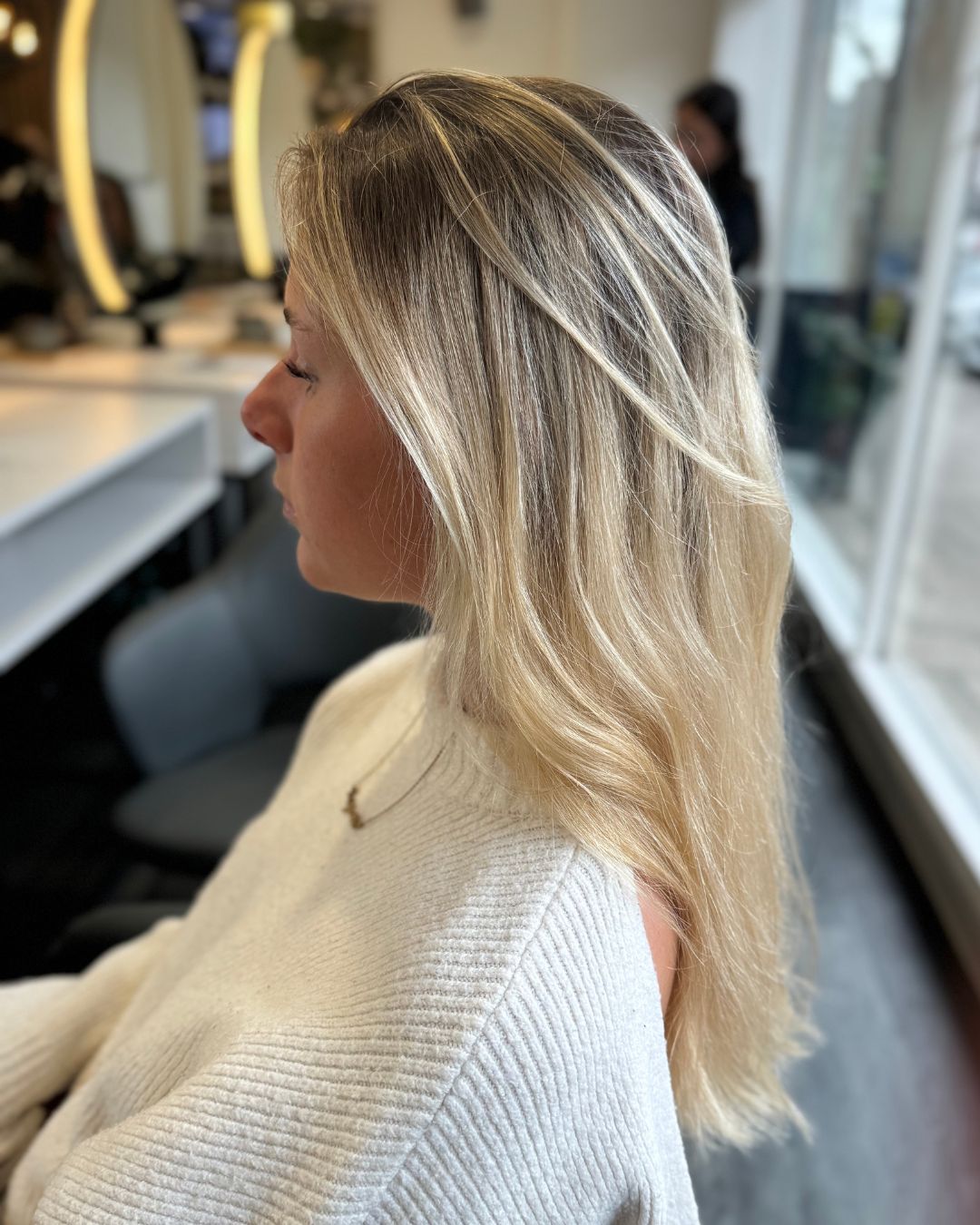
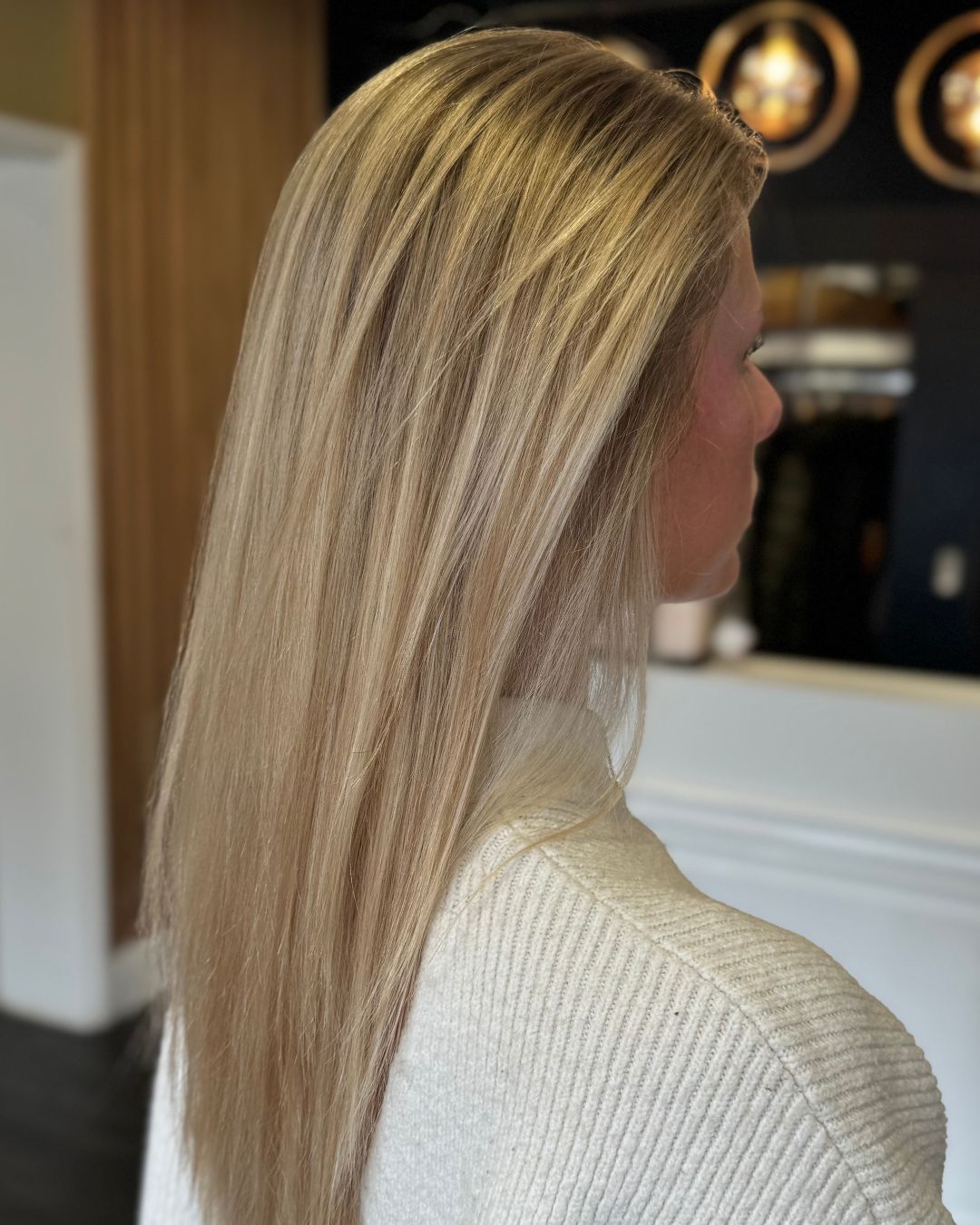
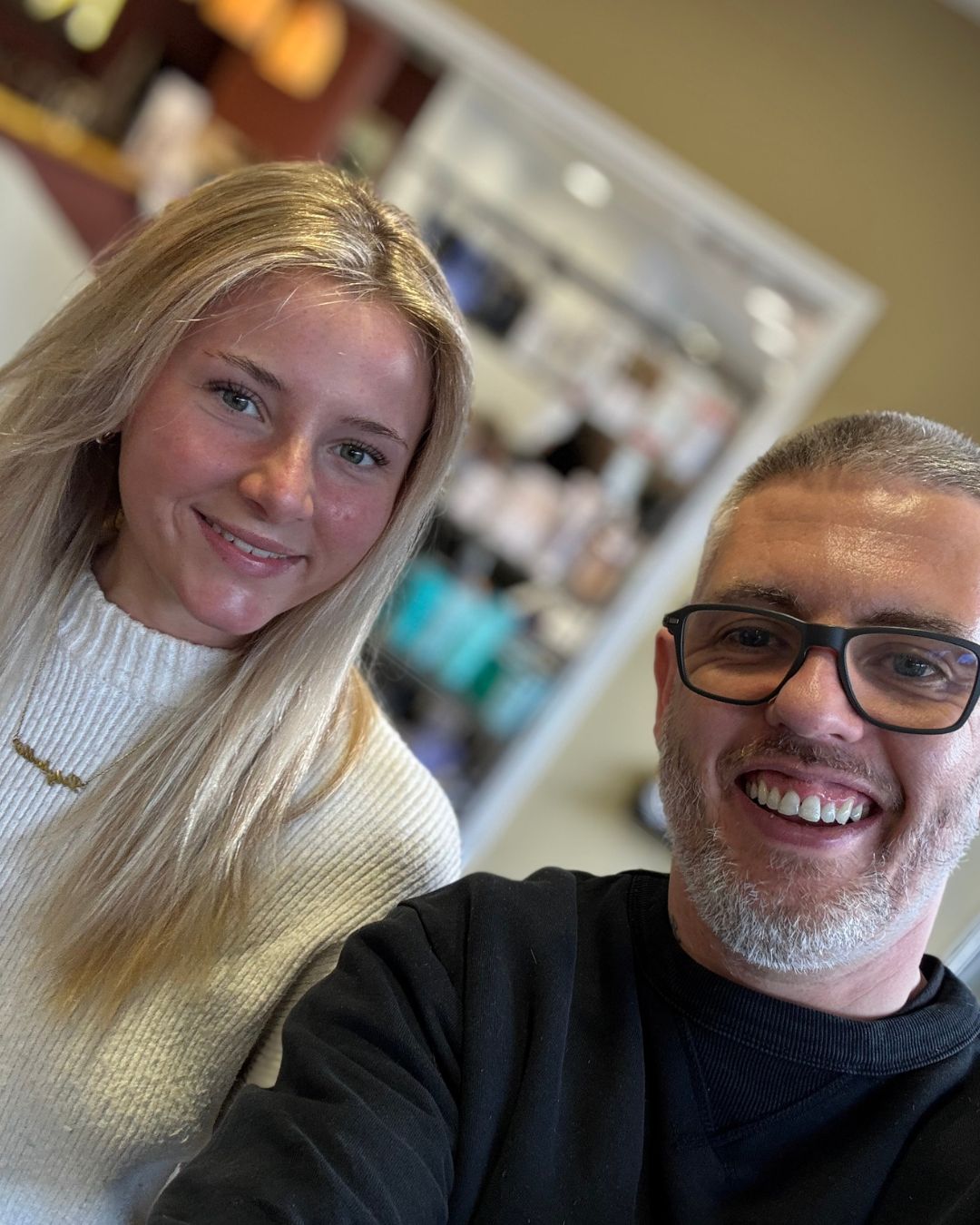
Blonde highlights in Bristol done well start with a conversation not a colour chart. For Lilybelle at NOCO Hair Bristol, that conversation changed everything. She did not just want lighter hair. She wanted to feel fresh, vibrant and confident walking out of the salon. Catching the light was the goal.
That is the conversation that shapes everything that follows.
Where she was starting from
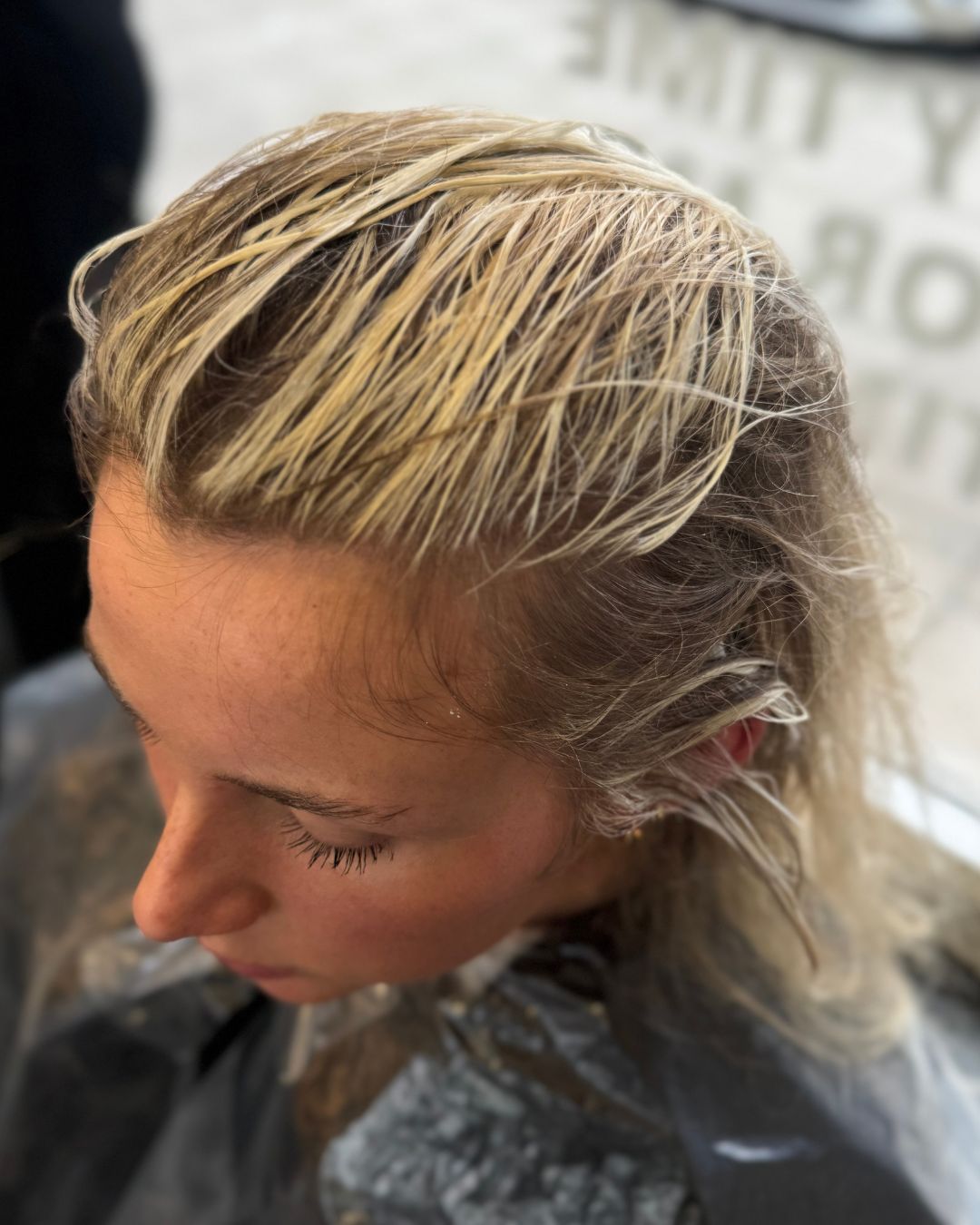
Lilybelle had last been in for colour six months earlier, back in September. Her natural regrowth had come through noticeably darker at the root, creating a visible contrast against her lighter ends. The lengths were in reasonable condition, but the overall effect was heavy and flat. The brightness that had made her hair feel alive was gone.
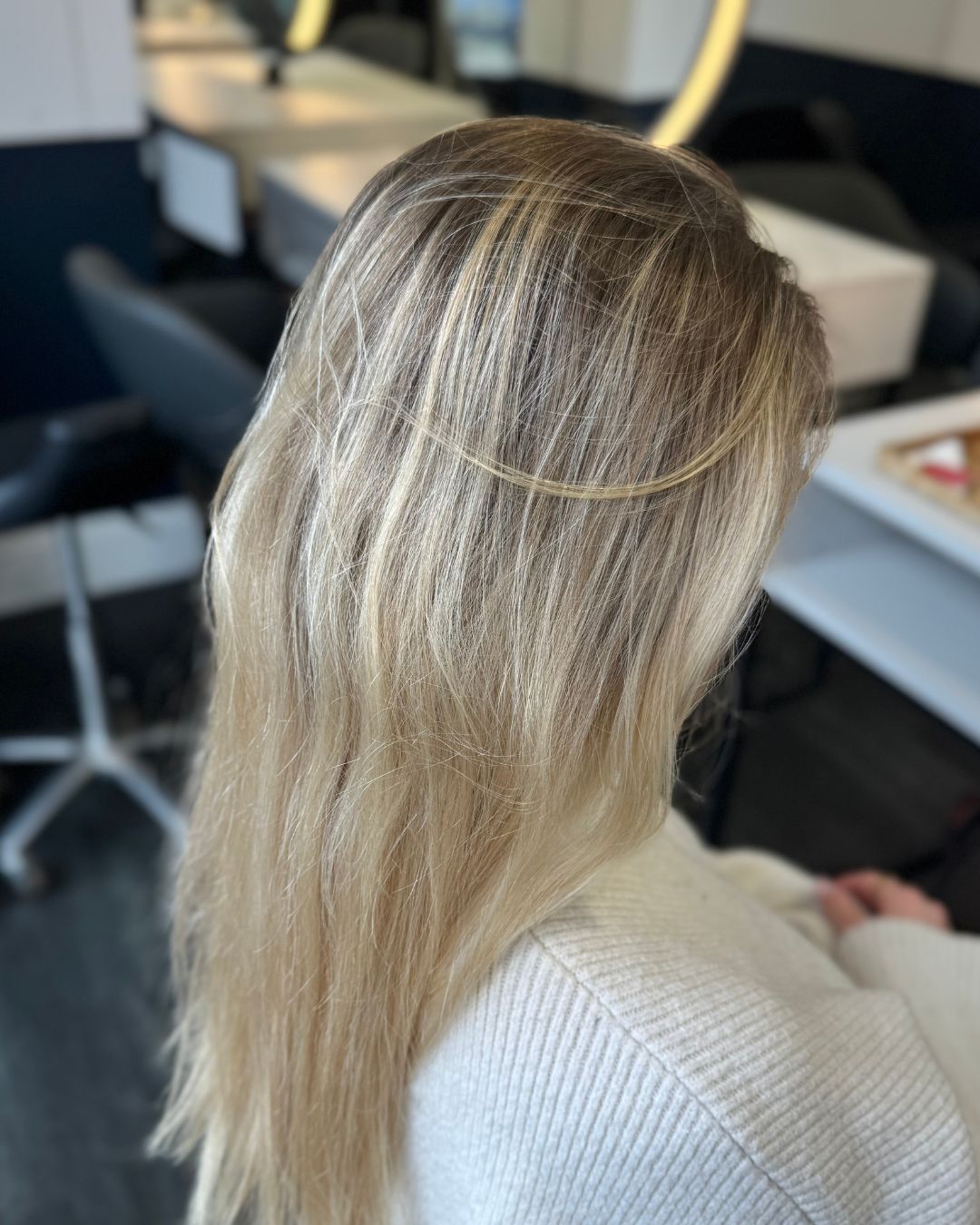
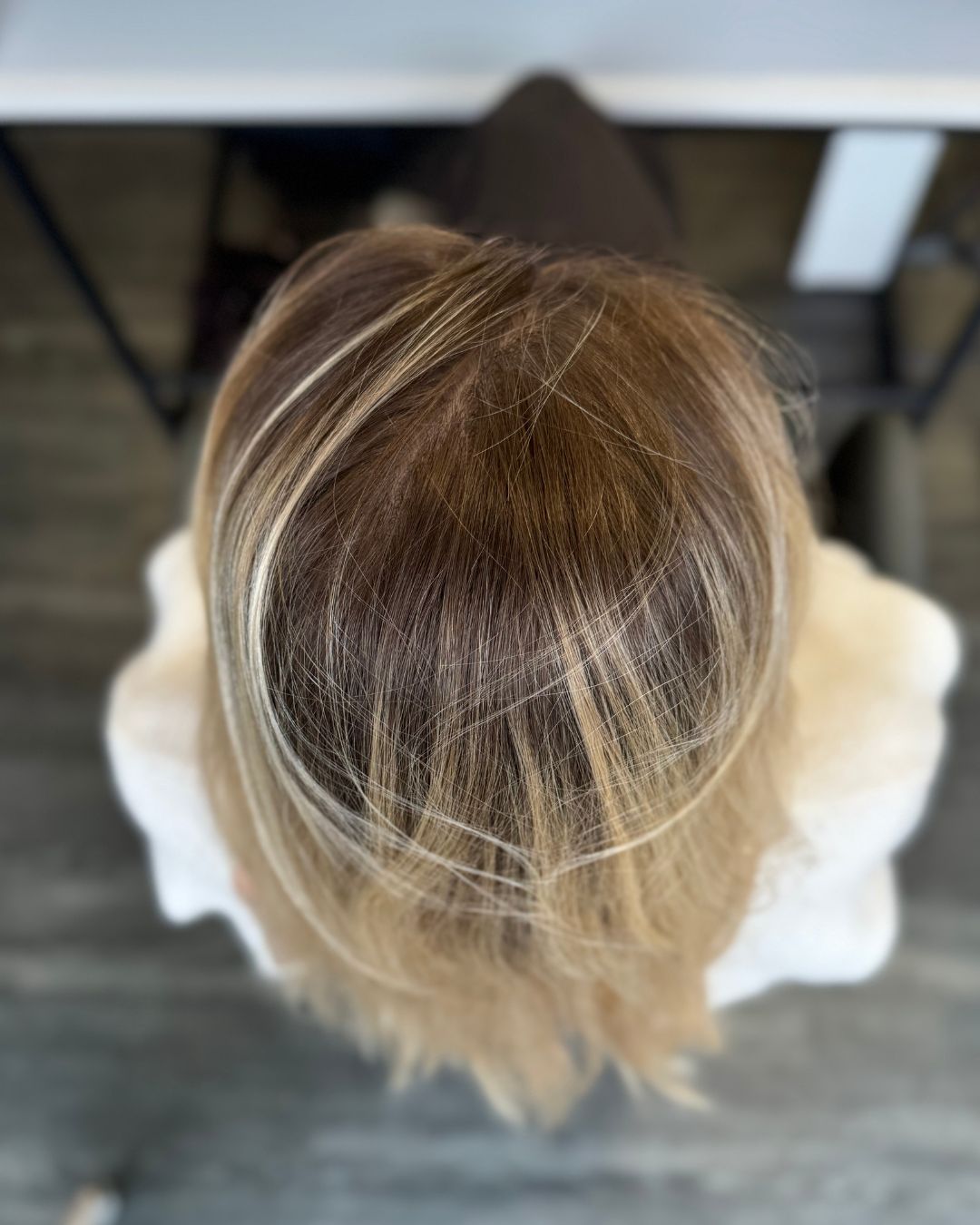
The top down photograph says it most plainly. A wide band of darker natural growth contrasting against the lighter blonde below. Not damaged. Not in bad shape. But flat, heavy and without energy.
What she told us in the consultation
We took Lilybelle through our full consultation before touching a thing. She was clear about what she wanted and equally clear about what she did not want.
What she wanted: Brightness back, especially around the face. A warm, creamy blonde with dimension. Something that looked healthy and luminous. The feeling she had when she left after her September appointment.
What she did not want: Nothing ashy or cool. Nothing too dark. No brassiness. And above all, she wanted the condition of her hair protected throughout.
The inspiration
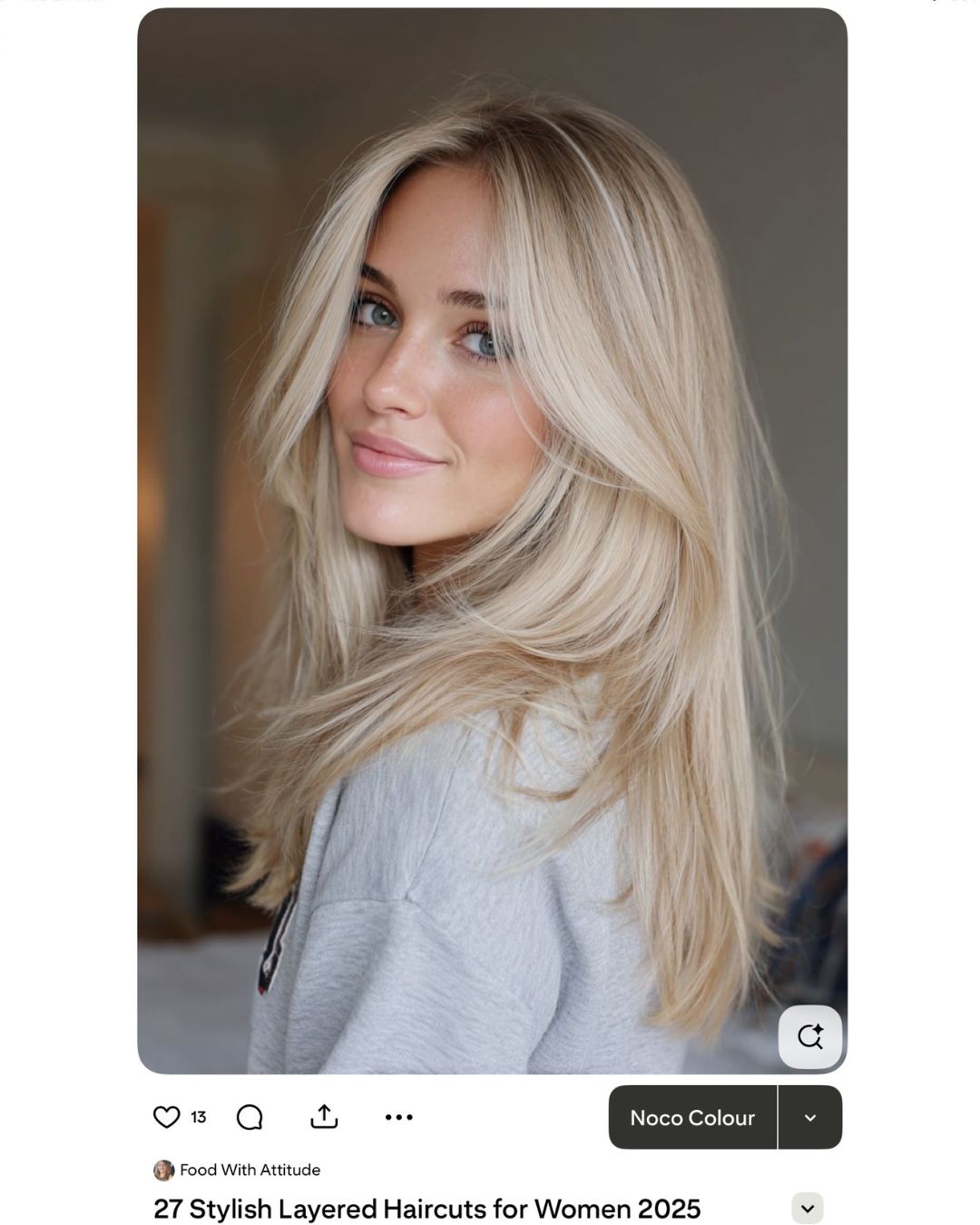
Lilybelle came with reference images showing long, layered blonde hair with soft dimension. Both had the same quality she was drawn to: brightness around the face, warmth through the lengths, and a lived-in quality that felt effortless rather than overdone. That brief guided every decision in the process that followed.
Our approach to blonde highlights in Bristol
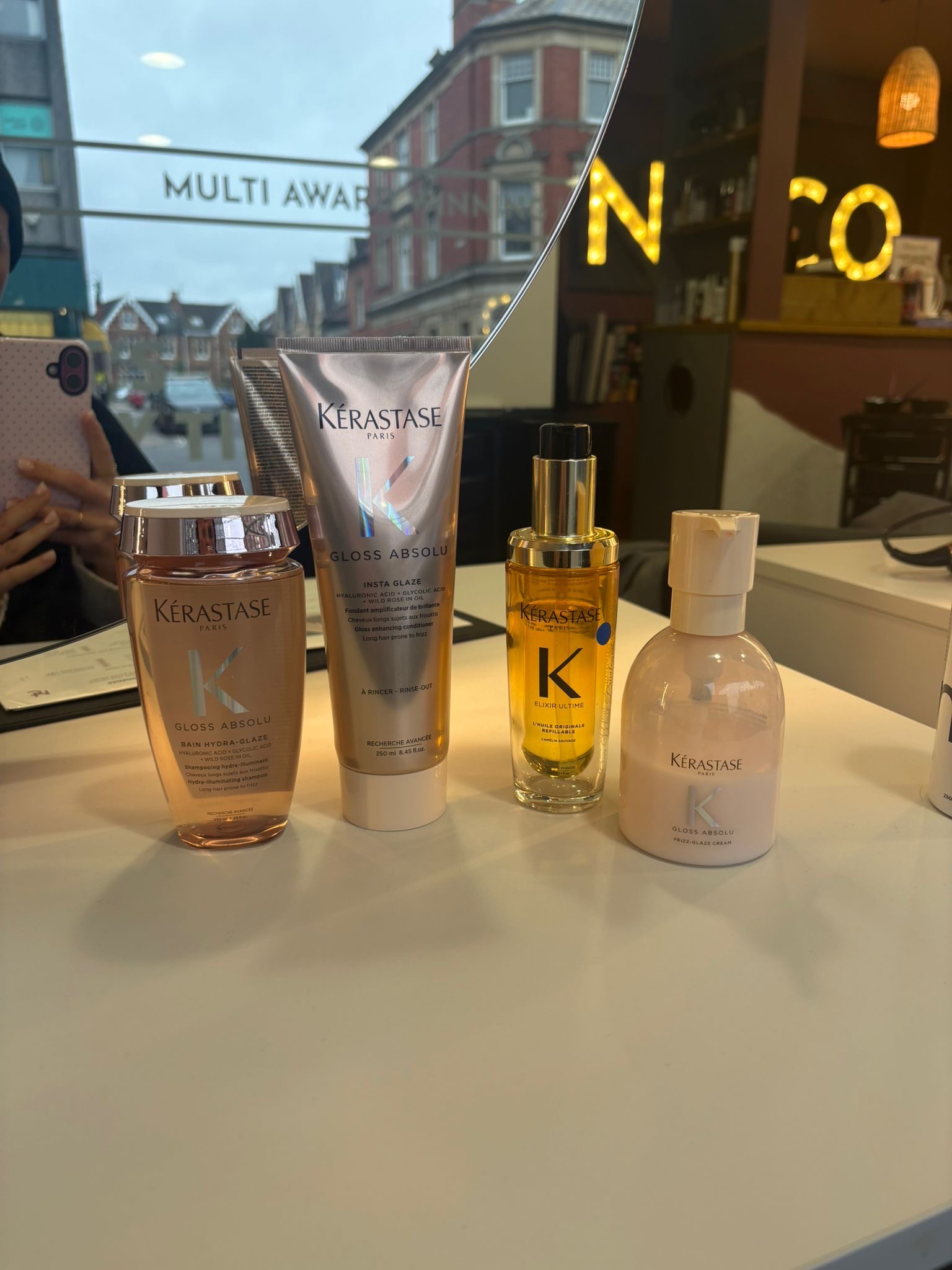
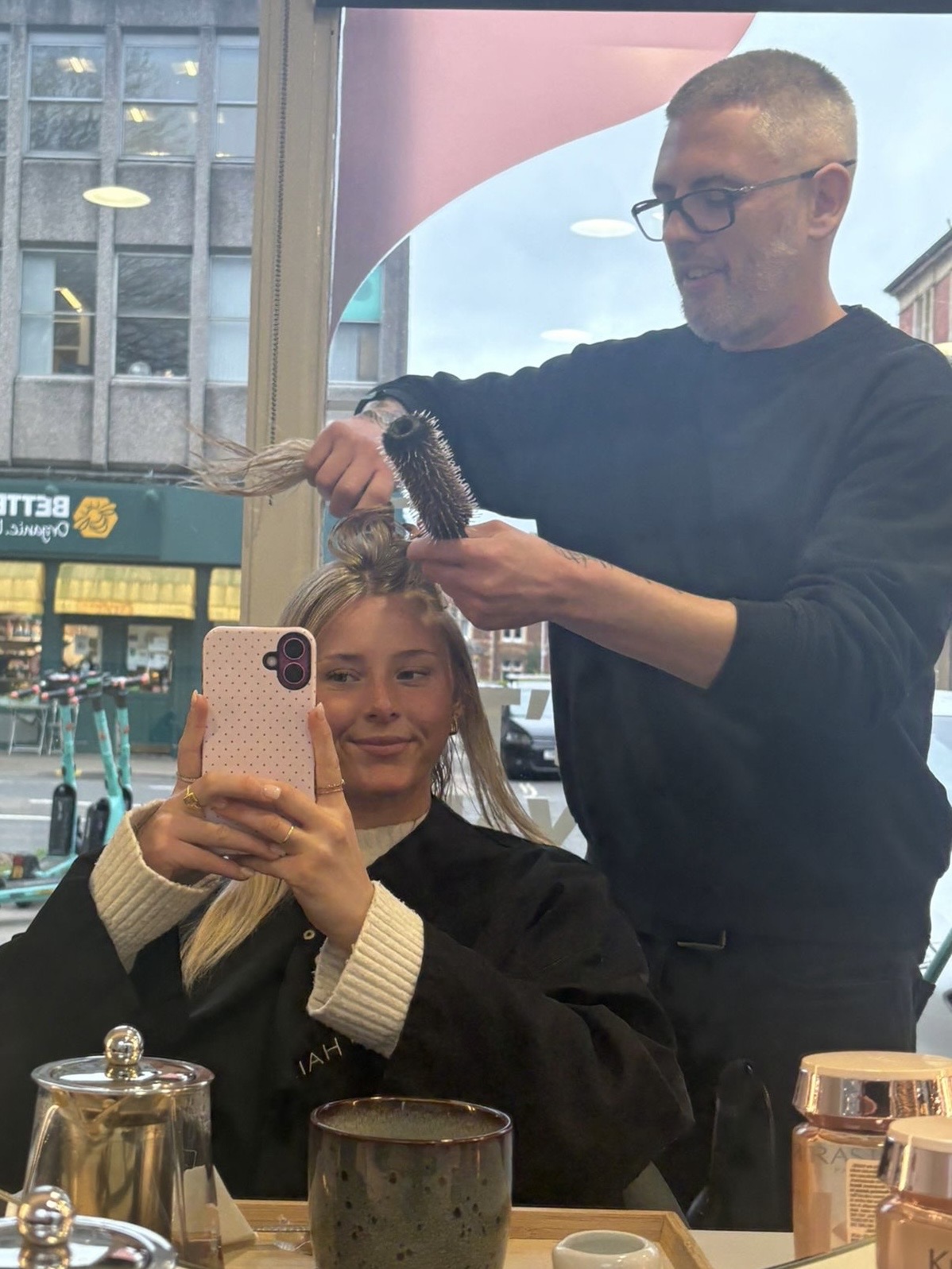
With the brief clear, the plan came together quickly. A full head of highlights to flood the hair with brightness, working particularly around the face. We would then tone the result to land in that warm, creamy blonde territory, and finish with our deluxe treatment package to ensure the condition matched the colour.
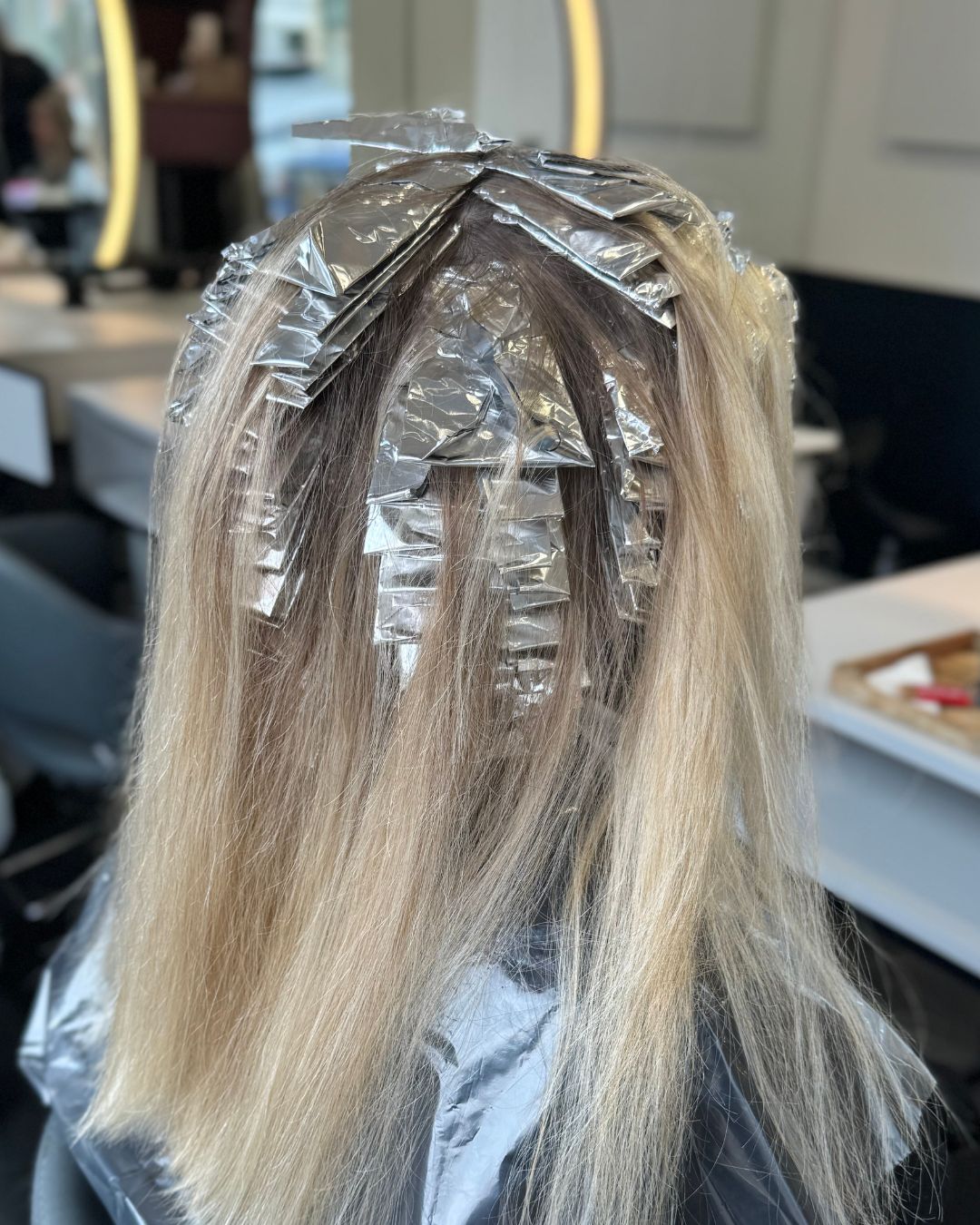
The treatment package
This is where Lilybelle’s result went from good to exceptional. Lightening services put the hair under stress. The way you manage that stress determines not just how the hair looks when the client leaves, but how it behaves for the weeks that follow.
The result
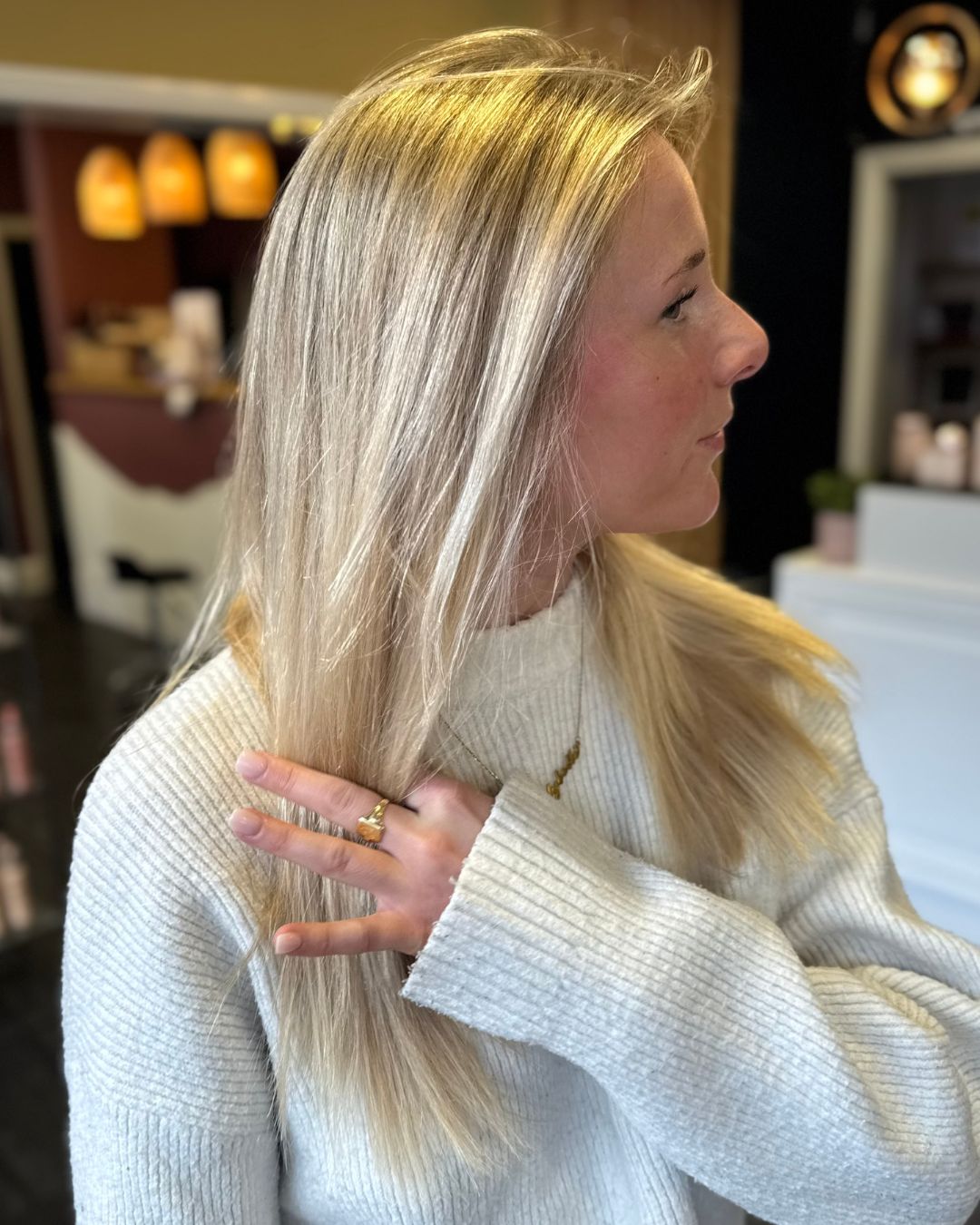
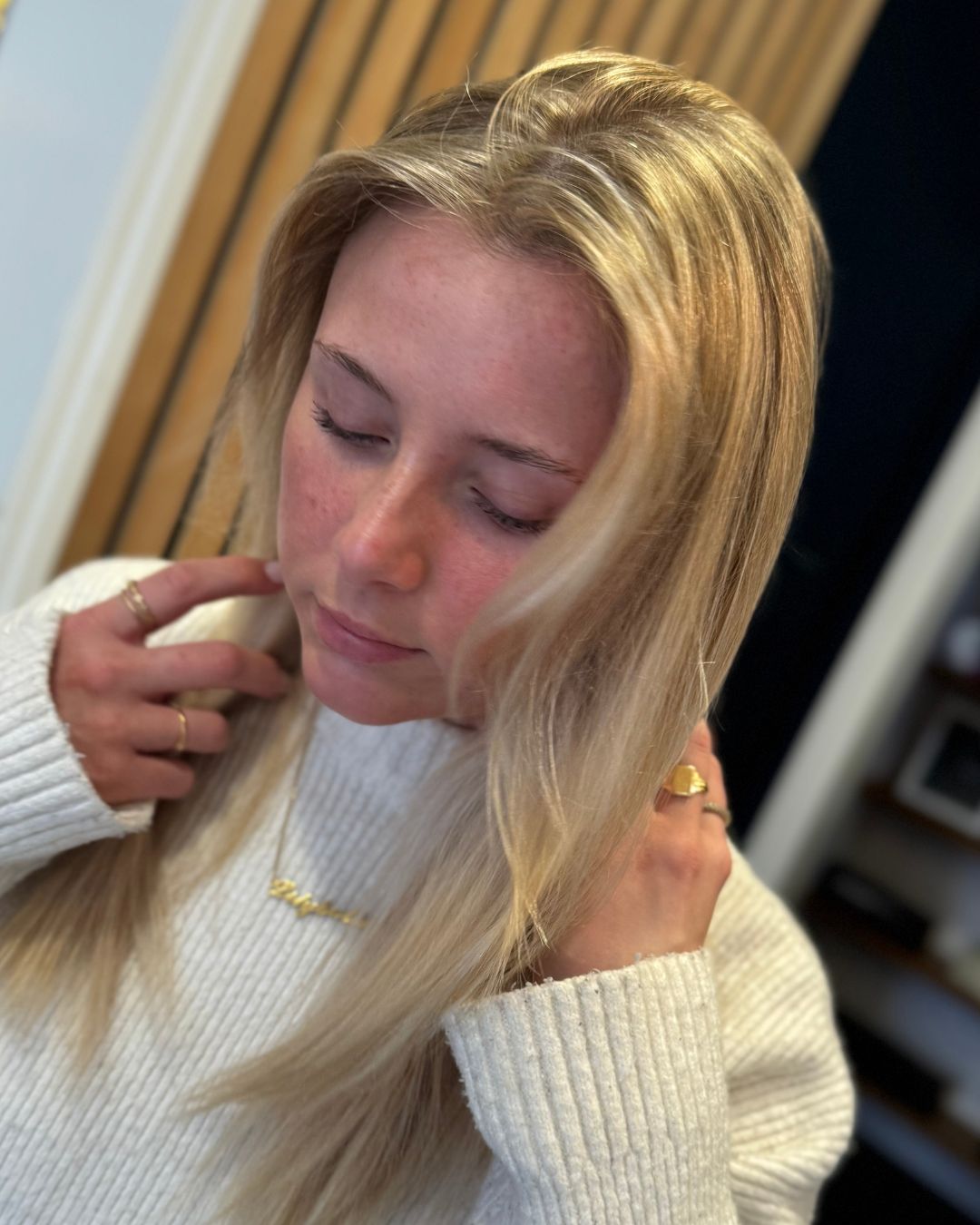
The transformation speaks for itself. Six months of regrowth and a flat, heavy colour replaced with a creamy, luminous blonde that catches the light exactly as she described. The face framing is bright without being stark. The lengths have dimension. The condition is exceptional.
Why the consultation made the difference
What made this result possible was not just the technical skill involved. It was the conversation that happened before any colour was mixed.
At NOCO Hair Bristol, every blonde highlights consultation is recorded and documented. Before we touched Lilybelle’s hair, we had a clear record of exactly what she wanted, what she did not want, how she manages her hair at home, and what result she was expecting to leave with. Her non-negotiables were on record. Her inspiration images were documented.
That documentation does two things. It means the stylist has a complete brief to work from. And it means the client leaves knowing that everything they said was heard and acted on.
Lilybelle’s consultation took just under twenty minutes. The colour and cut took four hours. But those twenty minutes were what made the four hours count.
The investment
We believe in being transparent about pricing. Here is exactly what Lilybelle’s appointment included and what it cost.
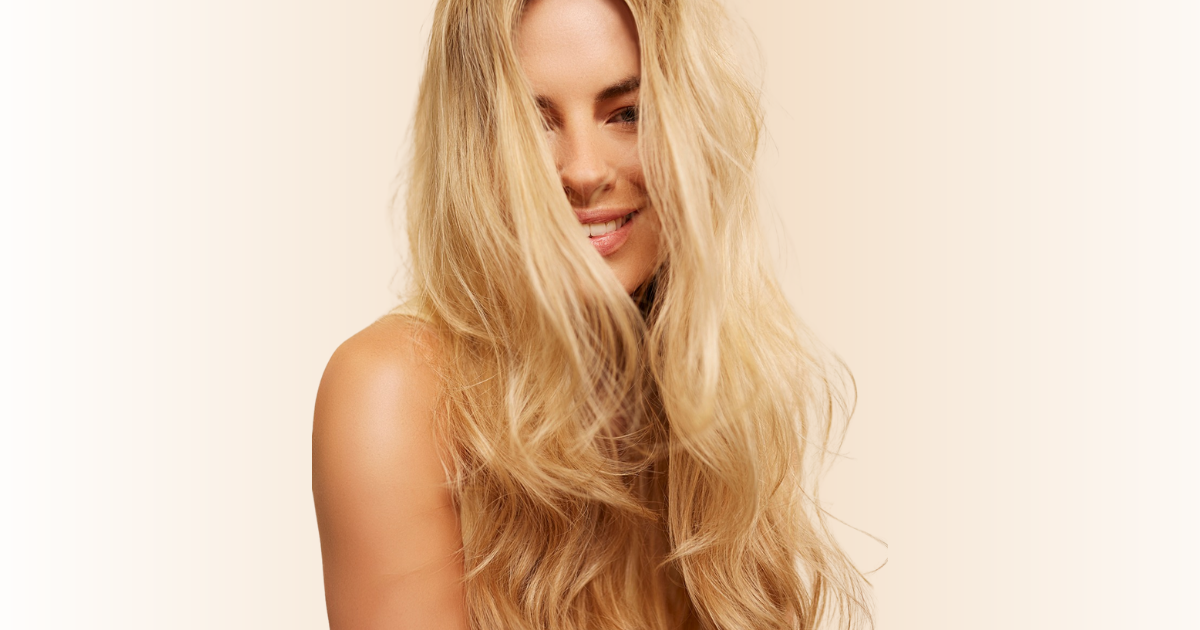
Whether your hair can take more bleach depends on four things: the result you want, the technique used to get you there, your previous colour history, and how strong your hair already is. There is no single rule that works for everyone.
This is one of the most common questions we hear in the salon. And it is the right question to ask. Because bleach does not fail. Hair fails when it is pushed too far. The real question is not whether it can go lighter. It is whether it can stay healthy if it does.
What bleach actually does to your hair
Bleach opens the outer layer of the hair shaft. Once open, it moves inside and removes pigment to make the hair lighter. At the same time, it removes structural strength. Every bleach service carries some level of risk, which is why the condition of your hair before we start matters so much.
A gentle lift to add warmth is very different from removing colour and going from dark to light. The approach, the speed, and the level of risk all change depending on the result you are trying to achieve.
Signs your hair may not be ready
These are not automatic red lights. They are signals worth checking properly before we proceed.
In many cases, hair that shows warning signs can still be worked on safely. It just needs the right approach. This is not about stopping. It is about doing it well.
Why a strand test matters
A strand test means taking a small section of hair and applying colour or bleach to it before working on the whole head. It shows us how fast the hair lifts, how evenly it lifts, how much strength it keeps, and when it is safest to stop.
Alongside this we check elasticity. We gently stretch a strand of hair between two fingers. Hair that stretches and returns generally has good strength. Immediate snapping may indicate dryness or brittleness. Stretching too far without returning usually means the hair needs protein support before we proceed.
These tests are most important when bleaching over existing bleach, or when your hair has been through multiple colour services. That is where damage can build quickly if hair is pushed beyond what it can handle.
How timing affects the decision
Timing matters, but it is not the same for everyone. It depends on hair length, how much new growth there is, the type of colour being used, and whether bleach would overlap hair that is already light.
In most cases, previously lightened ends do not need to be bleached again. If they are already light and healthy, we protect them rather than overlapping. Pushing too soon does not save time. It costs hair.
Can products fix hair enough to bleach again?
Modern bond builders and treatments have come a long way. They can reduce breakage, support strength during bleaching, and improve how hair feels and behaves. But there is a limit to what they can do.
Products cannot replace hair that has already been lost, and severely compromised hair cannot be fully repaired by a treatment alone. When hair is healthy enough, bond builders can make bleaching safer and more comfortable. When it is not, the safest option is to pause and rebuild first. Knowing the difference comes from proper assessment, not guesswork.
Foils versus open air techniques
Technique matters as much as timing. When hair is wrapped in foil, heat builds and the lift is stronger. The risk is higher. When bleach is applied in open air, the process is slower, the lift is gentler, and the hair has more protection.
In some cases, lifting low and slow is the safest option. In others, a stronger lift can be used carefully with proper protection. It depends on the hair, not just the colour goal. There is always some level of risk when colouring hair. The role of a professional is to manage that risk properly, not to eliminate the conversation about it.
Frequently asked questions
Can my hair take more bleach?
Sometimes yes, sometimes no. It depends on the strength of your hair, previous colour history, and how the bleach would be applied. A professional check is the safest way to decide.
Is bleaching over already bleached hair risky?
It can be. Overlapping bleach is where most damage happens. In many cases, previously lightened ends do not need to be bleached again and are protected instead.
Do foils make bleaching stronger?
Yes. Foils increase heat and speed up lift. Open air techniques are slower and gentler. The safest option depends on the hair and the desired result.
Can products make my hair strong enough to bleach again?
Products can help support strength and reduce breakage, but they cannot replace hair that has already been lost or fully repair severely compromised hair.
How long should I wait between bleaching appointments?
Around six weeks often works well for root work. Longer gaps can still be managed but usually require more time and care. There is no single rule for everyone.
Will bleaching always damage my hair?
There is always some level of risk when colouring hair. The goal is not to remove risk completely, but to manage it properly through testing, planning and technique.

Choosing a hair colour that actually suits you is not about following trends. It is about understanding two things: your natural base colour and your eye colour. Once you know those, the right direction becomes much clearer and the wrong ones are easy to avoid.
We use a simple framework at NOCO to have this conversation with clients. It cuts through the noise and gets us to the right answer quickly. Are you a blender or a contrastor?
Blenders and contrastors
These are the two natural colour types we work with. Understanding which one you are is the starting point for every colour conversation.
Why eye colour matters more than people think
Eye colour is one of the most reliable indicators of what will work on your hair. Light eyes create natural contrast against darker features. That contrast gives the face a lift and means the hair can carry lighter tones without looking flat or washed out.
I went grey at around fifteen years old. Dark natural base, light eyes. For years I coloured my hair. But when I eventually had more salt than pepper, something clicked. The light eyes balanced the lighter hair. It worked because the contrast was natural, not forced. That is exactly what we are looking for when we sit down with a client.
Natural balayage at NOCO Hair Bristol. Colour placed to work with, not against, the client’s natural base.
What happens when you push too far
When a blender, someone with dark hair and dark eyes, goes dramatically lighter, the result tends to look disconnected. The hair and the face stop speaking to each other. The colour draws attention to itself rather than enhancing the person wearing it.
The way around this, if a client with a darker base wants lighter tones, is to keep some depth around the hairline and face. Darker pieces framing the face maintain the natural connection between the hair colour and the person’s features. Lighter pieces can then come through the lengths and ends without the whole result looking wrong.
The hair colour level scale
Hair colour is measured on a scale of 1 to 10. Level 1 is the deepest black. Level 10 is the lightest blonde. Understanding where you naturally sit on this scale, and how far a colour direction moves from that point, is the foundation of every colour decision we make.
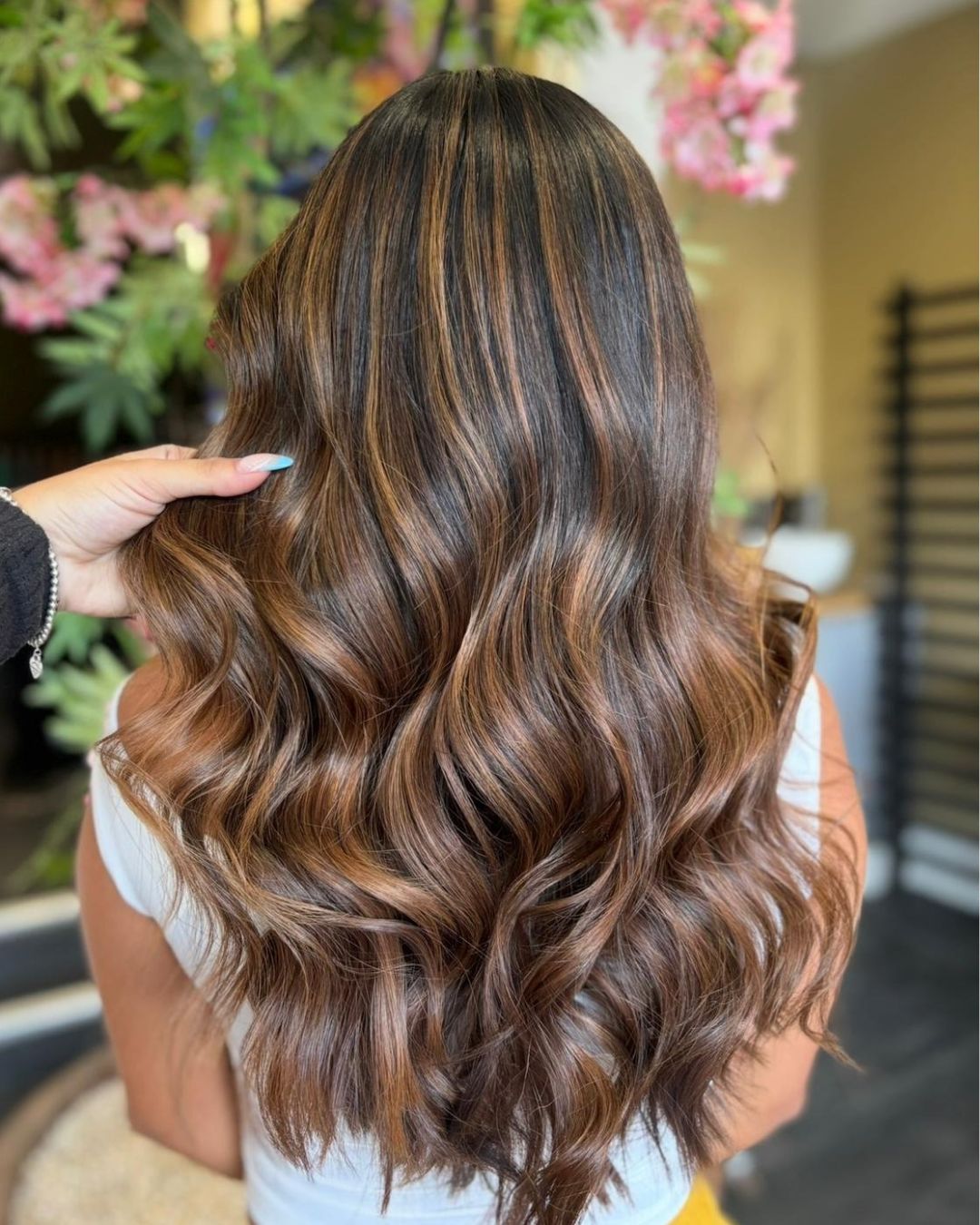
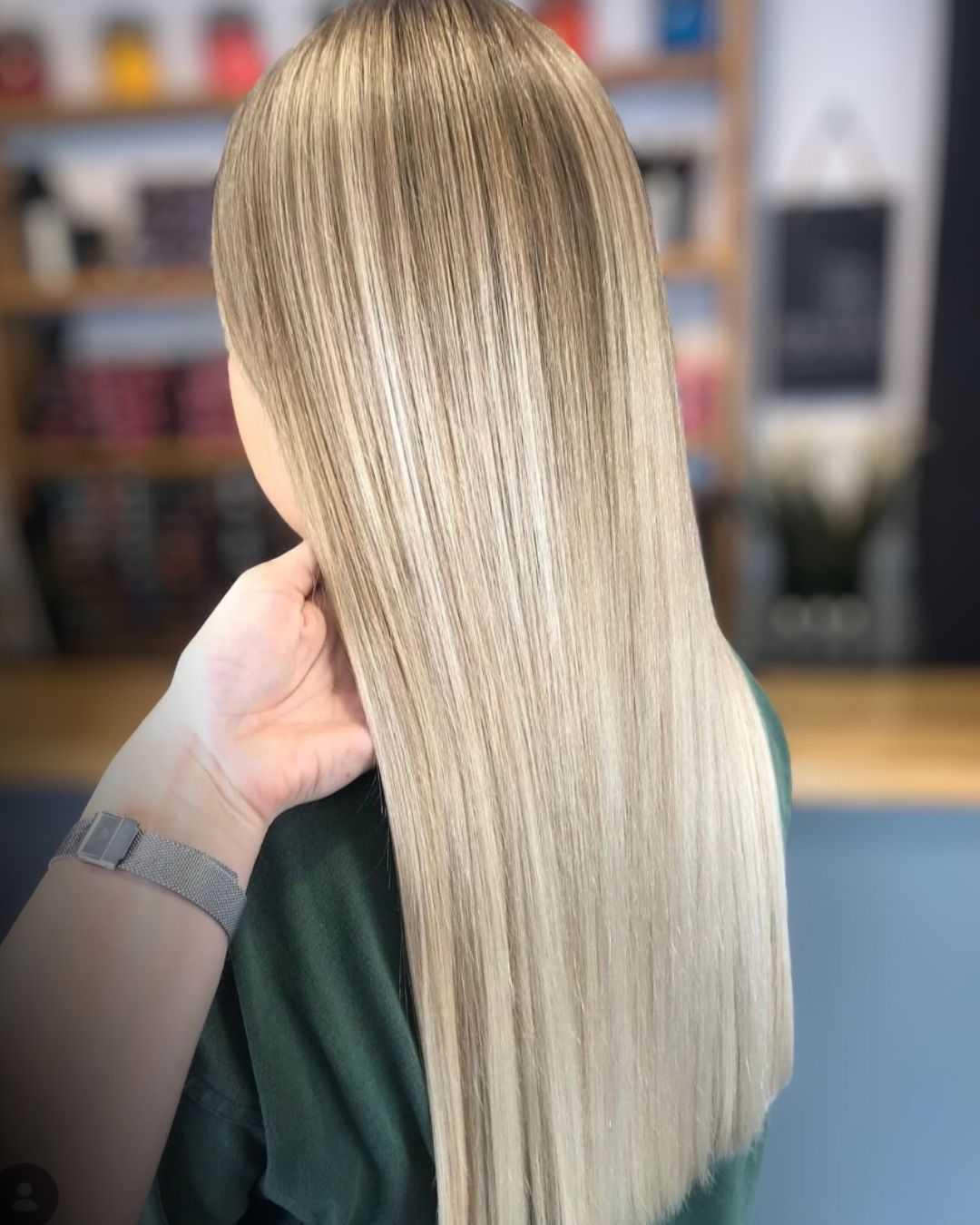
Real colour results at NOCO
Every result below started with understanding the client’s natural base and eye colour first. The colour was designed to work with their colouring, not against it.
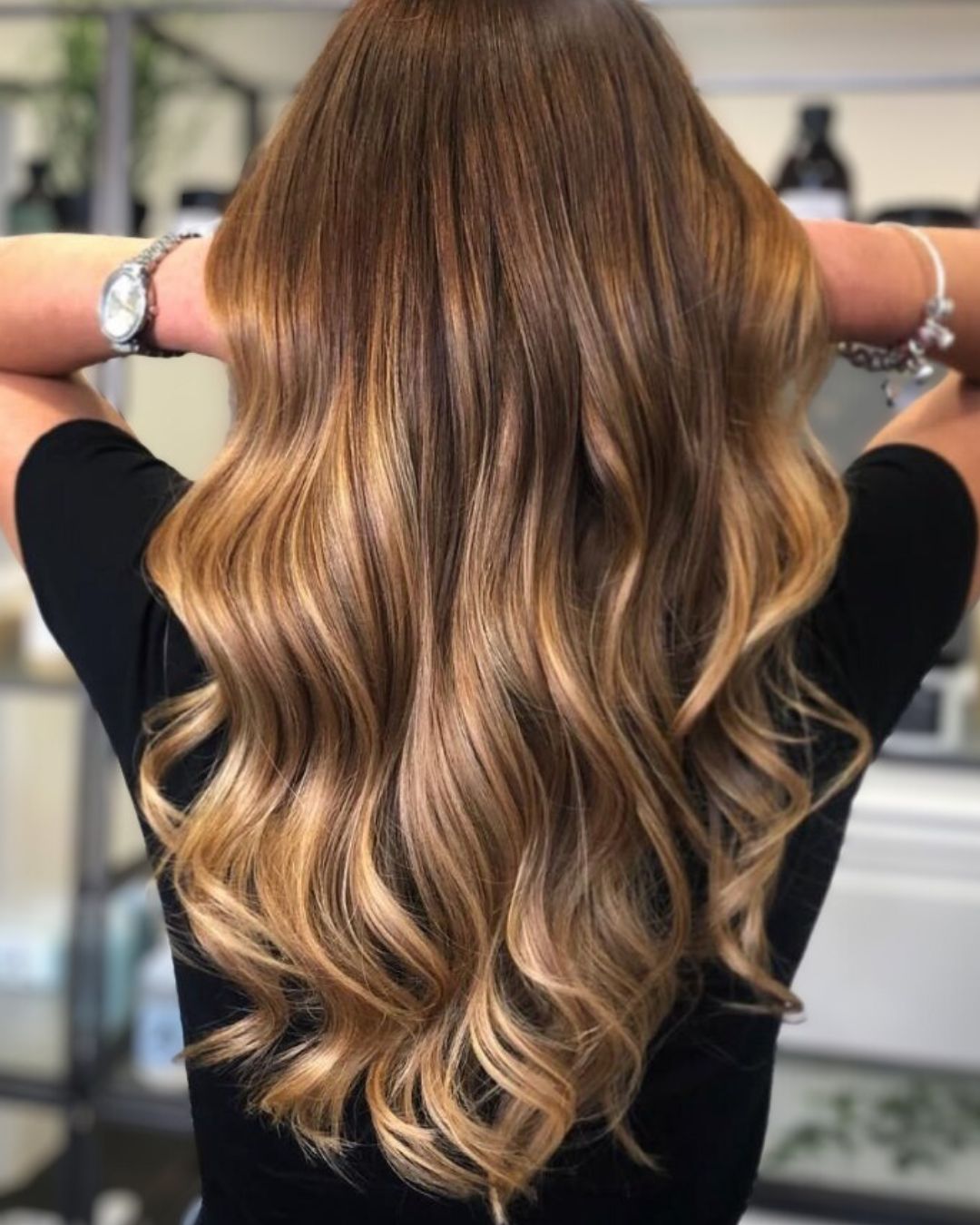
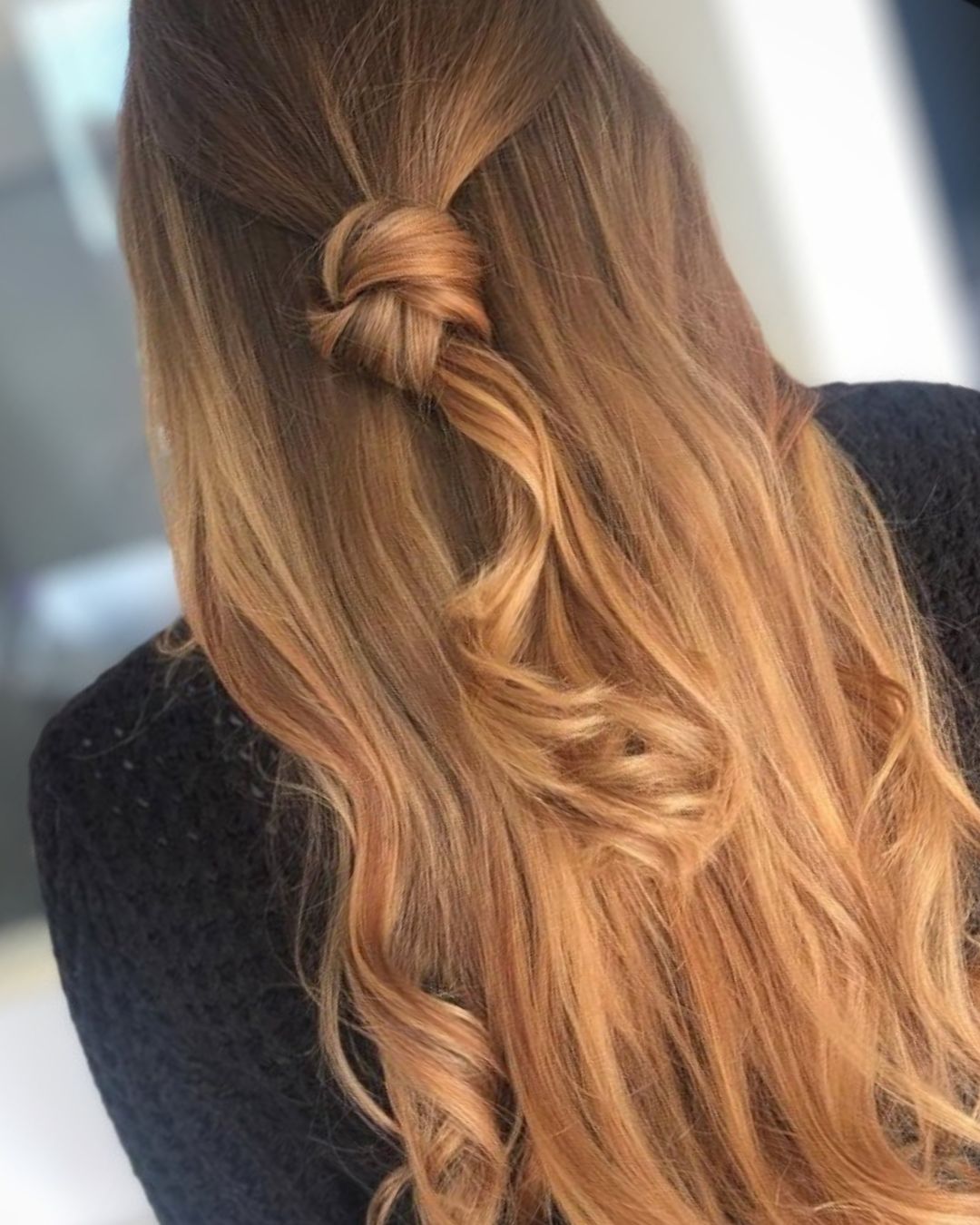
What we look at in a consultation
Before we recommend any colour direction, we assess your natural base shade, your eye colour, your skin tone and your colour history. We look at what your hair can safely achieve and what would actually suit you rather than just what is popular right now.
The consultation is where colour goes right. Skipping it is where colour goes wrong. A colour that suits someone else’s colouring is not automatically right for yours. The diagnosis has to come before the design.
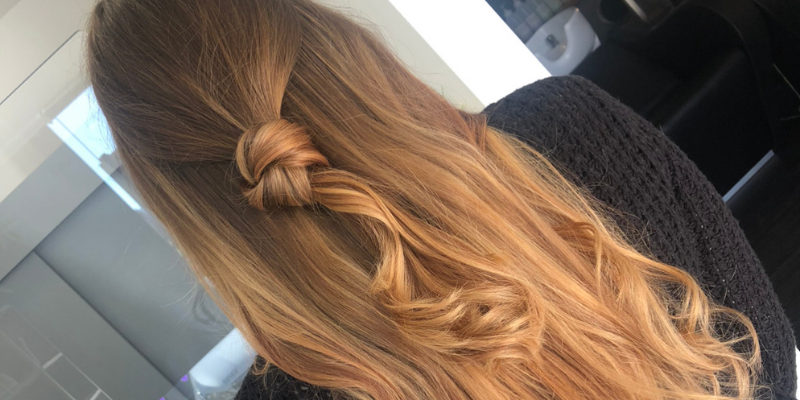
Whether you trusted your hair to the wrong stylist or an attempt at home colouring went sideways, a dye mishap can feel like a nightmare. But no hair colour disaster is completely unfixable in the right hands. The first step is understanding what actually went wrong.
Colouring hair is a more delicate process than the box dye adverts suggest, particularly when bleach is involved. Here is what we see most often and what can be done about each one.
Brassiness and bad blonde
Blonde is one of the most popular colour results and one of the easiest to get wrong. Too much lift in one direction can leave you with green-grey ashy tones, orange brassiness or a yellow that reads more Barbie than beachy.
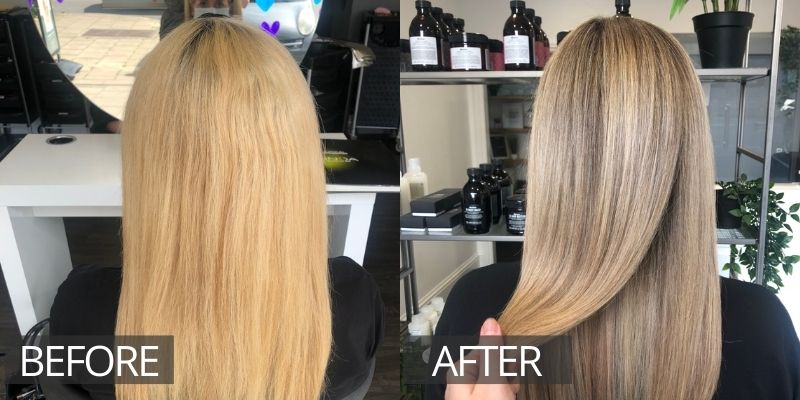
Colour correction work at NOCO Hair Bristol.
Hot roots
Hot roots appear when the hair at the root develops differently from the rest, creating a two-tone effect that looks unintentional. It happens most often when previously processed hair reacts differently to fresh colour, or when the heat from the scalp causes the dye at the root to develop faster and lift higher than the lengths.
A small amount of anti-brass or cool toner applied to the roots can help at home. In a salon, a colourist can correct hot roots using a slightly deeper shade at the root to balance the overall result. For future colour, applying the dye to roots last, after coating the lengths, reduces the risk of this happening again.
Colour that has gone too dark or intense
Left colour on too long? The first response is to wash immediately, several times if needed. A clarifying shampoo strips colour faster than a regular shampoo. Follow immediately with a deep conditioning treatment as clarifying shampoo is harsh on the hair structure.
From there, a stylist can advise the best route. In some cases the dye can be removed or lifted. In others, encouraging it to fade naturally over a few weeks while protecting the hair is the better option. Highlights or balayage can also be used to break up the intensity and lighten the overall effect without a full removal process.
Patchy or uneven coverage
Patchy colour coverage is one of the most common results of home dye jobs and can also happen with inexperienced stylists. The causes range from incorrectly mixed product to uneven application, damaged hair that absorbs colour inconsistently, or missed sections.
A professional can identify exactly what caused the patchiness and correct it using a combination of targeted re-colouring, toner, gloss treatments or condition work depending on the root cause. Colour often needs more than one pass to build depth evenly, in the same way that painting a wall benefits from an undercoat before the finish coat.
Stripey or chunky highlights
Bold, visible streaks rather than blended highlights usually happen when sections placed in foil are too thick. The result lacks the dimension and movement that makes highlights look natural.
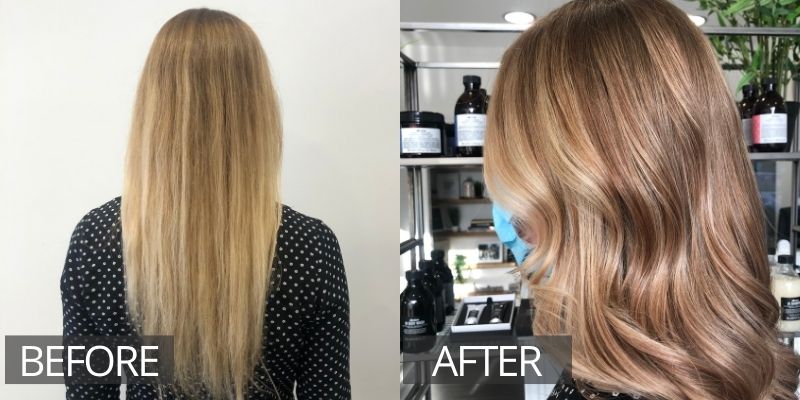
Balayage used to soften and blend overly chunky highlight work at NOCO Hair Bristol.
The two most effective salon fixes are blending the base colour back through to reduce the contrast between highlighted and unhighlighted sections, or using balayage to hand-paint colour in a way that disguises the foil sections and creates a more gradual, natural result.
Hair dye on skin
Staining around the hairline, neck and ears is extremely common. At the salon we use a professional stain remover. At home, milk on cotton wool works surprisingly well. Regular soap and water clears most fresh stains. For anything more stubborn, baby oil, a gentle body scrub or a small amount of rubbing alcohol applied lightly without scrubbing will usually clear it.
Prevention is more effective than removal. Always use gloves when colouring at home, wipe any drips immediately before they set, and apply a barrier of moisturiser or Vaseline around the hairline before you start.
Damaged hair after colouring
Bleach and permanent dyes work by lifting the outer protective layer of the hair shaft. This is necessary for the colour to penetrate, but it leaves the hair more vulnerable to breakage, frizz, dryness and heat damage until that outer layer recovers.
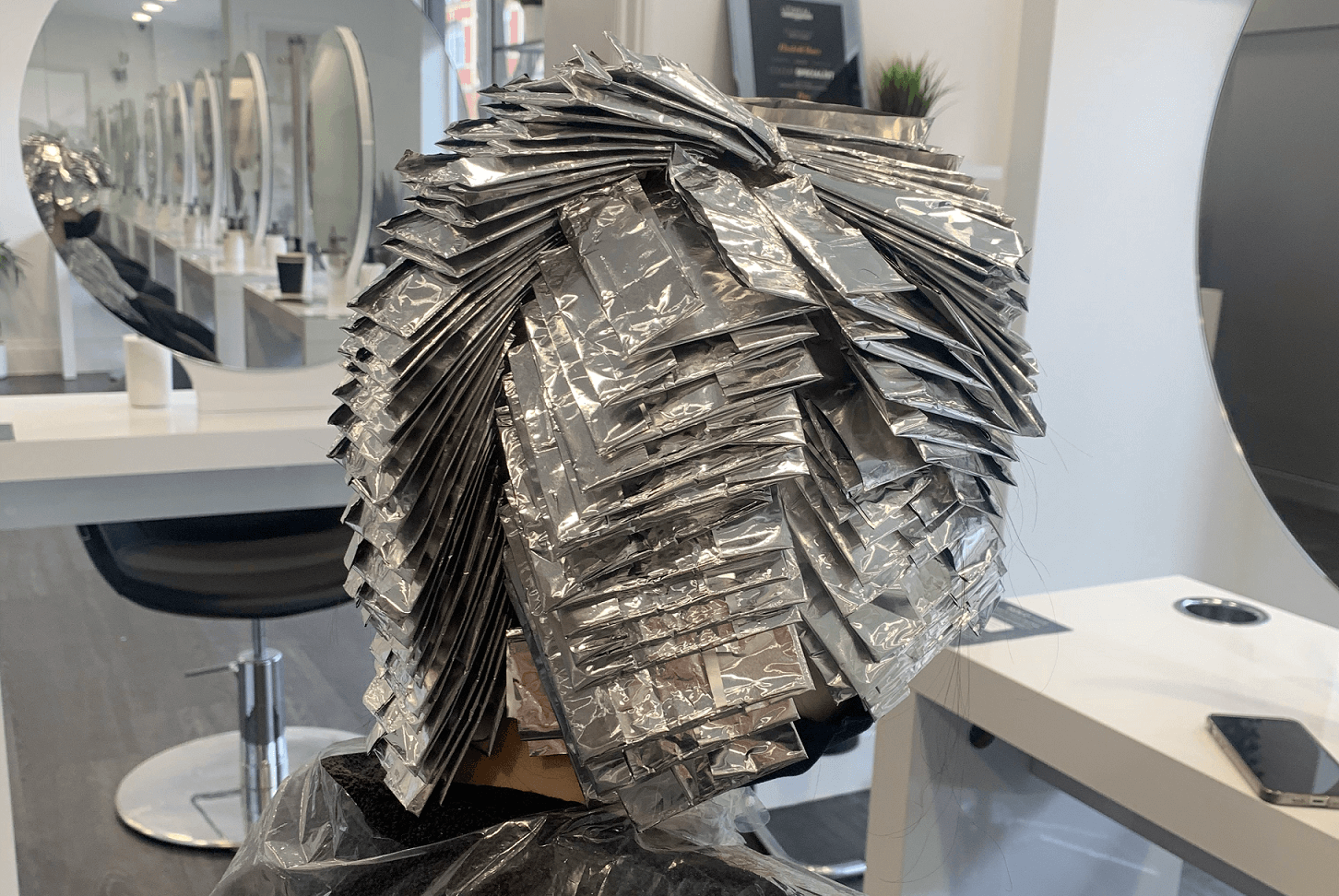
Bleach will always have some effect on hair structure. That is simply how the chemistry works. The question is not whether bleach causes damage at all, but how much, how it is managed, and whether the hair you have can handle what you are asking it to do.
Most problems with bleach happen either at home or when the condition of the hair is not properly assessed before the service begins. Both are avoidable with the right approach.
What bleach actually does to hair
Bleach works by opening the outer cuticle of the hair shaft and reacting with the melanin inside. This oxidises the pigment, effectively removing the colour. The melanin is not removed from the hair; it is rendered colourless.
Once the natural pigment is lifted, what remains is the underlying pigment of the hair. Darker bases reveal red tones first, then orange, then yellow as they lift higher. A pre-lightener lifts this underlying pigment out. A toner is then used to neutralise the remaining warmth and achieve the finished colour.
Breakage versus hair loss
Bleach does not typically cause hair loss from the follicle. What it causes is breakage, and the two are frequently confused. Hair loss means the follicle is shedding. Breakage means the hair shaft is snapping at some point along its length.
There are two types of structural damage to understand. Porous hair has damage to the cuticle, the outer layer. It feels dry and lacks moisture, usually caused by heat. Sensitised hair has damage to the internal structure, which changes the elasticity. Sensitised hair either snaps immediately when stretched or stretches too far and does not return, like chewing gum. Both need to be identified before any bleach service proceeds.
Going from dark to blonde
Moving from a dark base to a light blonde in a single session is not possible safely. Each bleach application lifts the hair a certain number of levels depending on the strength used, the development time and the starting condition of the hair. Attempting too much lift in one session risks over-processing, which in serious cases means the hair loses structural integrity entirely.
The right approach is to lift in stages with recovery time between sessions. After the first application, a toner is used to improve the result while the hair recovers. A minimum of two weeks is needed before assessing whether the hair is strong enough to go again. This process takes longer than clients sometimes want, but the alternative is compromised hair that cannot be repaired, only cut off.
Why home bleach is higher risk
Home bleach products are formulated for maximum lift because they are designed as a one-formula-fits-all solution. They cannot be adjusted for your specific hair condition, history or starting point. A professional mixes a bespoke formula based on your natural colour, previous colour history and current condition, then monitors the development in real time.
The other risk with home bleach is timing. The formula cannot tell you when to stop. Leaving bleach on too long causes accelerated damage and in extreme cases the hair structure can break down completely at the root and ends. At the salon this is prevented by ongoing visual and tactile assessment throughout the development process.